China installs reactor pressure vessel at Lufeng CAP1000 Unit 1
Lufeng Unit 1’s reactor pressure vessel is in place, pushing the CAP1000 from civil works into nuclear island equipment installation.
_15584.jpg&w=1920&q=75)
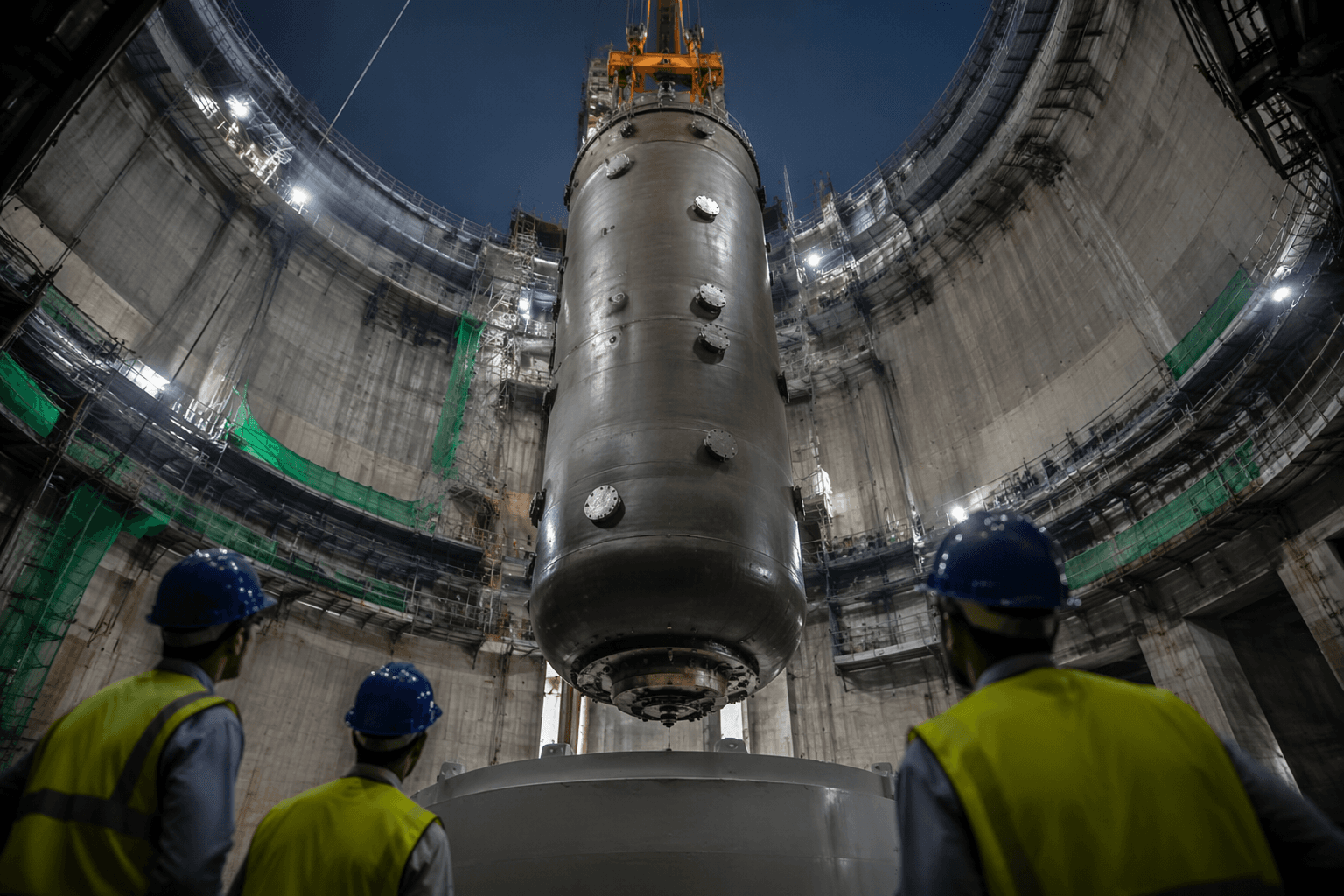
China General Nuclear has installed the reactor pressure vessel at Lufeng Unit 1 in Guangdong province, a key handoff point that moves the first CAP1000 at the site out of major civil works and into core reactor assembly. The vessel is the high-strength steel cylinder that will house the reactor core and internals, support coolant flow, and guide the control rods.
CGN said the lift marks the start of the peak period for main equipment work in the nuclear island. The next major step is installation of the main pipelines, which will tie the primary system together after the vessel is set and the reactor island begins to take shape around it.
The milestone comes about 17 months after first concrete was poured for Unit 1 at 11:36 on 24 February 2025, which CGN described as the official start of the unit’s main project. Lufeng itself is the first nuclear power project in eastern Guangdong, and the original four-unit plan for CAP1000 reactors was approved by the China National Development and Reform Commission in September 2014. Units 1 and 2 later received State Council approval on 19 August 2024 and are scheduled to begin operating in 2030, while approvals for Units 3 and 4 are still pending.
The broader site plan now spans six pressurized water reactors. In April 2022, the State Council approved two Hualong One units as Units 5 and 6, with construction starting on Unit 5 in September 2022 and Unit 6 in August 2023. That second pair has already been moving through major hardware milestones of its own: Unit 6’s reactor pressure vessel was lifted into place in March 2026, and Unit 2’s first steel containment vessel ring was installed in early July 2026.
Taken together, those parallel steps show how Lufeng is advancing in staggered waves rather than a single uniform build. The site at Jieshi Town in Lufeng City, under Shanwei City on Guangdong’s east coast, is now deep into the transition from foundations and structures to the irreversible phase of reactor installation that defines the rest of the schedule. CGN says the full six-unit station could generate about 52 TWh a year and cut standard coal use by almost 16 million tonnes while avoiding more than 42 million tonnes of carbon dioxide.
This article was produced by Prism’s automated news system from verified source data, official records, and press releases, then run through automated quality and moderation checks before publishing. The system is built and supervised by the people who set the standards it runs under. Read our full AI policy.
Did this article answer your question?