Constellation's Three Mile Island Restart Faces Potential 2031 Grid Interconnection Delay
PJM says the 835-MW Crane Clean Energy Center won't connect until 2031, four years after Constellation's ready date, leaving Microsoft waiting for carbon-free power.
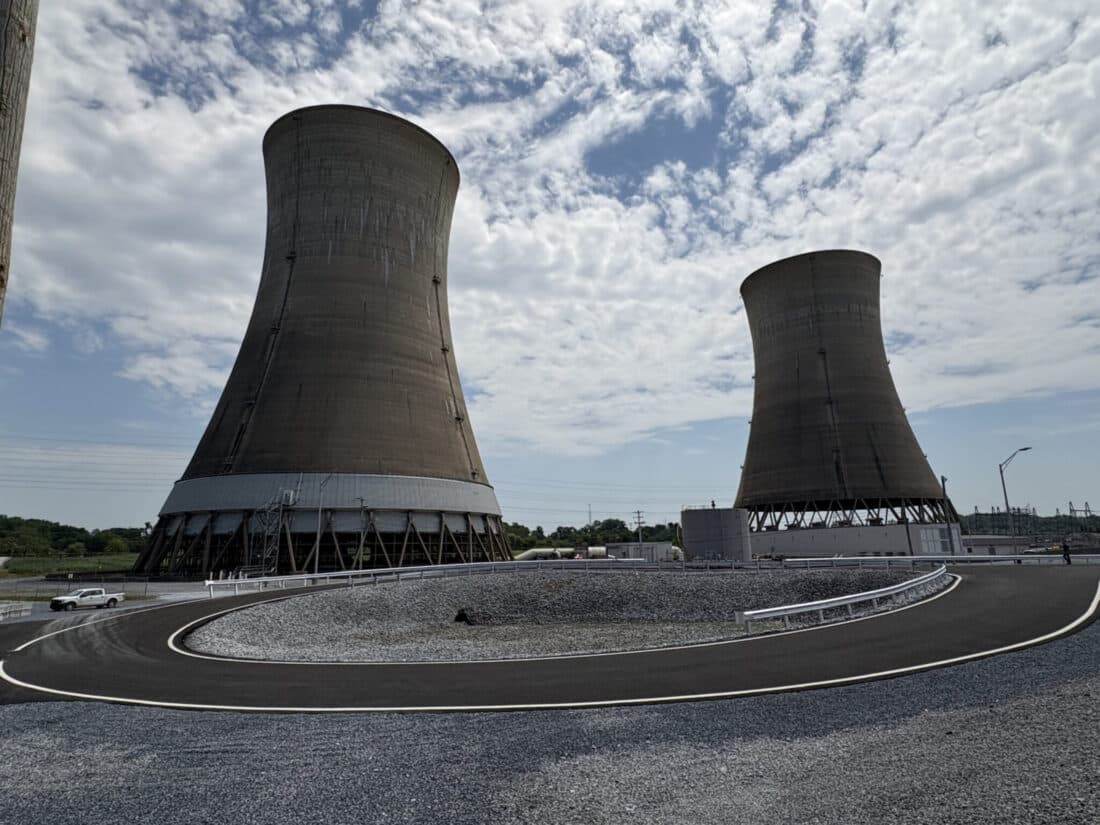
Microsoft needs clean power for its AI data centers, and Constellation Energy has a $1.6 billion answer sitting in Middletown, Pennsylvania. The problem is that PJM Interconnection, the grid operator serving 13 states and Washington D.C., has signaled the transmission upgrades required to reconnect the restarted 835-megawatt Crane Clean Energy Center won't be finished until 2031, four years after Constellation's own 2027 target.
At CERAWeek in Houston last Thursday, Constellation's chief external affairs and growth officer David Dardis was direct about where the bottleneck lies. "We will have it ready to go in 2027," Dardis said, making clear the delay lives entirely inside PJM's interconnection queue, not on the construction site.
That four-year gap has real arithmetic behind it. An 835-MW nuclear unit running at nuclear-typical capacity factors generates roughly 6.5 million megawatt-hours of carbon-free electricity per year. Four years of stranded capacity represents more than 26 million MWh of clean generation that Microsoft's data centers, and the broader PJM region, could not access during that window.
The Crane Clean Energy Center, formerly Three Mile Island Unit 1, was shut down in 2019 for economic reasons and has since become the anchor of what may be the most closely watched nuclear restart in U.S. history. Constellation signed a 20-year power purchase agreement with Microsoft in September 2024, secured a $1 billion Department of Energy loan in November 2025, and has been targeting 2027 as the year this becomes the first fully shuttered commercial reactor to return to service in the country.
What PJM's latest feedback underscores is that finishing the reactor is only half the equation. The interconnection queue, which ballooned past 250 gigawatts of backlogged projects in recent years and pushed PJM into a sweeping overhaul of its cluster-based study cycles, can impose delays on generators that have already cleared every other regulatory and engineering hurdle. Transmission upgrade costs, once determined through PJM's phased study process, must also be allocated between the generator and transmission owners before final interconnection service agreements can go to FERC for approval, a sequence that routinely extends timelines well after the technical reviews themselves conclude.
For Microsoft, the stakes are direct. The company structured its PPA specifically to match its PJM-region data centers with firm, around-the-clock, carbon-free megawatts. A 2031 interconnection date punches a four-year hole in that planning and complicates the long-term energy accounting that underpins both the company's clean energy commitments and its hyperscale infrastructure build-out.
Constellation said it is actively engaging PJM and regional transmission owners to compress the schedule and is exploring available mechanisms to accelerate study completion and upgrade construction. Shares of Constellation fell 2.6 percent in Thursday trading on the disclosure.
The nuclear industry is watching this closely because TMI is a test case. A smooth restart establishes the template for future reactor revivals across the country. A four-year grid bottleneck, on the other hand, demonstrates that the barriers to dispatchable clean capacity in PJM are no longer confined to the plant fence line.
This article was produced by Prism’s automated news system from verified source data, official records, and press releases, then run through automated quality and moderation checks before publishing. The system is built and supervised by the people who set the standards it runs under. Read our full AI policy.
Did this article answer your question?