Cross sections measured for gold and thallium isotopes from 20Ne (108-171 MeV)
Researchers measured production cross sections for 196Au, 198Au, 199Tl, 200Tl and 201Tl from 20Ne beams at 108-171 MeV, providing new activation data for modelers and facilities.
Researchers have reported production cross sections for a set of gold and thallium radionuclides created when 20Ne projectiles struck natural gold targets at beam energies between 108 and 171 MeV. The study identified 196Au, 198Au, 199Tl, 200Tl and 201Tl as likely direct-reaction products and quantified their yields using off-line gamma spectrometry.
The measurements span a high-energy region that is useful for facilities running medium-energy heavy-ion beams. By focusing on natural gold targets and a neon-20 projectile, the authors produced an activation fingerprint that links specific reaction channels to measured gamma lines. Off-line gamma spectrometry was used to isolate and quantify the radionuclides after irradiation, yielding cross section values that add empirical data where experimental information has been sparse.
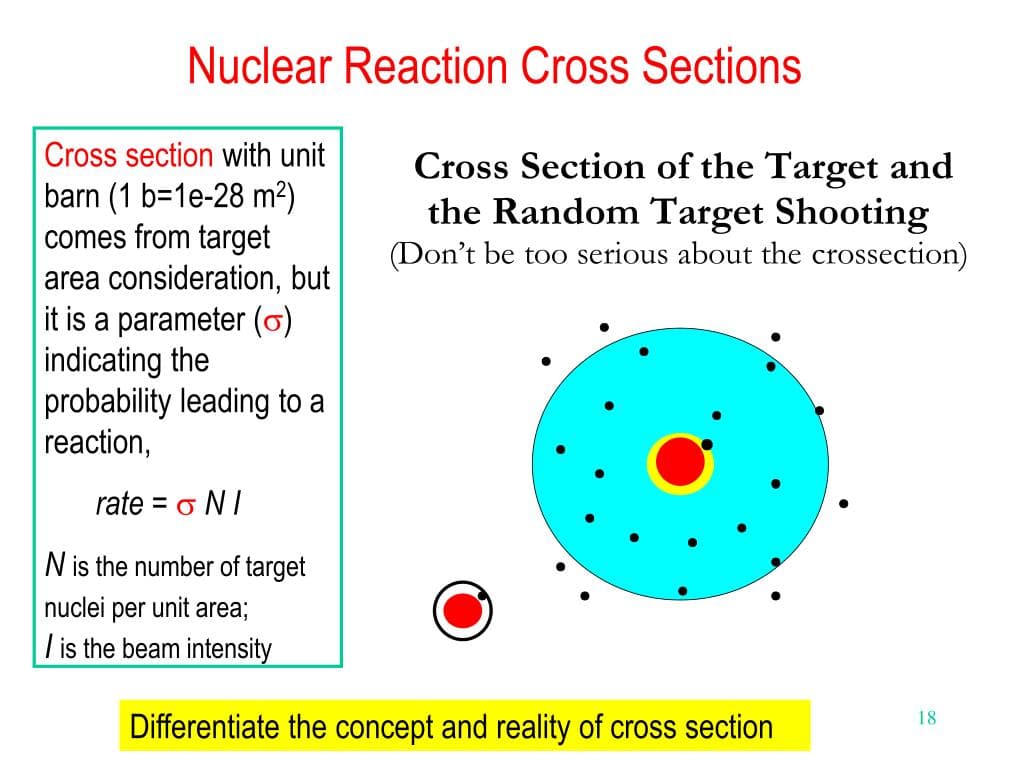
These numbers matter because cross sections are the currency of nuclear reaction planning. Accelerators that deliver heavy-ion beams use cross sections to estimate induced activity, plan cooling and handling of activated components, and design radiochemical recovery if isotope harvesting is intended. Modelers who tune reaction codes and nuclear data libraries will also use measured production cross sections as benchmarks to constrain calculations for direct-reaction channels in this energy window.
The authors describe the products as possible direct-reaction outcomes, which highlights the role of fast, peripheral interactions at these energies. That detail helps experimentalists and theorists separate competing mechanisms - for example, distinguishing direct removal processes from compound-nucleus pathways - when interpreting activation or when designing follow-up measurements to map excitation functions more finely.

For the local community of accelerator operators, radiochemists and reaction theorists, the practical takeaway is clearer planning for beam time and activation control. Facilities that use gold components or gold backing materials can update their activation estimates; groups interested in producing thallium isotopes for tracer work or calibration can compare expected yields in the 108-171 MeV neon beam window against their targetry and processing capabilities.
Looking ahead, these cross section measurements set the stage for broader comparisons with reaction models and for targeted experiments that map energy dependence in smaller steps. That will sharpen predictive power for activation and isotope production and help labs refine safety and recovery workflows.
This article was produced by Prism’s automated news system from verified source data, official records, and press releases, then run through automated quality and moderation checks before publishing. The system is built and supervised by the people who set the standards it runs under. Read our full AI policy.
Did this article answer your question?