Deep Isolation Validates Borehole Disposal for Recycled Nuclear Fuel Waste
Deep Isolation's ARPA-E analysis confirms borehole disposal works for Oklo's electrorefining waste streams, but NRC licensing and site characterization remain before any repository opens.
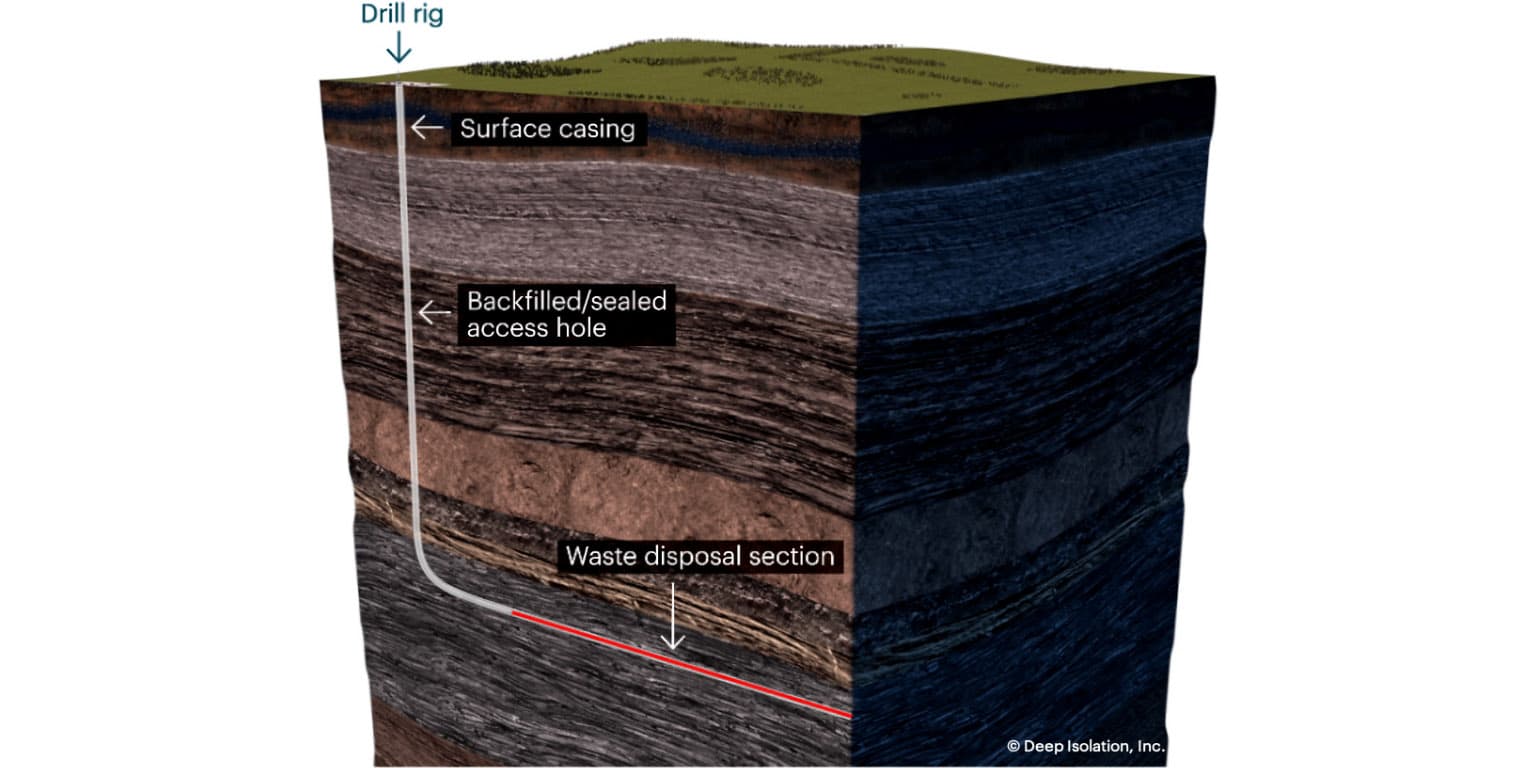
Deep Isolation Nuclear, Inc. and NYSE-listed Oklo crossed a technical threshold last week that metal-fuel reactor developers have been watching since at least 2022: engineering analysis conducted through ARPA-E's ONWARDS program confirmed that waste streams partitioned through Argonne National Laboratory's baseline electrorefining process are compatible with deep borehole disposal, removing one of the most persistent barriers to the closed fuel cycle Oklo plans to operate in Oak Ridge, Tennessee.
The completion, announced March 24 from Berkeley, California, closed out Deep Isolation's scope under the project titled "Enabling the Near Term Commercialization of an Electrorefining Facility to Close the Metal Fuel Cycle," an Oklo-led consortium that also drew in Idaho National Laboratory. The deliverables covered compatibility analysis, engineering-level safety-case elements, and technical work aimed at reducing uncertainty around long-term containment and operational deployment of borehole disposal concepts.
"This collaboration with Oklo represents an important step forward for the advanced reactor ecosystem and our deep borehole disposal solutions for nuclear waste," said Jesse Sloane, executive vice president of engineering at Deep Isolation. "By pairing innovation in fuel recycling with advanced deep geologic disposal technology, we are helping build the technical foundation for a fully integrated, sustainable nuclear future."
What "validated" actually means here deserves precision. Deep Isolation holds 99 issued patents and developed its Universal Canister System through a separate three-year ARPA-E-funded project, with technology designed to leverage proven directional drilling practices across horizontal, vertical, or slanted borehole repositories. None of that constitutes a Nuclear Regulatory Commission license, an approved site, or a permitted waste transport pathway. The company itself has stated the ONWARDS milestone is a research outcome, not an operational repository licensing decision. Still absent: site characterization data, a formal quality assurance program, approved canister and transportation specifications, and the long-term performance modeling that regulators require before any disposal system can move toward licensing.
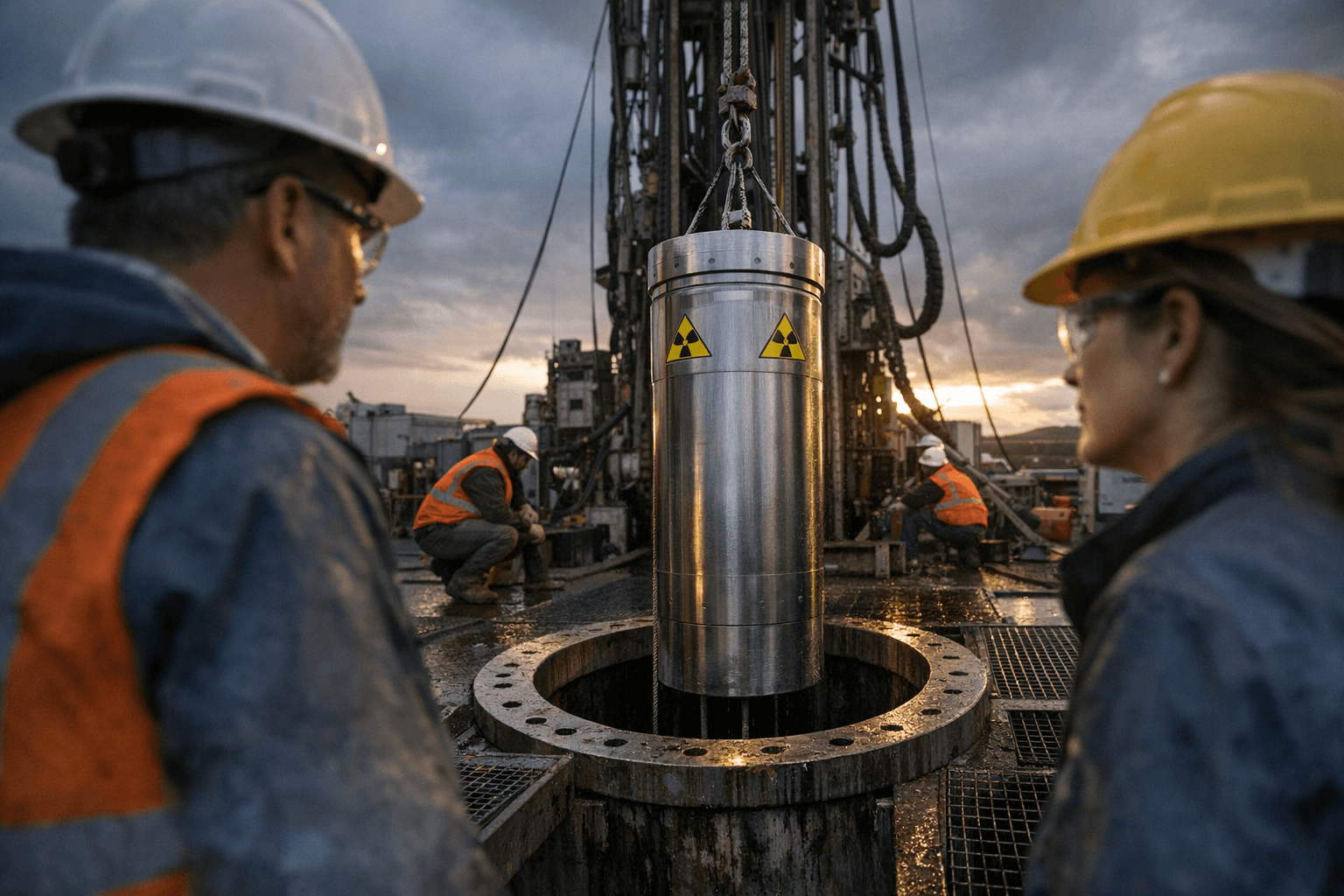
The gap matters commercially because Oklo is no longer treating electrorefining as a distant concept. The company announced in August 2025 plans to design, build, and operate a spent fuel recycling facility in Oak Ridge, and in 2024 completed what it described as the first end-to-end demonstration of its advanced fuel recycling process through the ONWARDS program. If that Oak Ridge timeline advances, waste management decisions for the facility's electrorefining outputs will move from the theoretical to the procurement stage faster than many developers have anticipated, transforming the question of borehole disposal compatibility from academic to contractual.
The broader ONWARDS program brought together public and private partners specifically to accelerate commercialization of fuel recycling technologies while developing final disposal pathways in parallel. That concurrent design reflects a hard-won lesson from the light-water fleet: treating waste disposal as a post-construction problem is a strategy that produces Yucca Mountain. For closed metal-fuel cycle developers, completing the loop before construction is now an explicit design criterion, and Deep Isolation's compatibility finding gives that loop one fewer unresolved question.
Whether borehole disposal becomes a near-term procurement option for electrorefining waste or remains a technically credible concept depends on what follows: site-specific subsurface studies, formal regulatory engagement with the NRC, and whether Oklo's Oak Ridge schedule generates the demand pressure needed to convert Deep Isolation's 99-patent portfolio into an operating license application.
This article was produced by Prism’s automated news system from verified source data, official records, and press releases, then run through automated quality and moderation checks before publishing. The system is built and supervised by the people who set the standards it runs under. Read our full AI policy.
Did this article answer your question?