DOE Restarts Uranium Recovery at H Canyon to Boost Energy Independence
DOE‑EM announced the restart of uranium recovery at H Canyon to produce HALEU, recover isotopes, and strengthen the domestic nuclear fuel cycle for energy independence.
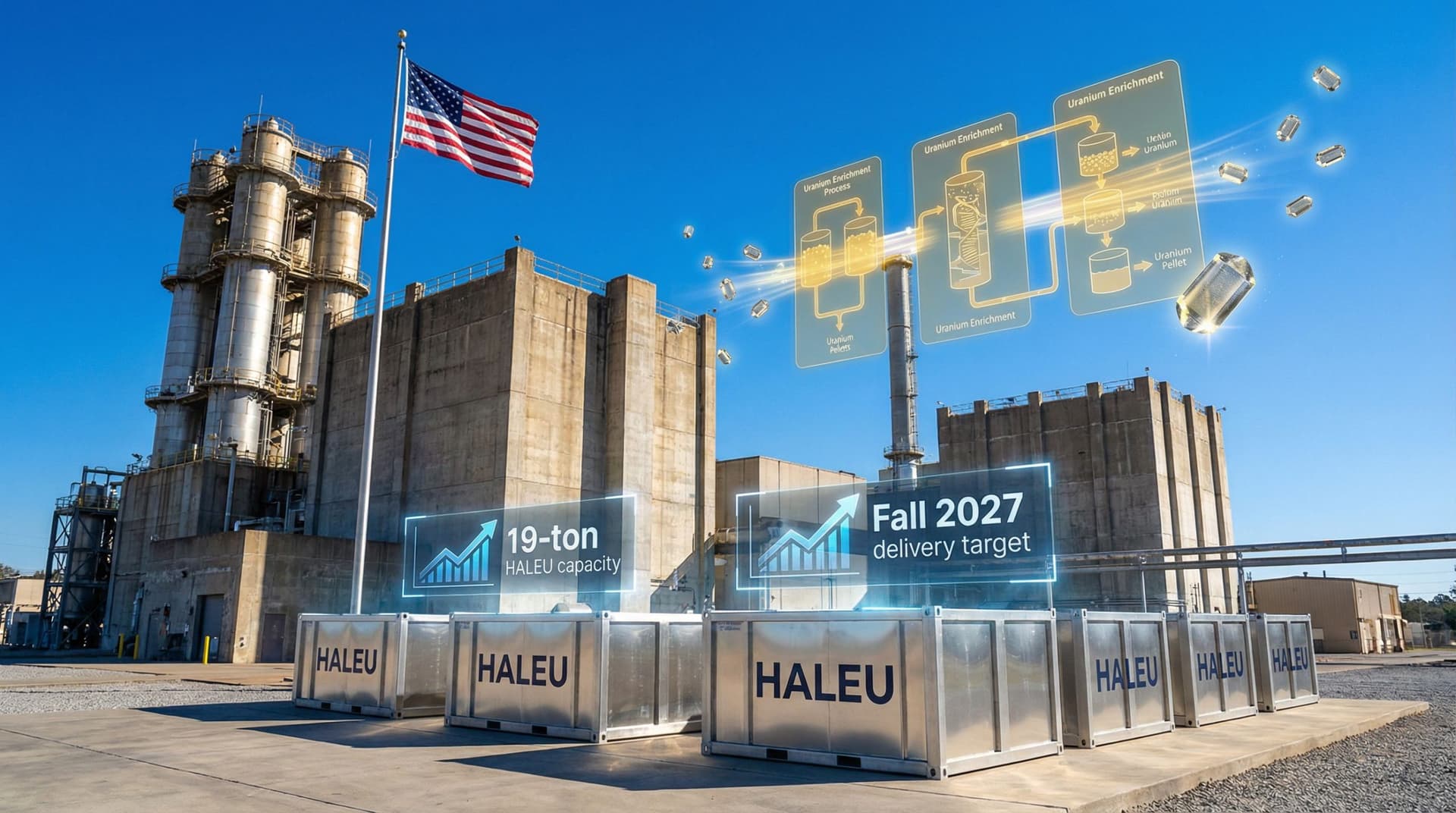
The U.S. Department of Energy’s Office of Environmental Management announced that it is restarting uranium recovery operations at the Savannah River Site H Canyon facility in Aiken, South Carolina, calling the move a strategic step to strengthen the nation’s nuclear industrial base and advance energy independence. The Office of Environmental Management published the announcement on February 4, 2026, while EnergyCentral and Neutronbytes reported the news on 02/03/26, reflecting the slight reporting date differences.
The restart targets the production of high-assay low-enriched uranium, or HALEU, defined as uranium enriched to contain between 5% and 20% uranium-235. Multiple outlets note that the inventory of used nuclear fuel at Savannah River Site contains enough highly enriched uranium to yield as many as 19 metric tons of HALEU, a quantity described as sufficient to fuel several proposed small modular reactors. H Canyon is described in reporting as the only operating, production-scale, radiologically-shielded chemical separations facility in the United States and has been recovering uranium and other materials for more than 70 years.
H Canyon began operations in 1955 and was originally part of Savannah River Site’s Cold War work to produce plutonium and tritium. The facility’s layout inspired its name because the processing areas resemble a canyon. After the Cold War, H Canyon’s mission shifted toward nonproliferation and environmental cleanup. DOE and reporting outlets emphasize that the restarted operations will continue to process used nuclear fuel as part of the site’s cleanup mission while enabling recovery of valuable isotopes for scientific, medical, and commercial uses.
DOE also framed the restart in supply‑chain terms and announced a partnership move reported by EnergyCentral and Neutronbytes. DOE press language reproduced in those outlets states that the partnership with American nuclear-fuel company General Matter and potential use of Hanford’s Fuels and Materials Examination Facility “holds great promise for rebuilding the domestic nuclear fuel supply chain and unlocking nuclear energy critical for meeting growing demand for affordable, reliable baseload power needed to fuel the artificial intelligence (AI) race.” The EnergyCentral item further connects the restart to President Trump’s executive orders “Reinvigorating the Nuclear Industrial Base” and “Deploying Advanced Nuclear Reactor Technologies for National Security,” saying the action directly supports those directives.

EM Assistant Secretary Tim Walsh framed the decision in national security and cleanup terms, saying, “Thanks to President Trump's leadership, we're maximising the value of existing assets, supporting national security objectives and advancing our cleanup mission - all while supplying America's next generation of advanced nuclear reactors.” That language appears in World Nuclear News and ANS reproductions of DOE comments.
Reporting to date does not provide an operational timeline, throughput estimates, or regulatory approval status for the restart. The announcement is explicit about intent and capability but leaves technical details and contract terms open. Community stakeholders and reactor developers should expect DOE and General Matter to clarify schedules, regulatory steps, and how produced HALEU will be allocated.
For communities around Aiken and the wider nuclear supply chain, the restart signals renewed federal focus on domestic fuel capability and isotope availability. Watch for DOE fact sheets, site operator briefings, and any regulatory filings to learn when H Canyon will move from announcement to operations and how the recovered HALEU and isotopes will be distributed.
This article was produced by Prism’s automated news system from verified source data, official records, and press releases, then run through automated quality and moderation checks before publishing. The system is built and supervised by the people who set the standards it runs under. Read our full AI policy.
Did this article answer your question?