EU Commission Unveils €200 Million Guarantee to Fast-Track SMR Deployment
Von der Leyen called Europe's nuclear retreat a "strategic mistake" as she unveiled a €200m SMR guarantee at Paris, targeting first reactors by the early 2030s.
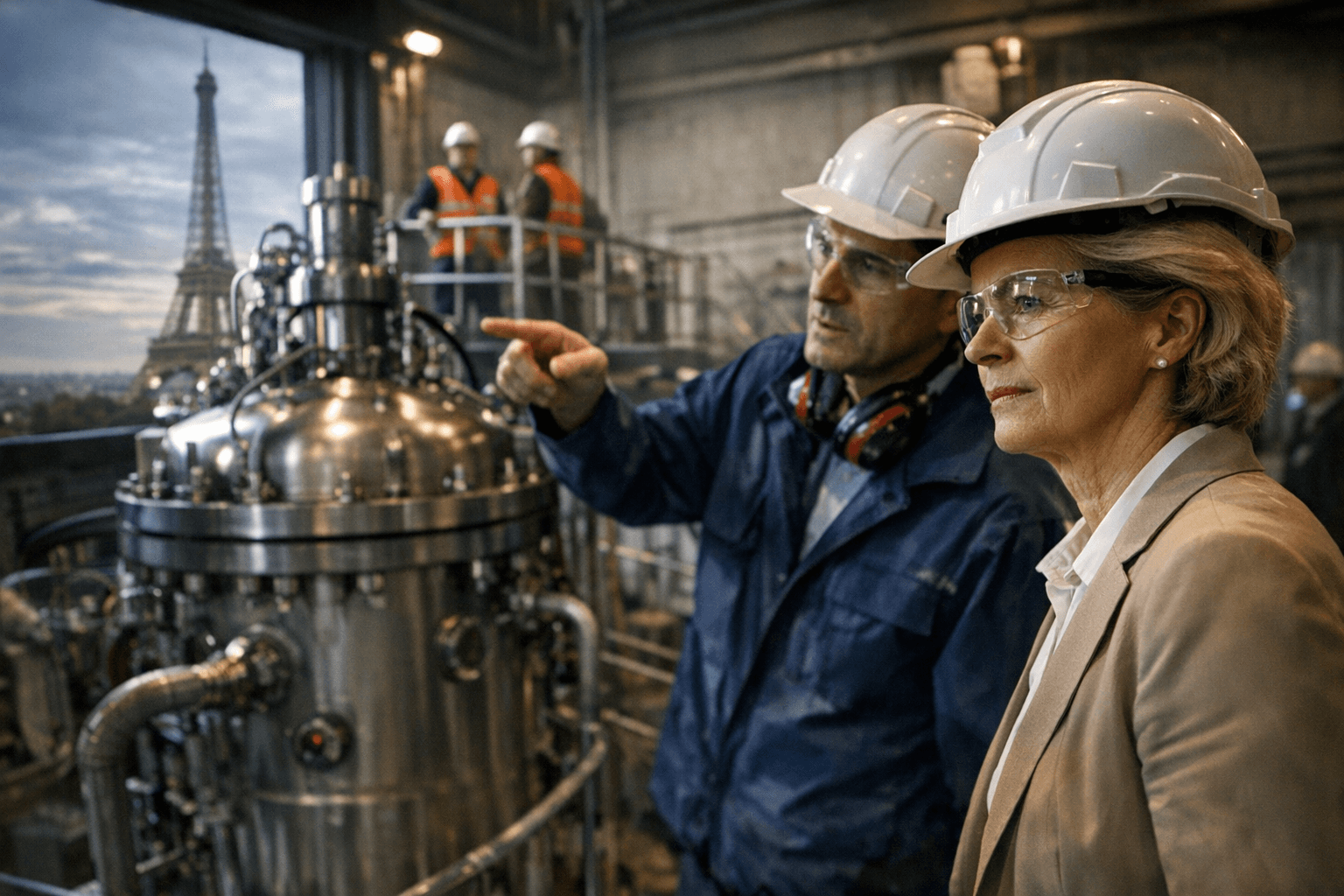
Ursula von der Leyen stood before the Nuclear Energy Summit in Paris on March 10 and declared that Europe had been wrong to abandon nuclear power, then announced a €200 million investment guarantee designed to make sure the continent does not repeat that error with the next generation of reactors.
The guarantee is intended to reduce financial risk for private investors and catalyze capital into small modular reactor development, with the explicit goal of having SMR technology operational across EU member states by the early 2030s. According to reporting by NucNet and Aa Com Tr, the mechanism will be financed through revenues generated by the EU Emissions Trading System. Pinsent Masons and PoliticoPro frame the funding differently, describing €200 million in extra support from the bloc's Innovation Fund available until 2028, with the Commission also considering an additional top-up under InvestEU. Separate from the guarantee, Pinsent Masons reported that the strategy would see the European Investment Bank provide up to €500 million to anchor capital for specific energy infrastructure projects.
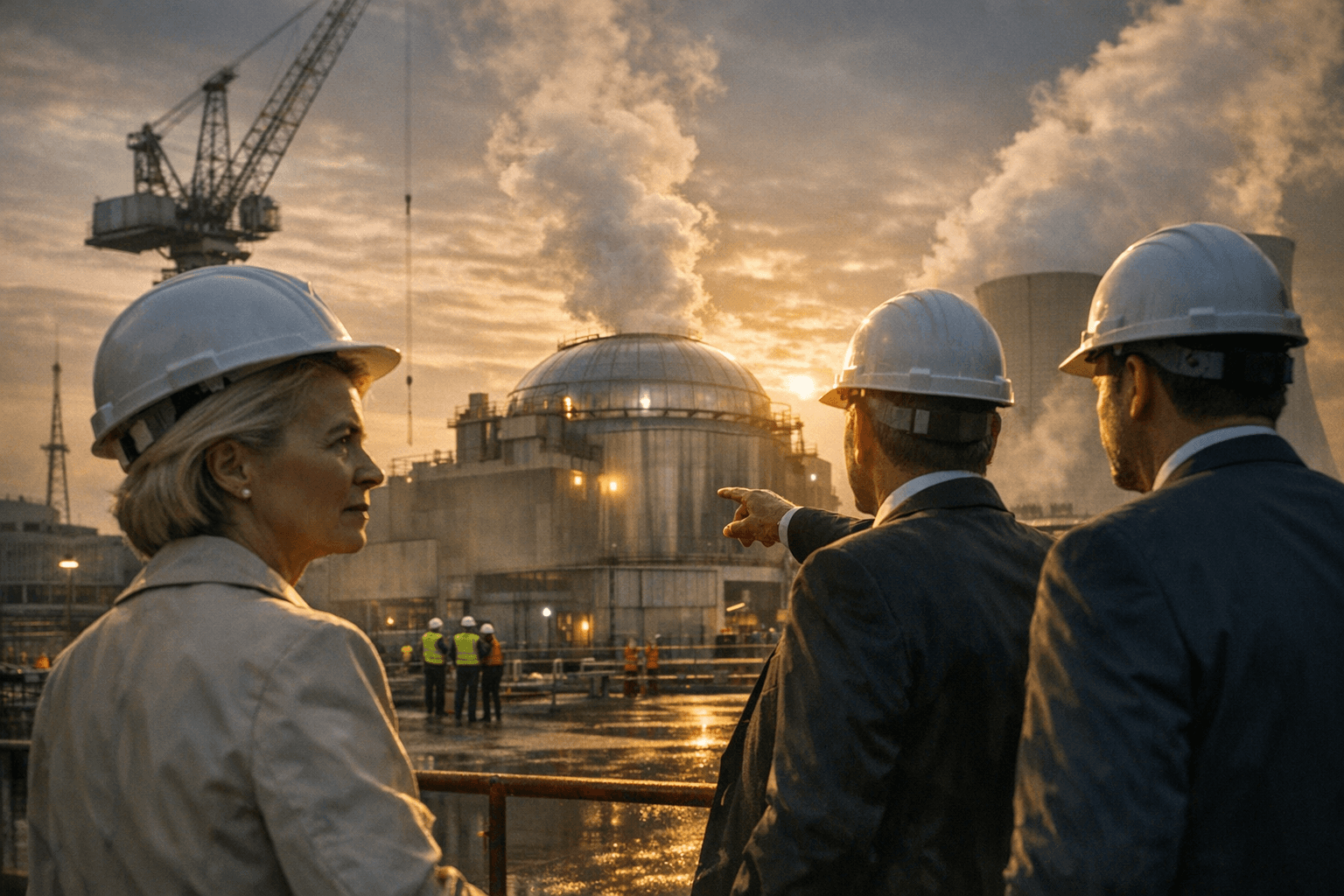
Von der Leyen was direct about what drove the announcement. "I believe that it was a strategic mistake for Europe to turn its back on a reliable, affordable source of low-emissions power," she told the Paris summit. She pointed to hard numbers to make the case: Europe's share of nuclear in its electricity mix has fallen from roughly one-third in 1990 to around 15 percent today. Her ambition for SMRs was equally blunt. "Our goal is very simple. We want this new technology to be operational in Europe by the early 2030's so that it can play a key role alongside traditional nuclear reactors in a flexible, safe and efficient energy system."
The strategy rests on three pillars outlined at the summit. The first is simplified regulation through cross-border regulatory sandboxes and alignment of licensing procedures across member states. The second is mobilization of private investment through the guarantee instrument. The third is coordinated cooperation between member states on permitting, workforce development, and supply chains. Von der Leyen also flagged next-generation nuclear technology as a potential high-value export sector for Europe, framing the initiative as an industrial competitiveness play alongside its energy security rationale.
EU Energy Commissioner Dan Jørgensen, speaking at a press briefing in Strasbourg, acknowledged the technology's unproven commercial scale while backing the investment push. "It's very clear that the potential for small nuclear reactors, although they are not up and running anywhere in the world yet, is very big. These types of reactors will be able to hopefully in the future, be deployed fast," he said.
EnergyWire's reporting describes SMRs as smaller, modular, and transportable, capable of being deployed at factories, industrial sites, data centers, or even shipping vessels to provide both electricity and industrial heat. The outlet projects EU SMR capacity could reach between 17 and 53 gigawatts by 2050, a range that reflects the significant uncertainty still surrounding commercial deployment timelines.
Michael Freeman, nuclear regulation expert and market lead at Pinsent Masons, called the announcement a meaningful signal. "The Commission's strategy represents further political commitment to nuclear energy and SMRs, and to the crucial role that they can and must play in achieving carbon neutrality objectives and reliable domestic energy security," he said. Eran Chvika, an energy industry expert with Pinsent Masons in Paris, connected the Brussels move to French domestic policy, noting that the strategy "reflects France's renewed commitment to nuclear development, initiated by the government in autumn 2022 and recently formalised through the adoption of the third Multiannual Energy Programme (PPE 3), which relaunches nuclear energy development."
The announcement came just weeks after the UK launched its own strategy for smaller nuclear projects, a timing that Pinsent Masons noted positions Europe's major economies as moving in lockstep on SMRs even as the technology awaits its first commercial units anywhere in the world.
Know something we missed? Have a correction or additional information?
Submit a Tip

