Fusion startups raise record $4.48 billion as commercial deals grow
Fusion startups raised a record $4.48 billion, and the top four rounds alone topped $2.29 billion as commercial power deals and siting talks multiplied.
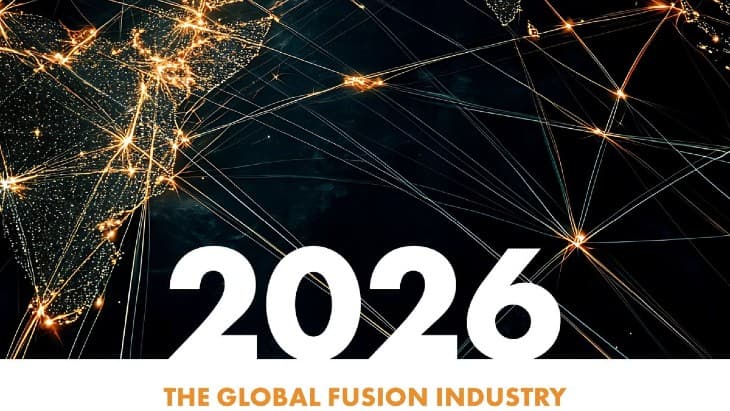
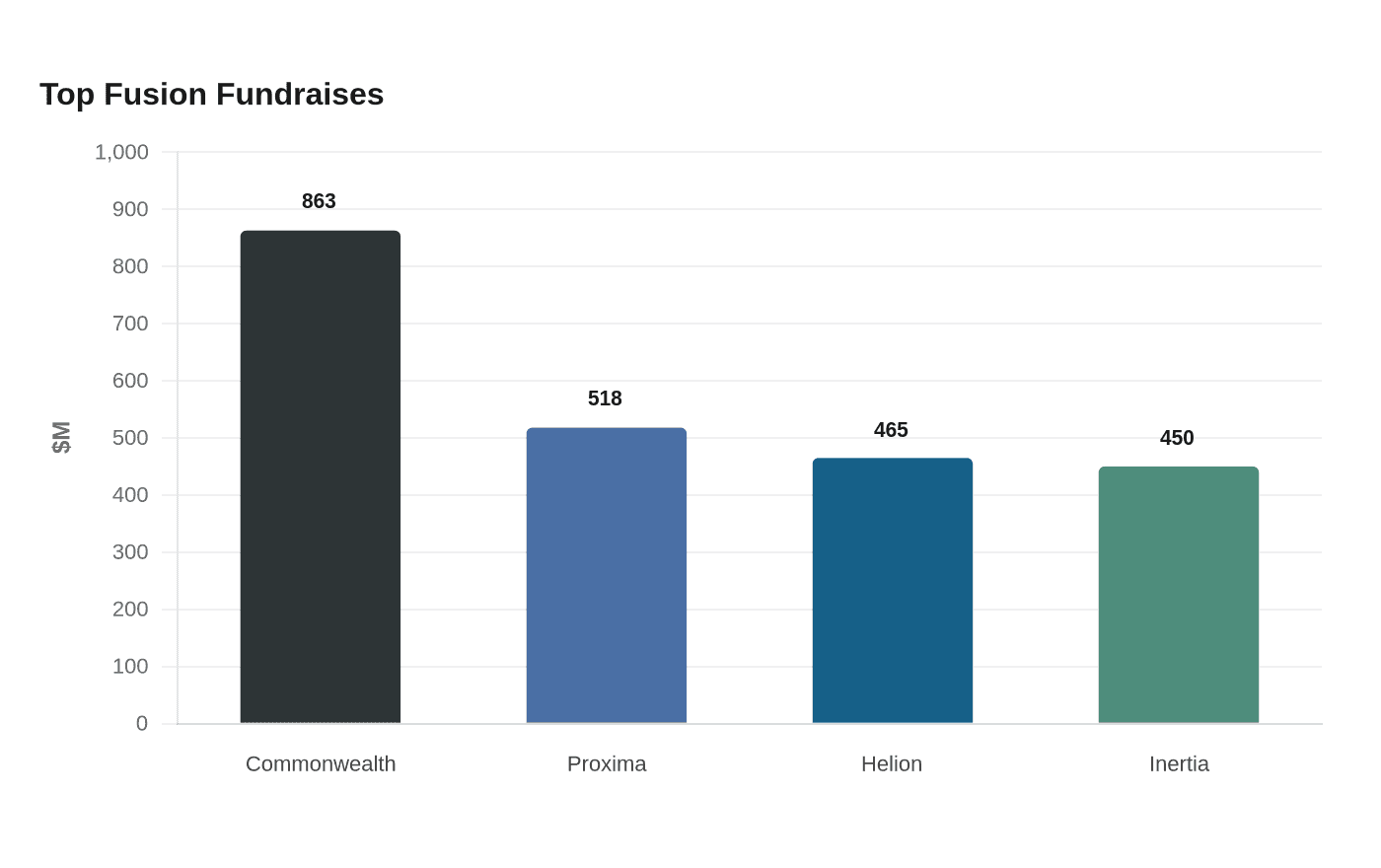
Fusion startups raised a record $4.48 billion in the 12 months to July. Commonwealth Fusion Systems led with $863 million, followed by Proxima Fusion at $518 million, Helion Energy at $465 million and Inertia Enterprises at $450 million. Those four rounds together accounted for just over half of the industry’s total, while the Fusion Industry Association’s 2026 survey puts cumulative funding across the sector at $14.24 billion.
Of the 56 companies in the association’s 2026 survey, 48% are pursuing magnetic confinement, 21% inertial confinement and 14% magneto-inertial approaches. The company count rose from 53 a year earlier and 23 in 2021, with six new entrants and three withdrawals, and the workforce has grown to more than 16,000 people worldwide. On the cumulative leaderboard, all five companies with more than $1 billion raised are American-based, but the broader private fusion ecosystem now reaches 12 other nations, including four companies each in the United Kingdom, Germany and China, and three each in India, France and Japan.
Five companies already have a power purchase agreement, offtake commitment or similar deal in hand, six have siting agreements and four more are evaluating options. TAE Technologies and General Fusion are preparing to join Nasdaq in 2026 and have drawn hundreds of millions of dollars in new investment as part of that process. Microsoft’s 2023 agreement with Helion Energy and Google’s June 2025 deal with Commonwealth Fusion Systems are the clearest customer-side markers. In the survey, 71% of companies said they expect a fusion plant to deliver electricity to the grid by the 2030s.
Andrew Holland, the association’s chief executive, says the field has shifted from a world dominated by national labs and public research to one increasingly driven by private capital, and governments will need to adjust funding and policy if they want a share of the economic value. Fusion regulation should stay separate from fission regulation and remain predictable and proportionate to risk. The Nuclear Regulatory Commission unanimously approved fusion regulation under the Part 30 byproduct material framework on April 13, 2023. The money now being raised is aimed at pilot plants, supply chains, neutron-resilient materials, power efficiency and tritium self-sufficiency.
This article was produced by Prism’s automated news system from verified source data, official records, and press releases, then run through automated quality and moderation checks before publishing. The system is built and supervised by the people who set the standards it runs under. Read our full AI policy.
Did this article answer your question?