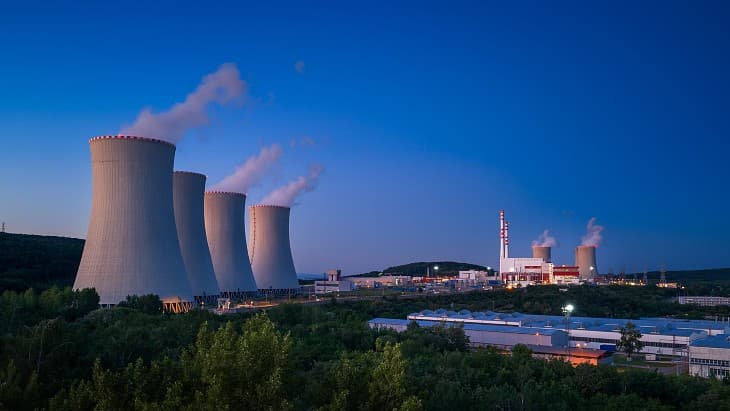
GE Vernova Hitachi Partners with AFRY to Deploy BWRX-300 SMRs in Sweden
AFRY will navigate Sweden's SSM licensing for the BWRX-300 as Vattenfall chooses between five GVH units and Rolls-Royce SMRs for its 1.5 GW Ringhals project.
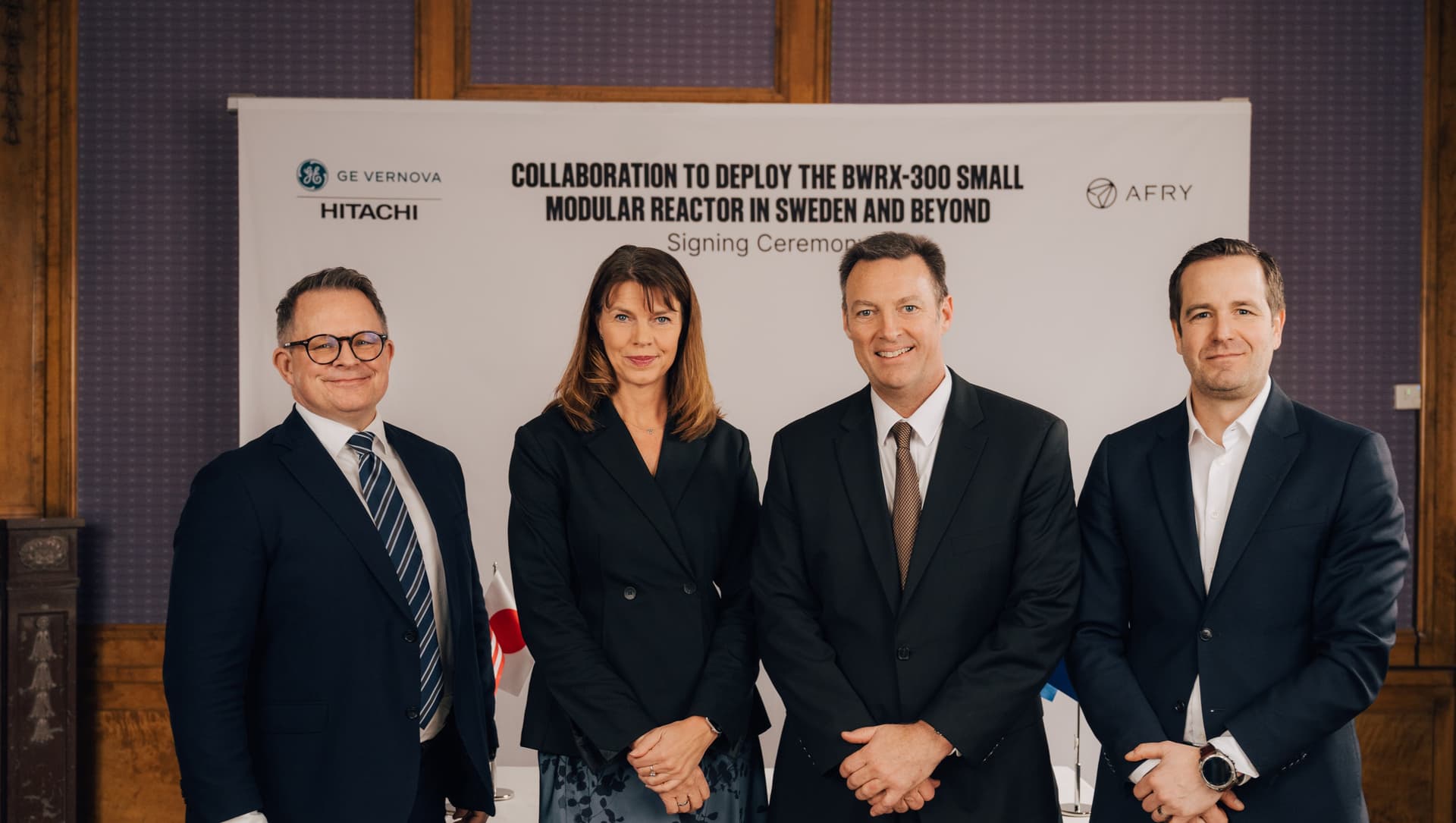
Vattenfall's technology selection is due this year, and it comes down to two options: five BWRX-300 units totaling 1.5 gigawatts, or three Rolls-Royce SMRs at roughly the same output, all destined for the Värö Peninsula at the Ringhals site. The Main Services Agreement that GE Vernova Hitachi Nuclear Energy signed with Swedish engineering firm AFRY on April 7 is the most direct move yet to make the BWRX-300 the credible, licensable choice when that decision lands.
The non-exclusive agreement tasks AFRY with engineering and advisory services and, critically, with supporting GVH's licence application to the Swedish Radiation Safety Authority (SSM). That SSM process is the pivotal regulatory gate standing between a technology partnership and a final investment decision; no licensing pathway, no project.
The BWRX-300 is a 300 MWe natural-circulation boiling water reactor with passive safety systems, derived from GVH's NRC-certified ESBWR design. Adapting that American licensing basis to SSM's framework means translating U.S. codes to Swedish nuclear regulations, working through seismic and cooling water requirements at a Baltic coastal site, and mapping grid interconnection into Svenska kraftnät's transmission system. The Ringhals site already hosts two operating large reactors and two permanently decommissioned units, so infrastructure exists, but the safety case for a new SMR technology has to be built from scratch under Swedish law. AFRY's job, in practical terms, is to close the gap between a vendor's reference plant and a licensable, site-specific submission.
The MSA is also a supply chain play. The agreement is explicitly designed to enable Swedish industries to participate in high-value opportunities tied to the European SMR market, which matters for the political economics of the project. Industrikraft i Sverige, a consortium of major Swedish industrial companies, invested SEK 400 million (roughly $43 million) in Vattenfall subsidiary Videberg Kraft in November 2025, taking a 20% stake. Those industrial partners will expect domestic fabrication and services contracts to follow any final vendor selection, and demonstrating a Swedish engineering ecosystem through AFRY is GVH's answer to that expectation.

Jason Cooper, CEO of GE Vernova Hitachi Nuclear Energy, pointed directly at that local dimension: "Sweden has a strong industrial base and world-class engineering capabilities, and by working with AFRY we are reinforcing our ability to deliver the BWRX-300 while enabling local industry to play a meaningful role in Europe's energy transition." Elon Hägg, EVP and head of Global Division Energy at AFRY, put Sweden's ambition plainly: "We aim to help position Sweden as a key hub in the future SMR value chain as well as advancing Sweden's nuclear power program."
The BWRX-300 is not without a construction reference. The first unit is under construction at Ontario Power Generation's Darlington site in Canada, with completion expected by the end of the decade. That build will generate the real-world schedule, component logistics, and commissioning data that AFRY needs to anchor a credible Swedish project timeline and that SSM will eventually want to see before any licence can be issued.
For GVH, the sequencing is now explicit: AFRY's SSM licensing work has to produce a credible regulatory strategy before Vattenfall's 2026 vendor decision locks in. The MSA doesn't guarantee that outcome, but it puts the engineering infrastructure in place before the competitive window closes.
This article was produced by Prism’s automated news system from verified source data, official records, and press releases, then run through automated quality and moderation checks before publishing. The system is built and supervised by the people who set the standards it runs under. Read our full AI policy.
Did this article answer your question?