Westinghouse Submits AP1000 Design Revision, Setting Vogtle-4 as Future Reference Plant
A reactor project that more than doubled its original $14 billion estimate is now the official blueprint: Westinghouse filed to make Vogtle-4 the AP1000 reference plant for all future U.S. fleet builds.
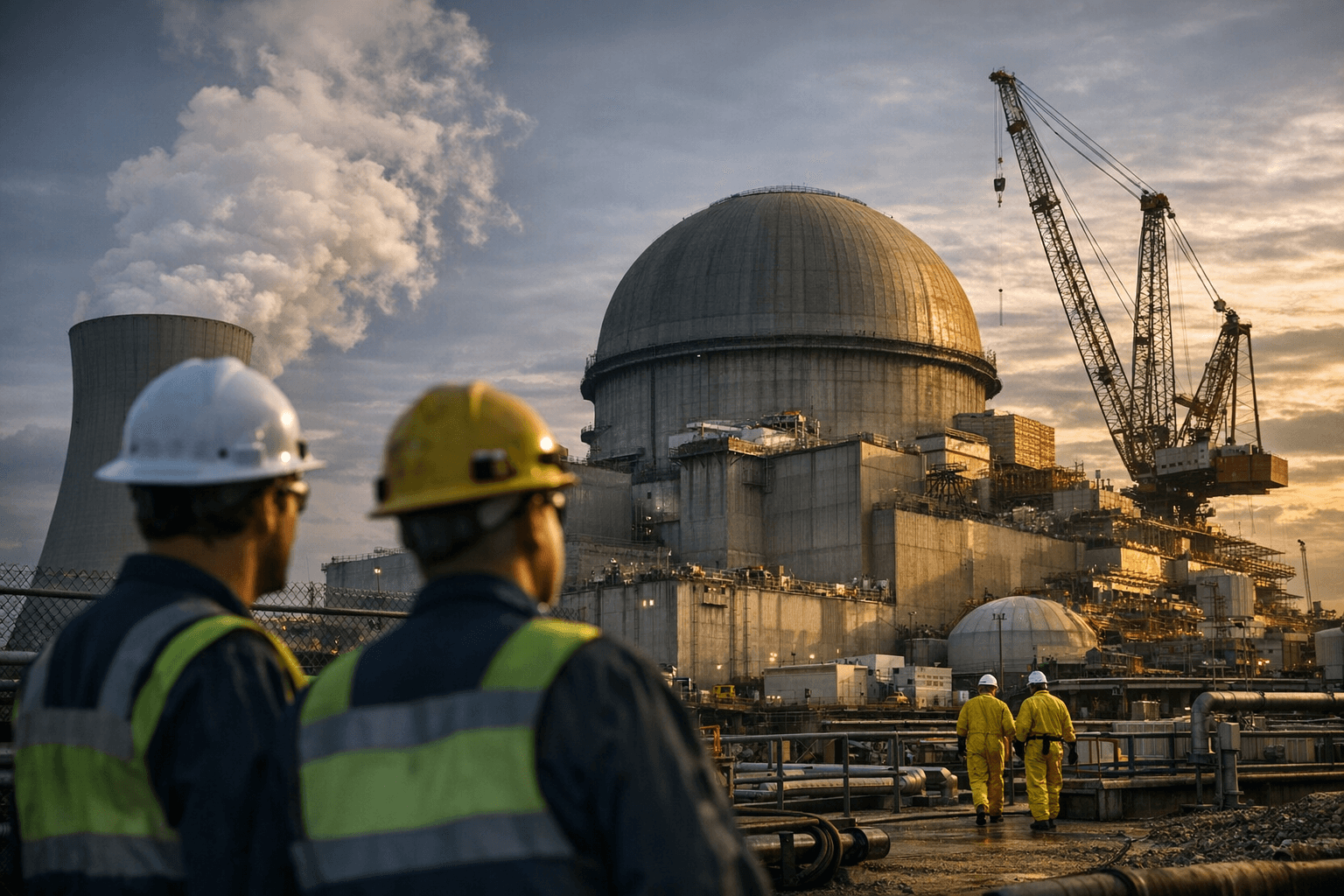
Westinghouse has submitted Revision 20 of the AP1000 Design Control Document to the NRC, a filing that converts the punishing Vogtle construction experience into a replicable standard baseline for every AP1000 unit built in the United States going forward.
Filed on April 6, the submission designates Vogtle Unit 4 as the "standard as-built reference plant" for all future U.S. AP1000 deployments. The NRC confirmed that if accepted and docketed, the revision would establish "a validated baseline" drawn from Vogtle Units 3 and 4, which entered commercial service in Georgia in 2023 and 2024. Westinghouse has asked the agency to approve the revision within the 2026 calendar year.
The pain points baked into Revision 20 track closely with what made Vogtle expensive. Construction sequencing, modular assembly, supplier qualification, and on-site rework were the headline drivers behind a project that ballooned from a $14 billion estimate to more than $30 billion. By anchoring the updated DCD to how the plant was actually built and operated, Westinghouse is handing future licensees a document that reflects field conditions rather than design intent that diverged from them mid-build.
Dan Sumner, Westinghouse's interim chief executive, framed the submission as a readiness declaration. "Establishing Vogtle Unit 4 as the standard as-built reference plant for all new AP1000 projects will enable Westinghouse and its partners to rapidly deliver multiple industry-leading AP1000 units simultaneously with more predictability," Sumner said.
A DCD revision matters precisely because of what it changes in the licensing pipeline downstream. A utility seeking a combined license for a new AP1000 site references the certified design in its application; the closer that certified design matches what will actually be built, the fewer amendment requests and open items accumulate during construction. That translation from document alignment to schedule savings is the core promise of the Revision 20 filing.
The NRC put the strategic upshot plainly in its own April 6 statement: the revision "could facilitate streamlined licensing for future applicants to replicate, which could lead to faster licensing approvals, lower regulatory uncertainty and costs, and increased deployment of new nuclear plants." From a project finance perspective, where schedule risk is often the most corrosive variable, a tighter certification baseline could materially improve the bankability of large reactor projects that have historically struggled to attract private capital at acceptable rates.
Westinghouse is pushing the filing as part of a measurable fleet ambition. Six AP1000 reactors are currently operating globally, with 14 more under construction and five under contract across markets including Poland, Ukraine, and Bulgaria. A PricewaterhouseCoopers analysis released in March projected that a ten-unit domestic fleet would generate $92.8 billion in GDP and support 44,300 jobs annually over a 13-year construction phase.
The NRC process ahead will include completeness reviews, potential requests for additional information, and a formal public comment period before any certification action is final. How quickly the agency moves will determine whether Westinghouse's 2026 approval target holds and whether the AP1000 fleet argument can be pressure-tested in earnest as large reactors and small modular reactors continue to compete for the same finite pool of political will and capital.
This article was produced by Prism’s automated news system from verified source data, official records, and press releases, then run through automated quality and moderation checks before publishing. The system is built and supervised by the people who set the standards it runs under. Read our full AI policy.
Did this article answer your question?