German Fusion Startup Marvel Fusion Pursues Defense, Medical, and Industrial Laser Markets
Marvel Fusion, the Munich fusion startup backed by Siemens Energy and EQT Ventures and reportedly worth €1 billion, is pitching its laser tech to defense, medical, and industrial buyers.
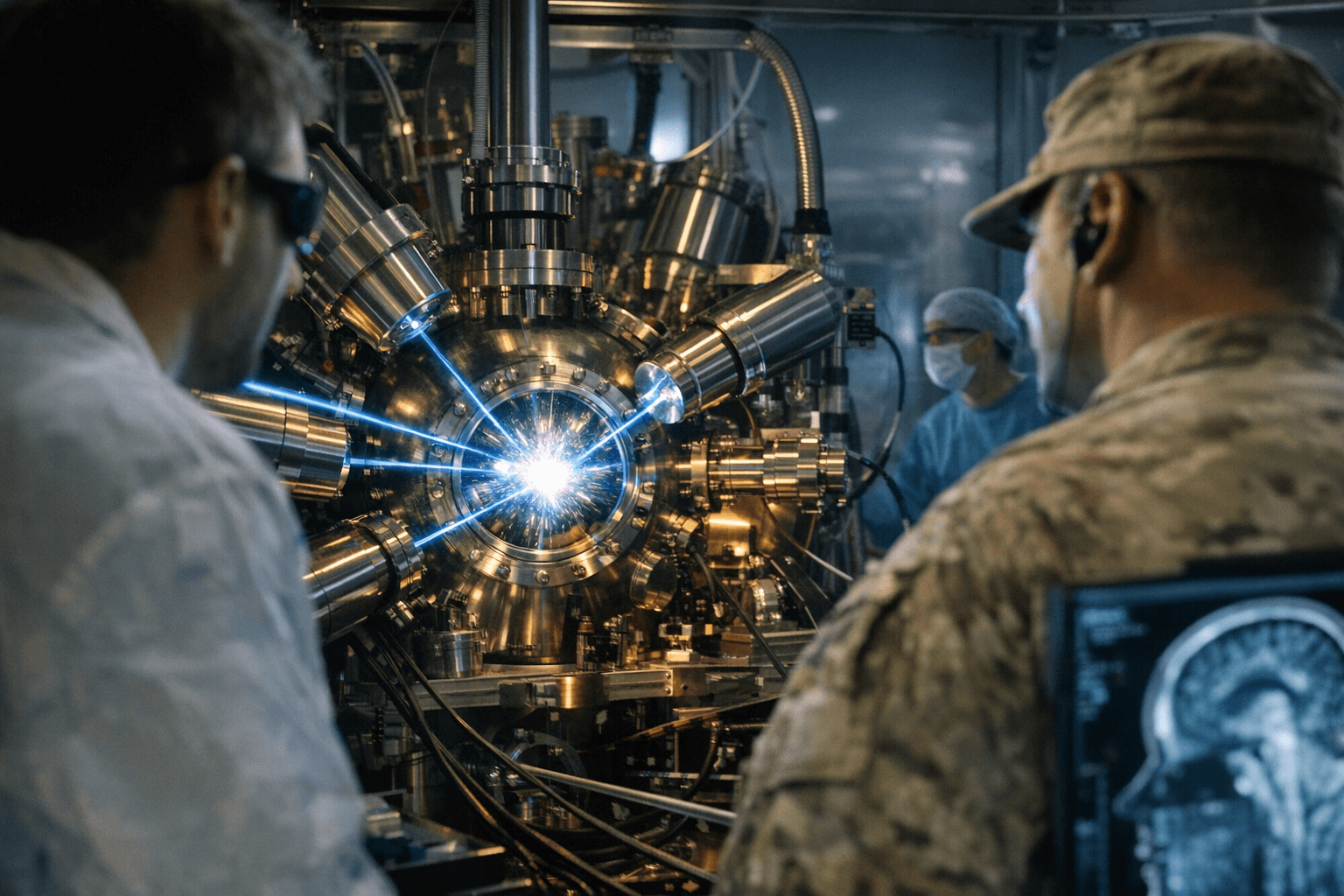
Marvel Fusion GmbH, the Munich-based laser fusion startup, has been exploring defense, medical, and industrial applications for its high-power laser technology, with executives holding meetings with investors about plans to bring those lasers to market. The pivot toward near-term revenue streams arrives as the company's core mission, building a commercially viable fusion power plant, remains more than a decade out.
The company has secured more than USD 400 million in public and private funding from European venture capital firms, strategic industrial partners, family offices, and public investors. Investors in recent rounds included EQT Ventures, Siemens Energy, and the European Innovation Council. The company is reportedly valued at around €1 billion, making the question of how and when it generates revenue a live one for its backers.
The laser technology at the center of these commercial discussions is the same machinery Marvel has been building to solve fusion. Marvel's approach is based around femtosecond pulses fired at a nanostructured fuel to enhance the fusion of protons and boron-11 isotopes. Developing those systems requires pushing laser efficiency well beyond anything currently operating at scale. The company's flagship U.S. program is the $150 million Advanced Technology Lasers for Applications and Science facility, currently under construction in Fort Collins, Colorado, through a partnership with Colorado State University. Beyond fusion, the ATLAS facility is also designed to support work in medicine, where lasers could deposit energy in localized regions for tumor treatment, as well as microchip lithography and detailed X-ray imaging of rapidly moving objects such as airplane engine turbines in full motion.
With the underlying physics validated, Marvel is focusing on the ignition process as the key to commercial viability, investigating alternative fuel cycles, cost-effective energy extraction technologies, and potentially eliminating the need for tritium in the fuel cycle. CFO Dr. Nicolas Burkardt has been blunt about the company's ambitions: "We are not the next scientific institution that is trying to innovate around small things. We are proposing critical innovations to move this out of a science-scale experiment toward a commercially competitive power plant configuration."
In March 2025, Marvel extended its Series B funding round by €50 million, bringing the total round to €113 million. On the European funding front, the company also advanced in the EIC STEP Scale Up Program, which carries potential investment of up to €30 million, and published a November 2025 press release announcing progress in the FusioTile Project, a government-funded German consortium focused on laser optics innovation.
The company is also weighing a relocation to the United States to improve its access to capital, though those plans are not final and Marvel may decide to stay in Germany. The prospect of a headquarters move underscores the broader pressure facing European deep-tech firms competing against the concentrated capital pools available in the U.S. market. The ATLAS facility represents the largest collaboration of its kind between a private fusion company and a U.S. university, and whatever Marvel's corporate address turns out to be, its most consequential hardware is being built in Fort Collins.
As of early 2026, Marvel Fusion employed 104 people across its Munich and Colorado operations. Construction on the ATLAS facility is expected to be completed in mid-2026, at which point the company will have one of the most powerful laser installations in the world available for experiments, starting well before any fusion plant ever fires up.
Know something we missed? Have a correction or additional information?
Submit a Tip

