Germany's Proxima Fusion Aims to Deploy Stellarator Reactor by 2031
Backed by €200M and a four-party deal with RWE, Bavaria and Max Planck IPP, Munich's Proxima Fusion is racing to demonstrate stellarator net energy gain by 2031, a first for the field.
_46272.jpg&w=1920&q=75)
Proxima Fusion GmbH, German energy group RWE, the Free State of Bavaria and Munich's Max Planck Institute for Plasma Physics formalized a four-party partnership in late February 2026, pledging to site, permit and build Europe's first commercial stellarator fusion plant on the grounds of a former nuclear power station, backed by €200 million in raised capital and a 2031 schedule for a demonstration machine that would do something no stellarator has ever managed: produce more fusion energy than it consumes.
That 2031 target is not a commercial power station. The company aims to begin operations at a machine it calls Alpha, a demonstration stellarator explicitly designed to cross Q>1, the threshold where fusion energy output exceeds heating input. Alpha is distinct from Stellaris, Proxima's commercial plant concept published as a peer-reviewed paper in February 2025 and targeted for the 2030s. That distinction matters in a field where milestone announcements have a long history of compressing several engineering stages into a single headline date.
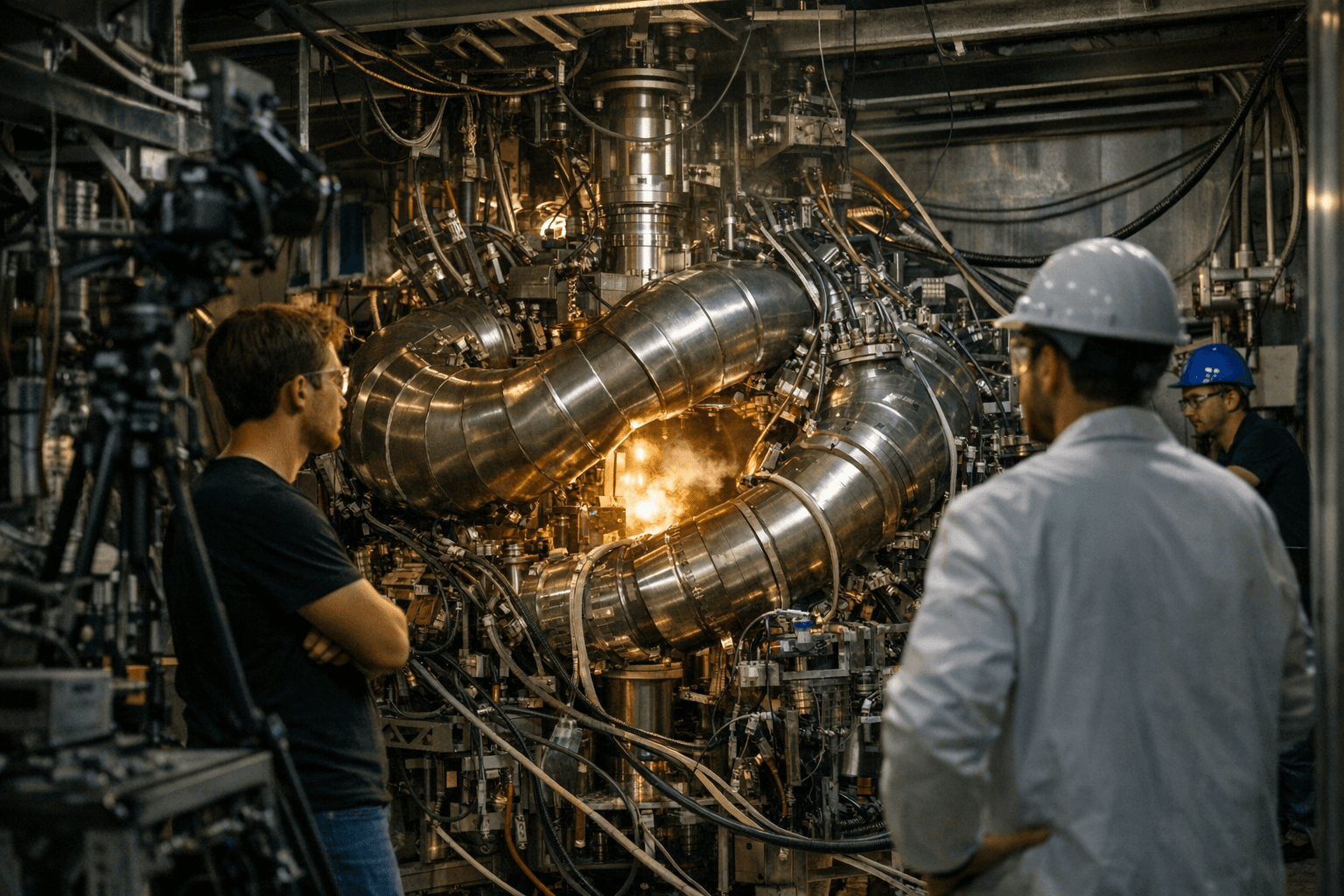
Getting to Alpha requires clearing a hardware gatepost first. Proxima has committed to completing its Stellarator Model Coil (SMC) by 2027, a prototype magnet assembly designed to prove that high-temperature superconducting (HTS) technology works in the twisted geometry that quasi-isodynamic stellarators demand. The SMC is a supply-chain and manufacturing proof point, not a plasma experiment. Proxima confirmed in September 2025 that it had already placed orders for superconducting coils, HTS tape, manufacturing lines and prototype vacuum vessel sections, moving the program from design into active procurement. A 2026 to 2028 component R&D phase covering magnets, cooling and materials feeds directly into a 2029 construction start for Alpha itself.
Proxima's cumulative funding now totals €200 million, roughly $230 million. The company raised a €130 million Series A in June 2025, then closed a €15 million extension in September 2025 from Italy's state-backed CDP Venture Capital, the European Innovation Council Fund and Brevan Howard Macro Venture Fund. By then Proxima had grown to more than 100 employees across Munich, the Paul Scherrer Institute near Zurich and the Culham fusion campus in the United Kingdom.
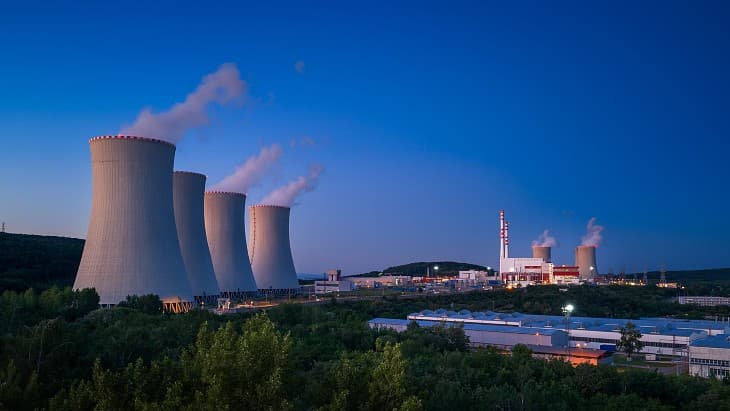
The February 2026 memorandum of understanding, announced at Munich's FusionXInvest:Global investor conference, assigns RWE and Bavarian state authorities responsibility for site selection, permitting and regulatory engagement. A former nuclear power station is the stated candidate site category; no specific facility has been named publicly. Proxima co-founder and CEO Francesco Sciortino said: "This MoU is a milestone that visibly positions the European fusion industry on the global stage. It marks the starting point of an industrial ecosystem that consolidates existing and new know-how in Europe and anchors value creation here. This marks the beginning of a long-term industrial growth trajectory over the coming decades, creating new export opportunities for Germany and Europe."
Proxima's design draws directly on the Wendelstein 7-X stellarator at Max Planck IPP, which in May 2025 set a world record in the fusion triple product, sustaining a key plasma performance value for 43 seconds. W7-X is the world's most advanced stellarator, but it was never built to achieve net energy. Alpha would be the first stellarator to attempt Q>1 as its primary engineering objective. Stellarators are notoriously harder to build than tokamaks: their magnetic fields must be shaped entirely by twisted external coils through complex three-dimensional geometries, without the internal plasma current that tokamaks rely on. Divertor design, cryogenic cooling and long-term material resilience under neutron bombardment remain open challenges on any stellarator program.
The SMC completion in 2027 is the schedule's clearest early indicator. If that magnet prototype confirms HTS technology performs as modeled in full stellarator geometry, Alpha proceeds to construction on time. If it slips, the 2031 operations date moves with it.
This article was produced by Prism’s automated news system from verified source data, official records, and press releases, then run through automated quality and moderation checks before publishing. The system is built and supervised by the people who set the standards it runs under. Read our full AI policy.
Did this article answer your question?