Holtec Completes Primary System Passivation at Palisades, Advancing Restart
Steam rose over Palisades for the first time in nearly four years as Holtec completed passivation, advancing the first U.S. nuclear restart from decommissioning in history.
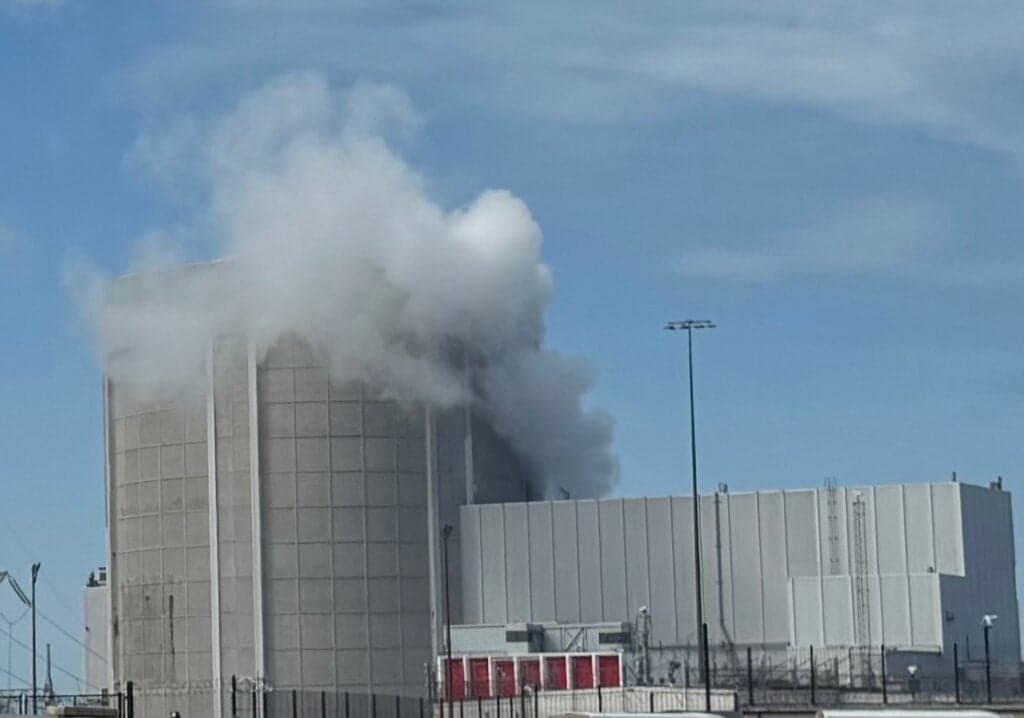
Holtec International, backed by a conditional $400 million Department of Energy grant and Nuclear Regulatory Commission acceptance of part of its Pioneer SMR-300 construction permit, completed primary system passivation at Palisades Nuclear Power Plant in Covert Township, Michigan on March 30, advancing what would be the first nuclear restart from decommissioning in U.S. history. The completion also marks a convergence point for a broader program pairing the near-term restart with two-unit Pioneer 1 and 2 SMR-300 construction led alongside Hyundai E&C and Mitsubishi Electric.
Passivation is the point in the restart sequence where the plant's primary system is brought back to normal operating temperature and pressure for the first time since shutdown, allowing protective oxide films to re-establish on internal metallic surfaces and restoring water chemistry control. Those oxide layers are the front-line defense against corrosion on components that must operate reliably for decades, and stabilizing the chemistry now reduces dose rates in sensitive areas while lowering risk in every subsequent phase of testing and operation. Holtec described the associated cleaning work as a "first-ever" comprehensive effort specifically targeting those dose-rate reductions.
The visual evidence was hard to miss: steam was visible rising from the plant during the testing phase, marking the first time in nearly four years the system had operated under those conditions. Palisades shut down in May 2022 under previous owner Entergy after more than 50 years of operation since its 1971 opening.
Reaching passivation required completing more than 300 inspections of piping and welds, steam-generator repairs, weld restorations, and reinstallation of the main turbine generator. The system will now be cooled and crews will proceed to the next round of testing and preparations, including upgrades to the fuel handling system, switchyard restoration work, completion of required surveillances, and final closeout of major maintenance evolutions before fuel loading can begin.
That sequenced list is the progress tracker to watch. Fuel loading is among the last steps before restart and cannot proceed without NRC and state regulatory signoffs and operational readiness demonstrations. The NRC accepted part of Holtec's Construction Permit Application for the SMR deployment earlier in 2026, but the full regulatory calendar for the restart itself remains to be cleared. The $400 million DOE matching grant also remains conditional, subject to execution of a funding agreement and other conditions.
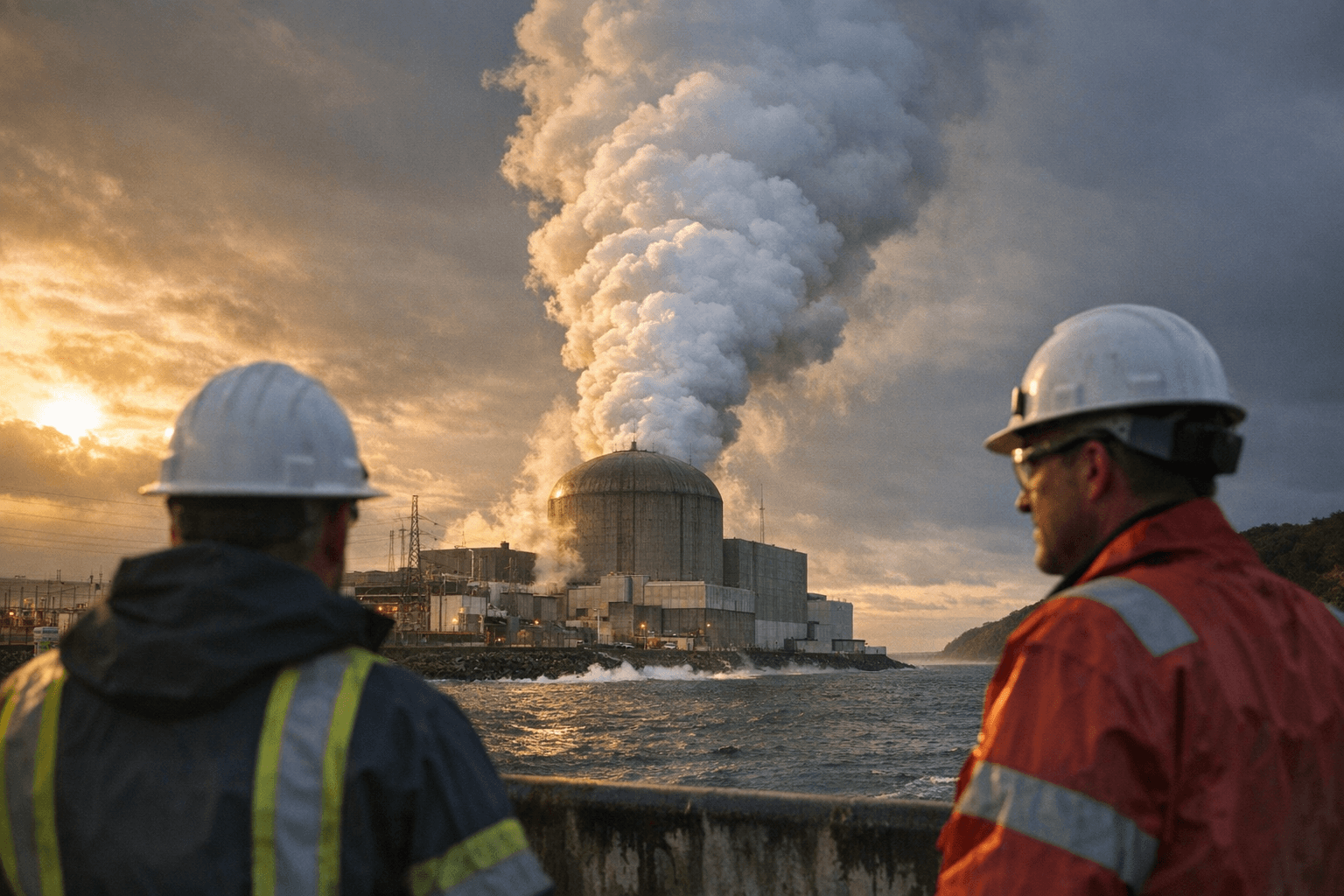
"The completion of primary system passivation reflects the diligence and technical rigor our team is bringing to position the plant for safe, reliable operation for decades," said Holtec International President Kelly Trice. "Ensuring long-term safety and reliability remains the central focus of our restart mission, and we continue to execute this work with the care and precision it warrants."
Beyond the existing reactor, Holtec is advancing plans for Pioneer 1 and 2, the two-unit SMR-300 project slated for the Palisades site in collaboration with Hyundai E&C and Mitsubishi Electric. Those two units are projected to add 680 megawatts of total electric output, complementing the more than 800 megawatts of carbon-free baseload power expected from the restarted Palisades plant.
Holtec is targeting a 2026 restart. If that timeline holds, Palisades would become the first nuclear plant in U.S. history brought back into operation after shutting down for decommissioning. The milestones that will confirm whether the schedule is holding: fuel loading authorization, switchyard and surveillance closeouts, and execution of the DOE funding agreement. Passivation clears the critical path; what happens in the cooling and testing phase that follows will determine whether 2026 remains realistic.
This article was produced by Prism’s automated news system from verified source data, official records, and press releases, then run through automated quality and moderation checks before publishing. The system is built and supervised by the people who set the standards it runs under. Read our full AI policy.
Did this article answer your question?


