IAEA Confirms Strike Hit Structure 350 Metres From Iran's Bushehr Nuclear Plant
A projectile struck and destroyed a structure just 350 metres from Iran's Bushehr reactor on March 17, with the IAEA warning it risks crossing the "reddest line" of nuclear safety.
_89414.jpg&w=1920&q=75)
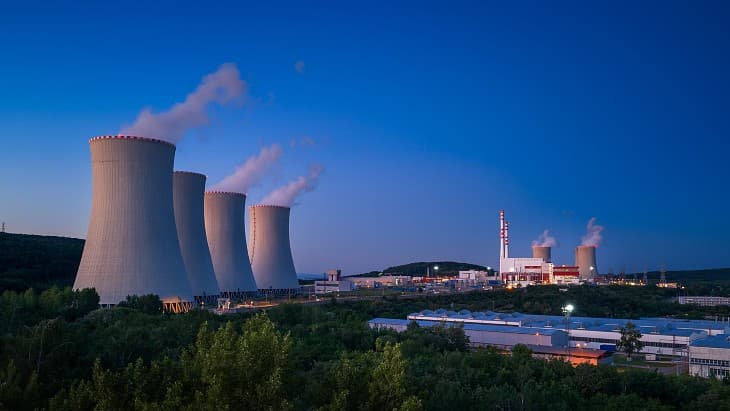
On March 17, 2026, Iran's Nuclear Regulatory Authority was informed by the Bushehr Nuclear Power Plant that at approximately 19:00 Iran Standard Time, a projectile struck the premises of the power plant. The IAEA confirmed that a structure 350 metres from the Bushehr NPP reactor was hit and destroyed. No damage to the plant or injuries to staff were reported.
Rosatom Director General Alexei Likhachev said the strike happened at 15:11 GMT on Tuesday, and hit the area near the facility's meteorological service "in close proximity to an operating power unit." Likhachev confirmed radiation levels at the site remained normal, and noted it was the first strike on the premises of the nuclear power plant since the war between Iran and the United States and Israel began late last month.
IAEA Director General Rafael Mariano Grossi did not mince words. "An accident on an operating nuclear power plant would be something very, very serious," Grossi said. "This is the reddest line of all that you have in nuclear safety." In a formal statement, Grossi added: "Although there was no damage to the reactor itself nor injuries to staff, any attack at or near nuclear power plants violates the seven indispensable pillars related to ensuring nuclear safety and security during an armed conflict and should never take place."
Grossi said the agency has not conducted an on-site inspection, noting that "independent" verification would require being physically present, but said available imagery suggests the damage is not significant.
Independent satellite analysis sharpened the picture considerably. The Institute for Science and International Security acquired high-resolution Airbus imagery taken on March 18, 2026, confirming a projectile impact crater 350 meters from the power reactor. The IAEA provided no details about the "structure" that was hit and destroyed, but satellite imagery taken a week before the strike shows an unidentified object in an open field measuring about 5 meters in length. No other damage can be seen anywhere else at the complex, and the power reactor remains untouched.
David Albright, a former UN nuclear inspector and founder of the Institute for Science and International Security, said the projectile likely came from the north rather than the Persian Gulf, based on high-resolution images taken on March 18 showing a debris pattern suggesting an incoming trajectory from the north. The IAEA's use of the term "projectile" would generally imply that it was not a drone attack. Albright said the direction "adds Iran to the suspect list, along with Israel and the United States, although an Iranian projectile would certainly have been inadvertent." No state has claimed responsibility.
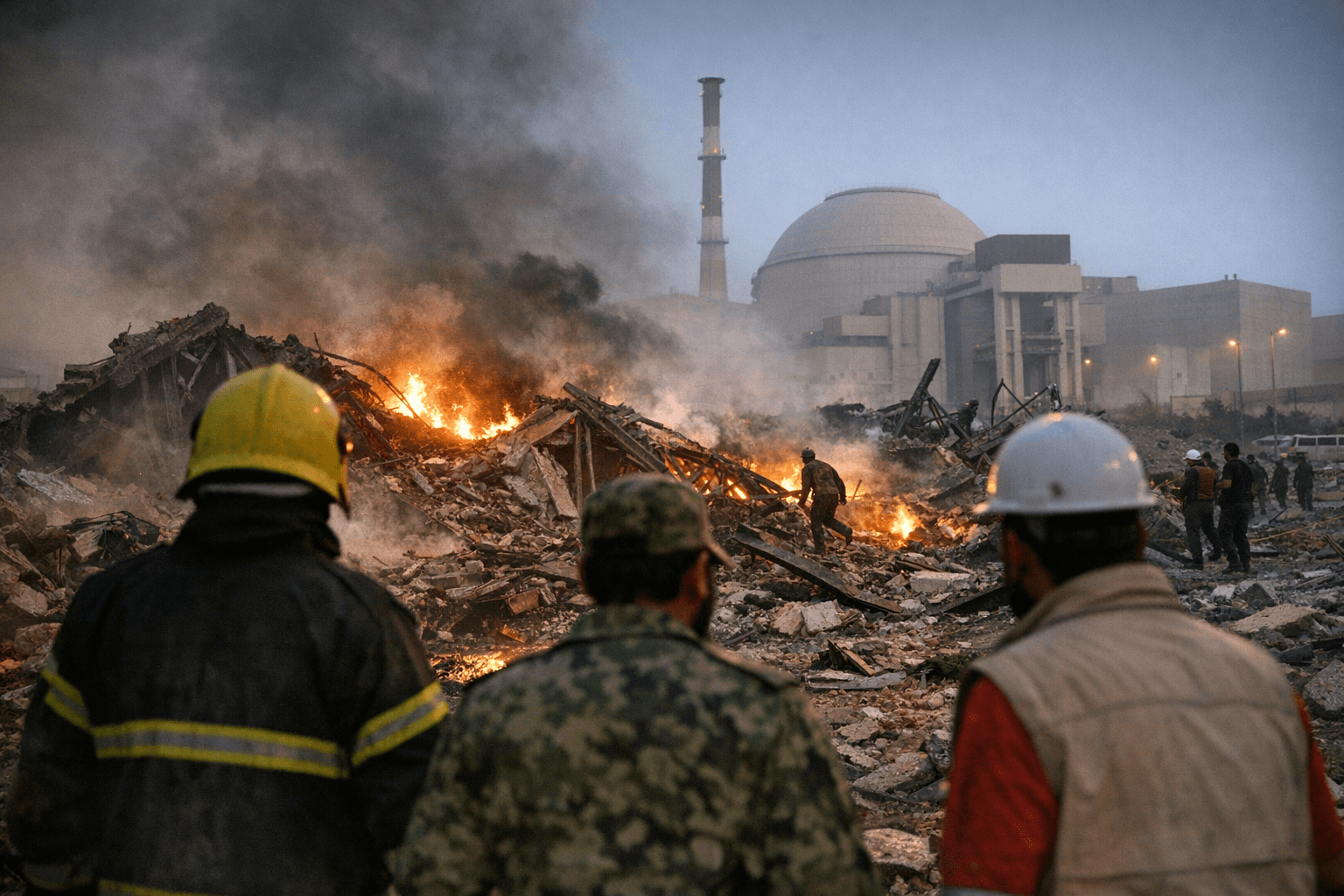
There are no details from the IAEA about what the projectile was. The plant has one operating unit and two further Russian-designed units under construction. Likhachev warned that the reactor operates at full capacity, containing 72 tons of fuel and an additional 210 tons of spent fuel, calling any strike on such a facility a potential "regional-scale disaster."
Russian Foreign Ministry spokesperson Maria Zakharova called the strike an "irresponsible and utterly unacceptable missile strike on the inner perimeter" of the plant. Approximately 480 Rosatom employees remain at the site after two rounds of evacuations, with preparations now underway for a third.
The Institute for Science and International Security joined Grossi in condemning any attacks in the vicinity of the reactor or of any electrical lines coming into the plant needed to run reactor emergency systems, and urged that Israel and the United States ensure communication channels with Russia remain open and that all operational personnel are fully aware of the risks.
The incident has intensified concerns about the safety of a nuclear installation that sits on the shores of the Persian Gulf, where a radiation leak could pose an existential threat to neighbouring Gulf Arab states that depend on desalination plants for their water supply. Tuesday's strike was not the first time military operations have crept close to Bushehr. Since the U.S.-Israeli campaign against Iran began in late February 2026, multiple strikes have been reported in the Bushehr region, including attacks on nearby military targets and Iran's major South Pars gas processing infrastructure in Asaluyeh, within the same province. Three hundred and fifty metres, in the context of an active reactor holding 72 tons of fuel, is not a near miss in the abstract. It is one degree of aim away from a radiological event with no precedent in the history of nuclear power.
This article was produced by Prism’s automated news system from verified source data, official records, and press releases, then run through automated quality and moderation checks before publishing. The system is built and supervised by the people who set the standards it runs under. Read our full AI policy.
Did this article answer your question?