ITER Inspectors Give Vacuum Vessel Sector 9 Thorough Review During Assembly
Sector #9 of ITER's nine-piece tokamak vessel is getting the full once-over as three sectors are already installed and six more are targeted for 2026.
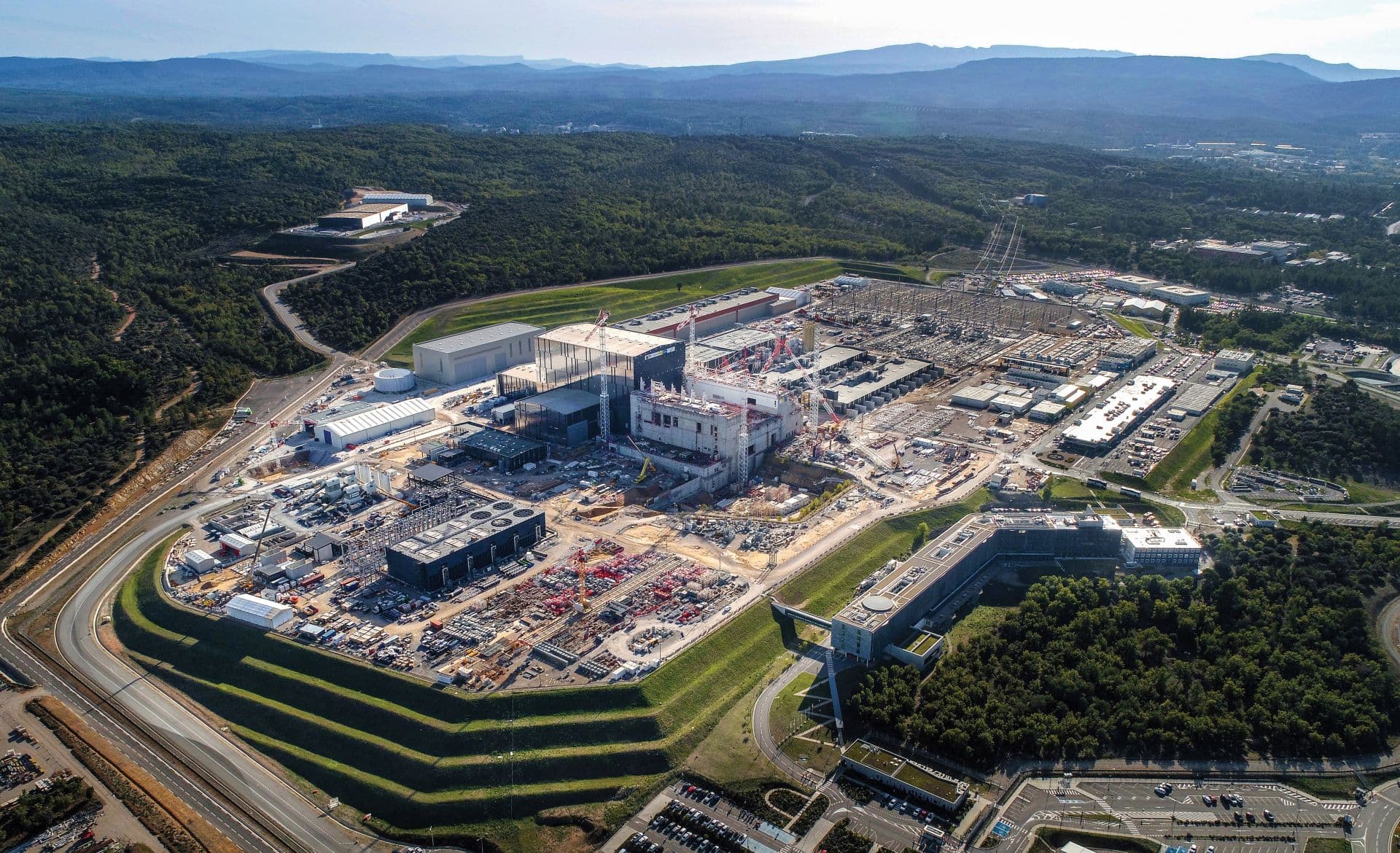
Vacuum vessel sector #9 is getting the full once-over at ITER's assembly site in southern France, according to a Newsline item published on 9 March 2026 documenting the sector's ongoing inspection progress. The update arrived as the broader tokamak assembly picture sharpens: with sector 5 now installed beside sectors 6 and 7, ITER has closed roughly one third of its toroidal vacuum vessel, the giant metal doughnut-shaped chamber ultimately made up of nine massive sectors that will confine plasma at around 150 million degrees Celsius.
That operation is on full display for sector #6, with 13 of 27 milestones achieved, or 48 percent, on the road to lowering the first vacuum vessel sub-assembly into the Tokamak pit. An operation that will be repeated nine times in the coming years, the milestone sequence for sector #6 offers the clearest public window yet into just how granular the process becomes once a sector reaches the pit.
Sector #1(7) represents the most recently celebrated arrival. On 27 August, the ITER community marked the safe arrival of that 440-tonne sector, the second of four expected from the Korean Domestic Agency. Since then, it has undergone the same early set of activities as its predecessor, sector #6. All site acceptance tests have been passed successfully and metrology is underway to verify the as-built dimensions of the component. Before sector #1(7) can be raised to vertical, it must also be equipped with diagnostics and instrumentation, after which it will be installed on the second of two tall assembly tools, paired with a toroidal field coil pair and thermal shielding.
The precision involved at every stage is not incidental to the challenge; it is the challenge. Each new sector slots into a space only millimetres wider than the component itself, yet must align precisely over tens of metres. Every component is custom-built; no two sectors are strictly identical. That makes each lift a once-only operation, with little margin for learning from previous mistakes. When a sector arrives on site, years of design, qualification and manufacturing stand behind it.

Engineers aim to place the remaining six sectors during 2026, at a rate of one every two to three months, assuming inspections and interface work stay on schedule. The arrival of sector 5 as the third installed module was described as a quiet milestone, one that showed the assembly strategy works at full scale for teams who spent years designing, machining and rehearsing every movement.
The stakes behind that schedule are substantial. Fusion fuel sources, hydrogen isotopes derived from water and lithium, are abundant at a planetary scale. A fusion plant produces no CO₂ emissions during operation and avoids the risk of runaway chain reactions associated with fission reactors. Shutdowns happen fast once the fuel and heating stop. When all nine sectors finally close around the invisible path where plasma will circulate, the ring will represent decades of engineering compromise and international coordination, sector by painstaking sector.
The 9 March Newsline also included items titled "Women of ITER share their professional journeys" and "A finger on the installation's pulse," alongside the latest ITER publication, "A Small Sun on Earth (Vol 8): The New ITER Baseline and JT-60's Contributions." The quarterly ITER Magazine, published in French and aimed at a general audience, remains available by subscription, as does the weekly Newsline feed.
This article was produced by Prism’s automated news system from verified source data, official records, and press releases, then run through automated quality and moderation checks before publishing. The system is built and supervised by the people who set the standards it runs under. Read our full AI policy.
Did this article answer your question?


