NASA thruster test hits record power, advances nuclear Mars propulsion
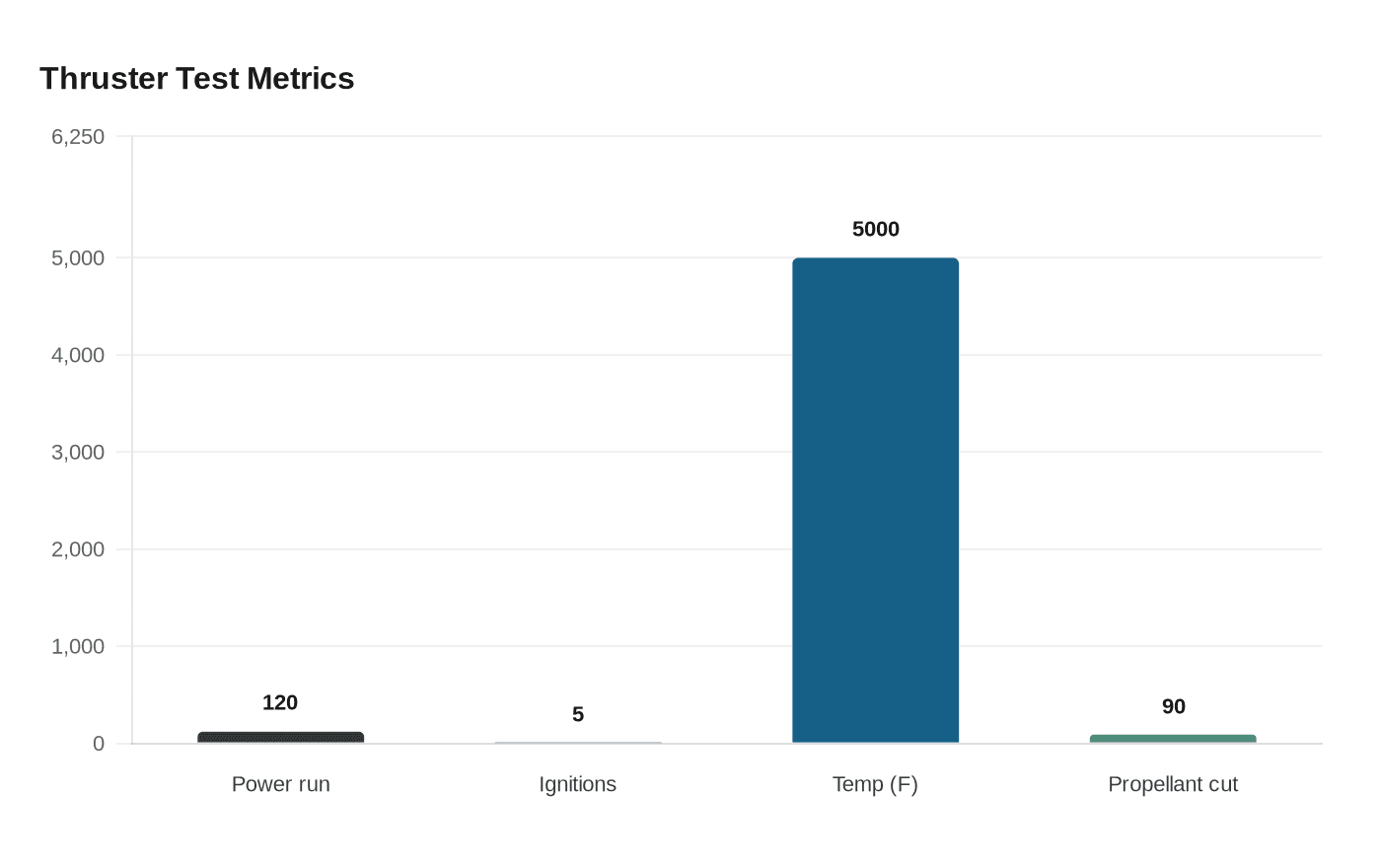
NASA pushed a lithium-fed thruster to 120 kilowatts, a U.S. record that could shrink Mars mission mass if paired with a fission reactor. The lab leap still sits far from a flight-ready system.
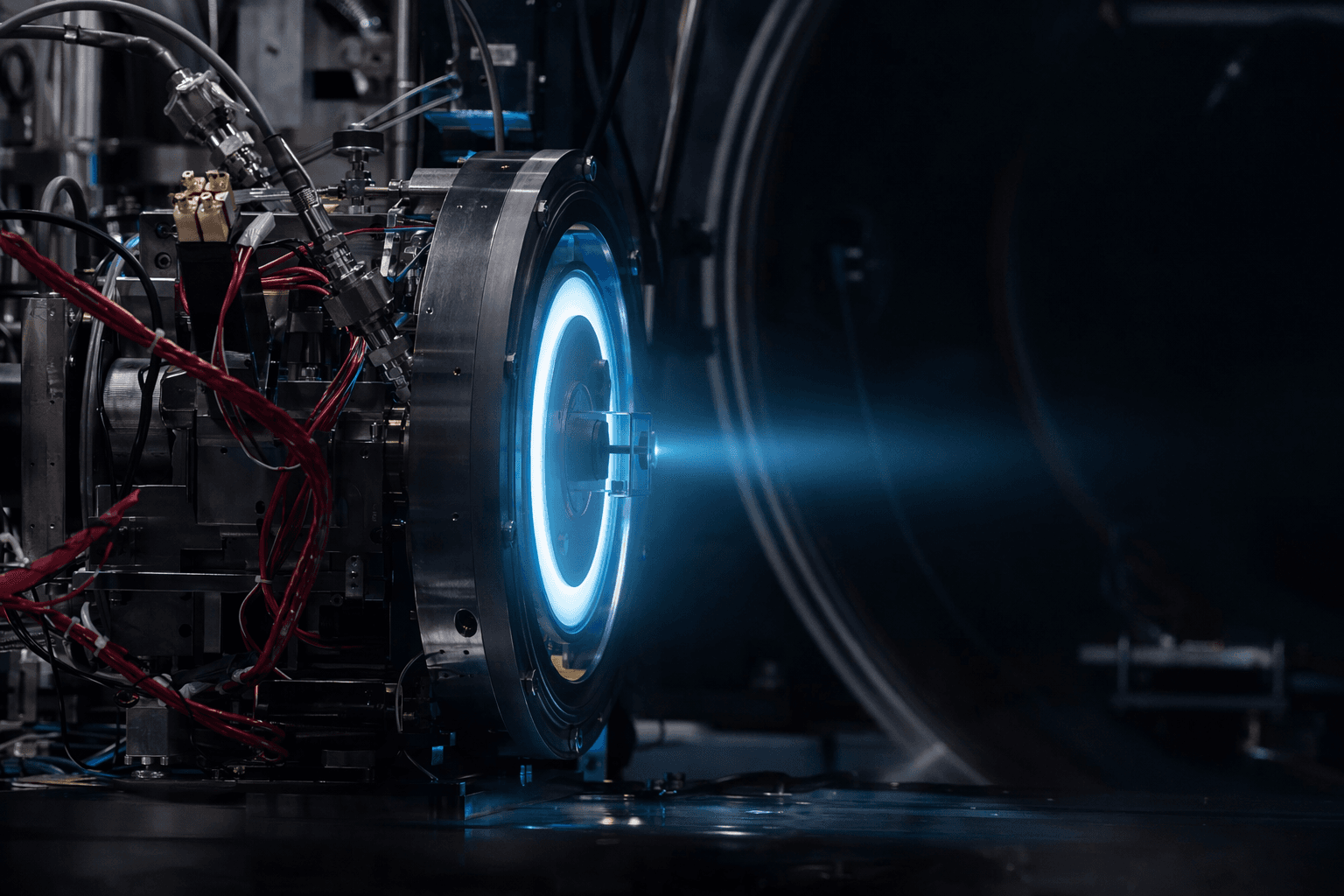
A lithium-fed thruster has just hit the highest power level ever reached in a U.S. electric propulsion test, and NASA is treating that number as more than a lab brag. The 120-kilowatt run, conducted on Feb. 24, showed how a future Mars architecture could trade propellant for capability if the engine is ultimately paired with a fission reactor.
NASA said the prototype was a lithium-fed magnetoplasmadynamic thruster tested in Jet Propulsion Laboratory’s Electric Propulsion Lab in Southern California, inside the condensable metal propellant vacuum facility. During five ignitions, the tungsten electrode at the center glowed bright white and climbed past 5,000 degrees Fahrenheit, or 2,800 degrees Celsius, as the system accelerated lithium plasma electromagnetically. NASA said the test exceeded the highest-power electric thrusters on any of its current spacecraft.
The practical consequence is what makes the result matter. NASA says electric propulsion can use up to 90% less propellant than traditional high-thrust chemical rockets. In a crewed Mars mission, that kind of efficiency could reshape launch mass, free up room for payloads, and give mission planners more flexibility on what gets carried to deep space. If the thruster’s record power is eventually combined with a compact fission reactor, the payoff could extend from faster trip designs to heavier science gear, better shielding, and more robust crew systems.
That said, this is still a laboratory milestone, not a mission-ready propulsion system. The technology has been studied since the 1960s, but NASA says it has never flown operationally. The hard part now is turning a record-setting test article into a durable flight unit that can survive the thermal, power, and integration demands of a real spacecraft.
NASA’s Space Nuclear Propulsion office is pursuing both nuclear thermal and nuclear electric propulsion as part of its Moon to Mars vision. In nuclear electric propulsion, a fission reactor generates electricity that ionizes propellant and drives it electromagnetically, a setup NASA believes could support long-duration missions beyond Earth orbit. JPL senior research scientist James Polk, a leading figure in plasma propulsion research, sits at the center of that effort.
NASA Administrator Jared Isaacman said the result shows real progress toward sending an American astronaut to the Red Planet, while the agency continues strategic investment in the technology. NASA has also advanced the reactor side in parallel, including a cold-flow test campaign of the first flight reactor engineering development unit since the 1960s at Marshall Space Flight Center in Huntsville, Alabama. Together, the reactor work and the thruster work point to the same goal: a deep-space propulsion stack that can move beyond theory and into actual Mars mission design.
This article was produced by Prism’s automated news system from verified source data, official records, and press releases, then run through automated quality and moderation checks before publishing. The system is built and supervised by the people who set the standards it runs under. Read our full AI policy.
Did this article answer your question?