Naval Research Laboratory Uses Neutron Scattering to Clarify Altermagnet Magnetism
NRL used neutron-scattering beamlines to probe an altermagnetic material, issuing a Feb. 18, 2026 release that notes experiments “to measure magnetic str” but omits material and instrument details.
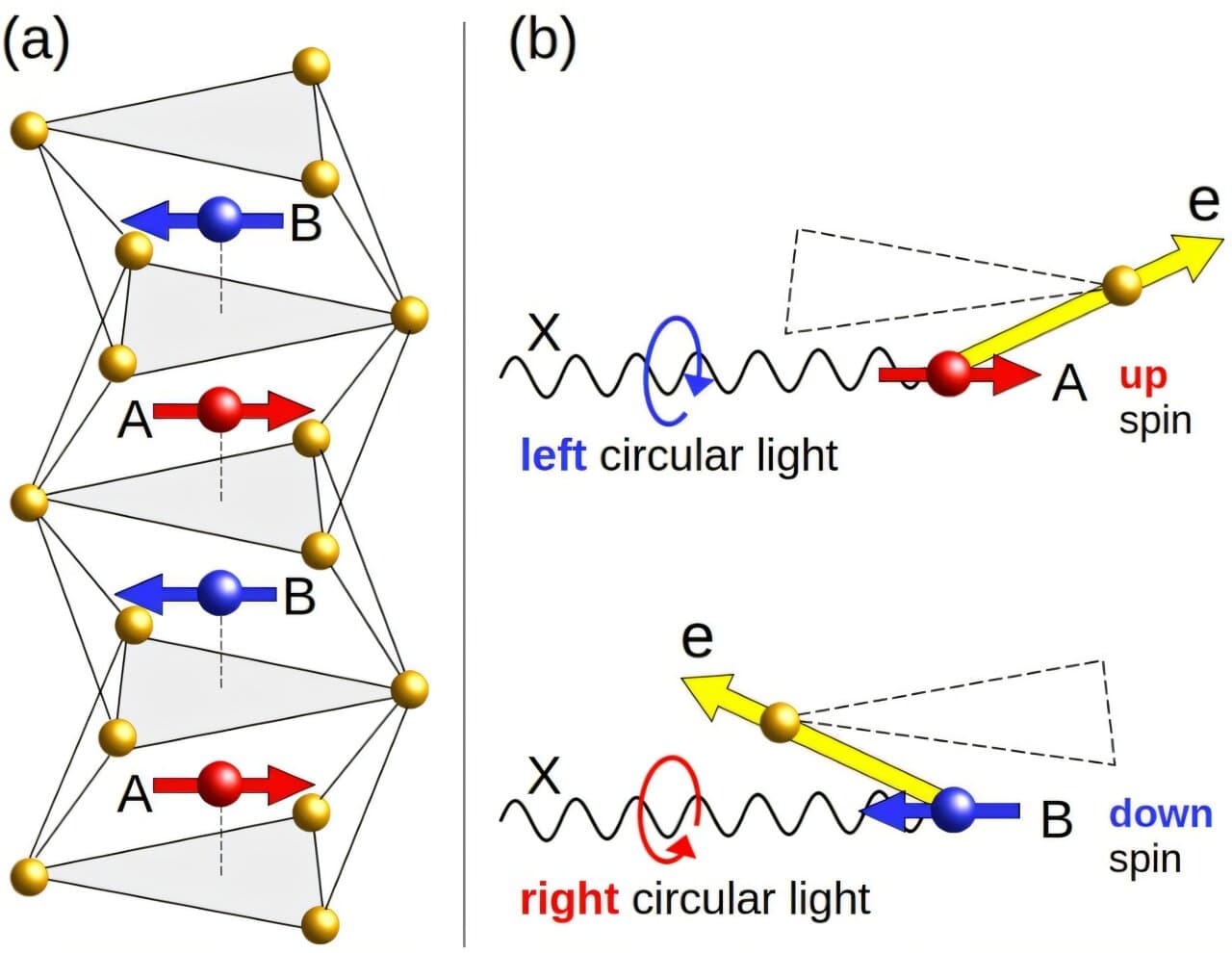
Researchers at the U.S. Naval Research Laboratory announced a neutron-scattering study of an altermagnetic material in a Feb. 18, 2026 news release that states investigators "used neutron scattering beamlines to measure magnetic str" and stops there. The release confirms NRL-led work on altermagnetism but does not identify the compound, the beamline or instrument used, or any numerical results in the supplied text.
Neutron scattering’s capabilities explain why NRL picked the technique. As NIST describes, "Magnetic neutron scattering originates from the interaction of the neutron’s spin with the unpaired electrons in the sample." That interaction gives neutrons unique access to magnetic structure and dynamics across energy ranges from about 10–8 eV to 0.25 eV and over the entire Brillouin zone, allowing "the only technique that can directly determine the complete magnetic excitation spectrum" including spin-wave dispersion and crystal-field excitations.

Oak Ridge National Laboratory experts emphasize the experimental leverage. Matt Tucker, leader of ORNL's Diffraction Group, said, "Neutrons are sensitive to magnetism," and noted that neutrons can determine both magnetic and atomic structure to reveal fundamental physics and useful material properties. ORNL materials notes add that thermal neutrons, those with energies characteristic of room-temperature water, have wavelengths of about 2 angstroms, close to interatomic distances, which makes them well suited to probing atomic-scale magnetism.
Techniques for nanostructured and interface-specific magnetism are directly relevant to altermagnets. The University of North Texas digital-library material highlights polarized-neutron methods: "Spin flip scattering is a measure of the mean square component of the sample magnetization perpendicular to the applied field," and differences between spin-up and spin-down intensities can reveal interface versus bulk behavior. That text also cautions that neutron experiments "are time consuming and often require large samples" yet can yield answers that other probes cannot.
The new NRL release sits inside a long naval connection to neutron instrumentation. NIST historical material notes that "The first four instruments for neutron diffraction structure studies were jointly funded by NBS, the Naval Ordnance Laboratory in White Oak Maryland, and the Naval Research Laboratory in Washington D.C.," tying the NRL announcement to decades of naval investment in neutron methods for materials research.
What remains missing from the Feb. 18 statement are key experimental specifics. The NRL release excerpt does not name the altermagnetic material, give beamline or instrument identifiers, specify whether measurements were elastic or inelastic, or report numerical observables such as excitation energies, moments, or ordering temperatures. Those details will determine whether the NRL measurements resolve altermagnetic ordering, spin-wave spectra, interface modes, or other signatures that neutron scattering can uniquely access.
This article was produced by Prism’s automated news system from verified source data, official records, and press releases, then run through automated quality and moderation checks before publishing. The system is built and supervised by the people who set the standards it runs under. Read our full AI policy.
Did this article answer your question?