New Review Preprint Surveys Nuclear Physics Behind X-ray Bursts
A five-author preprint posted to arXiv last week maps the current state of nuclear physics knowledge behind X-ray bursts.
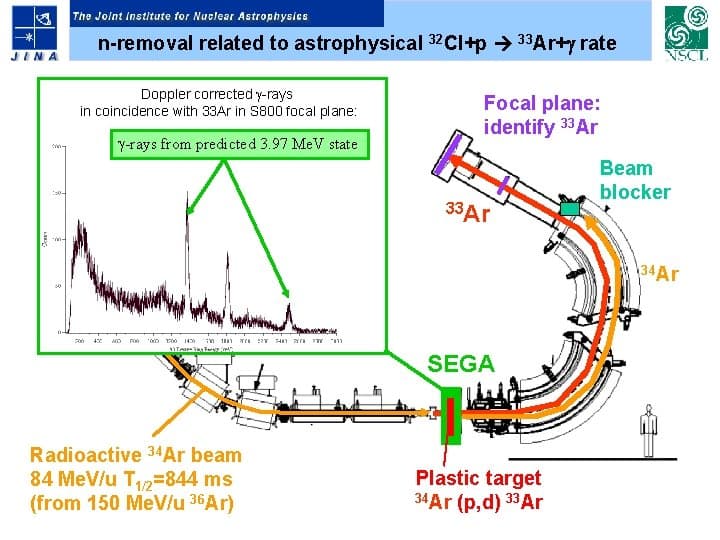
A new review preprint pulling together the nuclear physics behind X-ray bursts landed on arXiv on March 5, authored by Yi Xu, Hendrik Schatz, Rita Lau, Zach Meisel, and Peter Mohr. Titled "Nuclear Physics of X-ray Bursts," the paper offers a state-of-the-field survey of one of astrophysics' most reaction-rate-intensive environments, and it's already drawing attention from the nuclear astrophysics community.
X-ray bursts are among the most demanding testbeds for nuclear reaction networks. Driven by thermonuclear runaways on the surfaces of accreting neutron stars, they torch through hundreds of isotopes along the proton-rich side of the nuclear chart via the rapid proton-capture process, the rp-process. Pinning down the relevant reaction rates, mass excesses, and decay properties has kept experimental and theoretical nuclear physicists busy for decades, and a comprehensive review synthesizing where things stand is genuinely useful work.
Schatz, based at Michigan State University and long associated with the National Superconducting Cyclotron Laboratory and its successor FRIB, is one of the field's most recognized voices on rp-process nucleosynthesis. His involvement alongside co-authors Xu, Lau, Meisel, and Mohr signals the kind of cross-institutional collaboration that tends to produce thorough, citation-worthy reference material.
The preprint's appearance on arXiv makes it immediately accessible to anyone working in nuclear astrophysics, whether on the experimental side pushing new cross-section measurements at rare-isotope facilities or on the modeling side tuning one-zone and multi-zone burst codes. Review papers of this scope serve a dual purpose: they document where the community's understanding is solid and they expose the gaps where new measurements would actually move the needle on burst light curve modeling or neutron star crust composition estimates.

Because the paper is a preprint, it has not yet cleared formal peer review, so treat specific claims as preliminary until the reviewed version is published. That said, arXiv preprints from established groups in this field routinely reflect work that holds up, and the five named authors carry enough collective track record to make this worth reading now rather than waiting.
The full preprint is available on arXiv for anyone wanting to dig into the details before a journal version appears.
This article was produced by Prism’s automated news system from verified source data, official records, and press releases, then run through automated quality and moderation checks before publishing. The system is built and supervised by the people who set the standards it runs under. Read our full AI policy.
Did this article answer your question?