NRC Streamlines Reactor Oversight Process to Focus on High-Risk Safety Areas
NRC document 26-036 cuts duplicative baseline inspection hours at high-performing plants, sharpening oversight focus on engineering and emergency preparedness with SMR timelines in the balance.
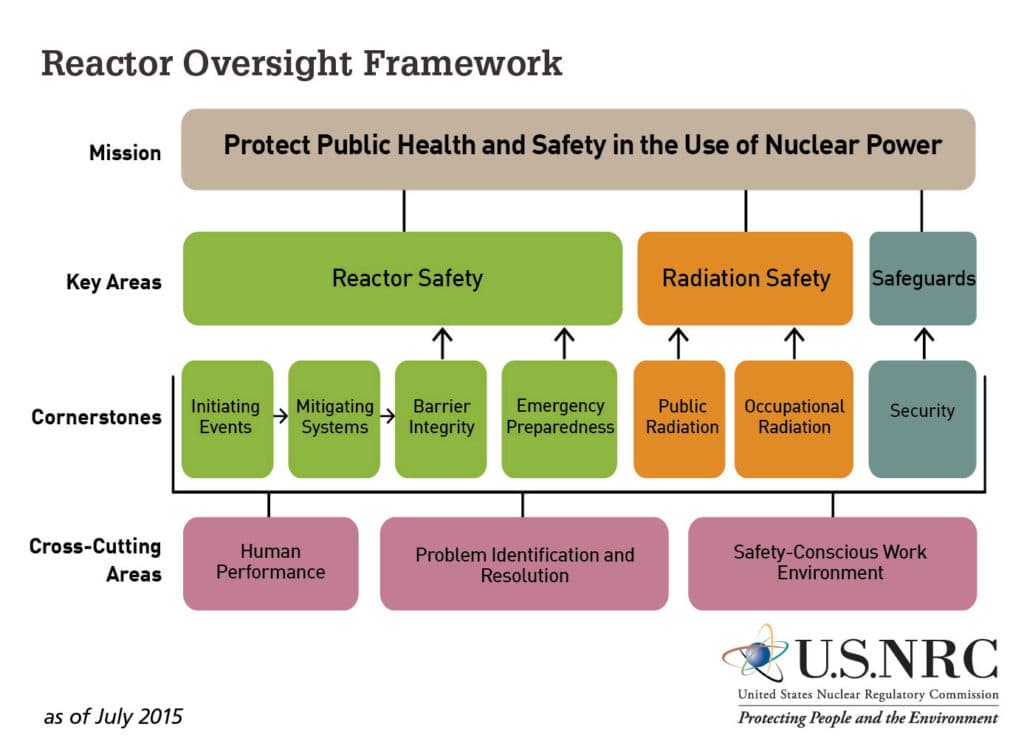
The U.S. Nuclear Regulatory Commission trimmed duplicative baseline inspection hours at consistently high-performing plants on March 26, publishing document No. 26-036 from its Rockville, Maryland headquarters as a formal overhaul of the Reactor Oversight Process, the framework that has governed how inspectors evaluate and categorize performance issues at every operating reactor in the country.
The revised ROP shifts inspection emphasis toward engineering, emergency preparedness, and radiation protection, redirecting agency resources away from routine, low-risk areas that were generating findings categorized as "very low safety significance." The update also clarifies the evaluation criteria used to determine whether a finding clears the "more-than-minor" threshold, a longstanding source of friction between NRC regional offices and licensees over what actually warrants a formal inspection finding.
NRC leadership framed the overhaul as an evolution, not a retreat, describing the revised process as one that maintains "rigorous, independent oversight" while allowing both agency staff and plant personnel to concentrate on what carries the most safety weight. The Commission pointed to SECY 26-0014 and supporting backgrounders as the analytical foundation for the changes, grounding the revision in years of accumulated performance data, sustained industry improvements, and technological advances in plant monitoring and risk assessment.
For licensees, the practical effect is lower compliance overhead in routine areas, with resources freed to flow toward maintenance quality, engineering margin, and safety analysis work. That reallocation matters in an industry where plant-level staffing decisions track closely against the regulatory burden imposed by inspection cycles. For the NRC itself, executing the revised ROP will require staff retraining, regional inspection program adjustments, and a dedicated communications effort to keep licensee and public expectations aligned with the new framework.

The changes carry weight well beyond the existing fleet. The ROP revision connects explicitly to federal objectives around accelerating advanced reactor deployment and reducing permitting friction, signaling that regulatory modernization at the NRC is now tied to the commercial timeline for small modular reactors and next-generation designs that cannot afford years of regulatory lag.
That link is precisely where public watchdogs and industry critics will focus scrutiny. Reducing the frequency and scope of baseline inspections raises a legitimate question: whether the cuts reflect genuine risk reduction grounded in plant performance data, or represent a quieter erosion of the transparency that gives the oversight process its public credibility. The NRC committed to addressing that concern directly, stating that any reclassification of findings will be accompanied by updated guidance and that early outcomes will be monitored to confirm the revised process holds up operationally. Stakeholder briefings and published implementation details are part of the rollout.
The ROP has been the structural backbone of U.S. reactor oversight since its introduction in 2000. This revision is the most operationally consequential update since; and for an industry now counting on regulatory speed to make the economics of new nuclear construction work, how the NRC executes it will matter as much as what document No. 26-036 says on paper.
This article was produced by Prism’s automated news system from verified source data, official records, and press releases, then run through automated quality and moderation checks before publishing. The system is built and supervised by the people who set the standards it runs under. Read our full AI policy.
Did this article answer your question?