Oak Ridge Emerges as Hub for Advanced Nuclear Energy Development
Oak Ridge is quietly becoming the nerve center of America's nuclear renaissance, with a constellation of companies racing to build reactors and next-gen fuels on its storied soil.
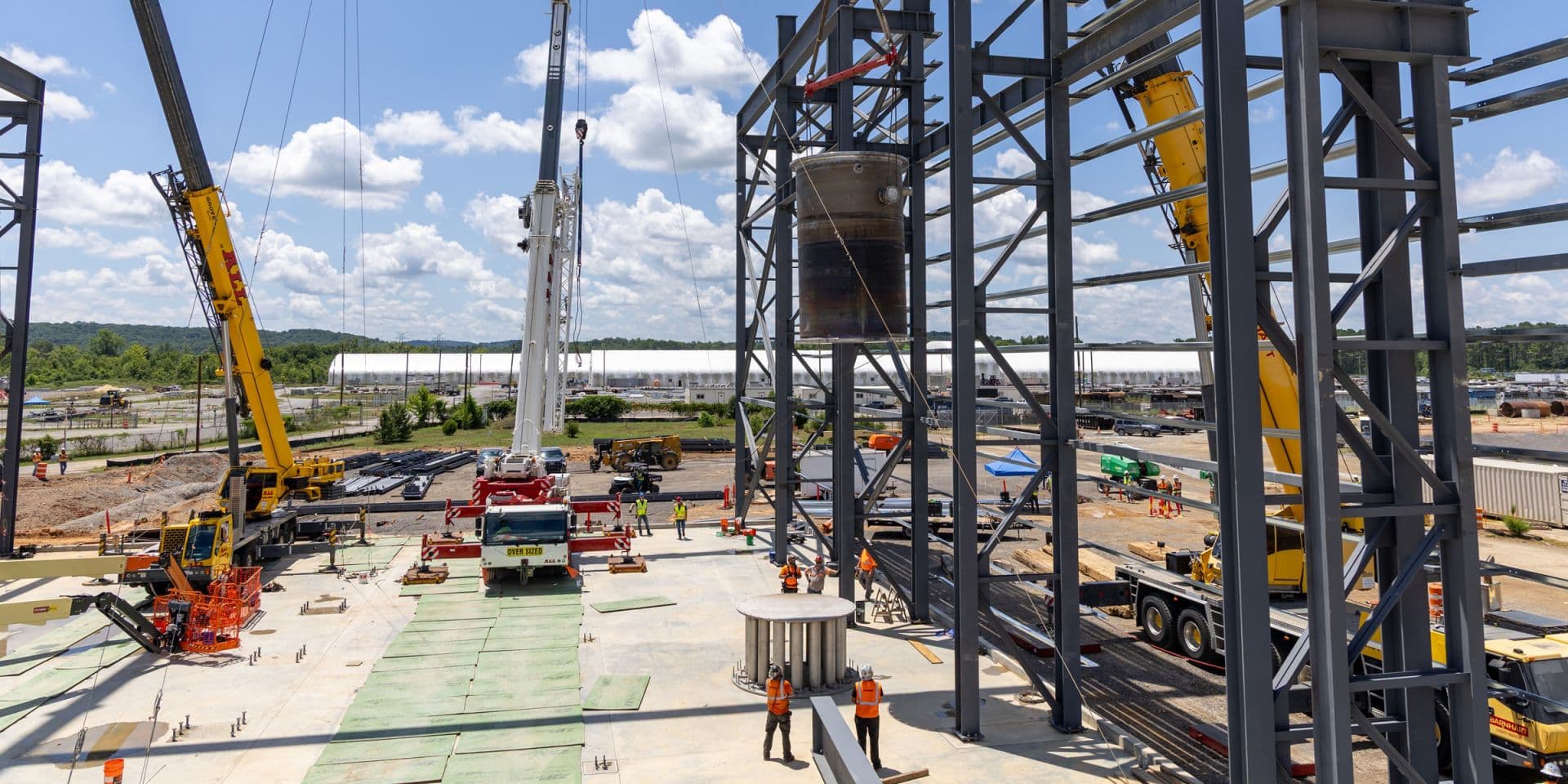
Something significant is taking shape in Oak Ridge, Tennessee, and it's unfolding fast enough that a luxury bus full of nuclear enthusiasts spent a Tuesday in October riding through construction sites and future fuel facilities to absorb it all firsthand. The New Nuclear "Dirt Tour," organized during Nuclear Science Week and sponsored by Kairos Power, which paid for the bus, gave participants an on-the-ground look at what columnist D. Ray Smith, writing in The Oak Ridger's Historically Speaking column, describes as Oak Ridge becoming the "core of America's nuclear renaissance." That framing is not hyperbole; it reflects a convergence of federal ambition, private capital, and decades of nuclear expertise that has made this Tennessee city the focal point of advanced nuclear development in the United States.
A Federal Vision and the Companies Answering It
The scale of what's being attempted here starts with a single, striking number: the United States has set a goal to quadruple the use of nuclear power by 2050. That target is driven by the anticipated surging demand for electricity from growing populations and the rapid expansion of power-hungry infrastructure, particularly facilities built to advance artificial intelligence. The Department of Energy's initiative, characterized in some circles as "Manhattan Project 2.0," is aimed at ensuring the United States maintains its global leadership in AI and its competitiveness in national security, economic prosperity, and scientific discovery through supercomputing and quantum computing. Oak Ridge, with its deep institutional history in nuclear science, is where much of that ambition is being planted in the ground.
The companies investing in Oak Ridge land are doing so with a dual purpose: creating tomorrow's nuclear reactors and manufacturing the specialized fuels those reactors require to power the data centers that will run next-generation AI systems. It is a feedback loop between energy infrastructure and computing infrastructure, and Oak Ridge sits at the intersection of both.
TVA, Kairos Power, and the Tour That Started a Conversation
Smith's March 11, 2026 feature in Historically Speaking focuses specifically on the Tennessee Valley Authority and Kairos Power, two of the most prominent actors in Oak Ridge's nuclear buildout. TVA, as the federally owned utility that has long powered the region, and Kairos Power, a company developing advanced high-temperature fluoride salt-cooled reactors, represent both the institutional continuity and the entrepreneurial energy reshaping the local landscape.
Carolyn Krause, who participated in the New Nuclear "Dirt Tour" during Nuclear Science Week, sponsored by the American Museum of Science and Energy in Oak Ridge, emerged as a key chronicler of this moment. The tour, conducted on a luxury bus paid for by Kairos Power, took place on Tuesday, Oct. 21, and drew guides, lunch speakers, and fellow passengers who were, as Smith's column describes, "well-educated on nuclear companies' plans for the future in Oak Ridge." Krause supplemented what she learned on the bus with internet searches using AI chatbots, which she describes as providing excellent information, and the result is a five-part series running in Historically Speaking that profiles each major company making moves in Oak Ridge.
ORANO USA and OKLO: The Second Layer of the Story
The second installment of Krause's series, published the week of February 16, 2026, turns its attention to ORANO USA and OKLO, two companies whose names now appear alongside TVA and Kairos Power in any honest accounting of what's happening here. ORANO USA brings international fuel cycle expertise to the table, while OKLO has drawn national attention as a developer of advanced fission power plants. Both companies are investing in Oak Ridge, and both reflect the broader pattern of private capital converging on a city that was essentially built for nuclear work.
The Fuel Recycling Facility: A Centerpiece Project
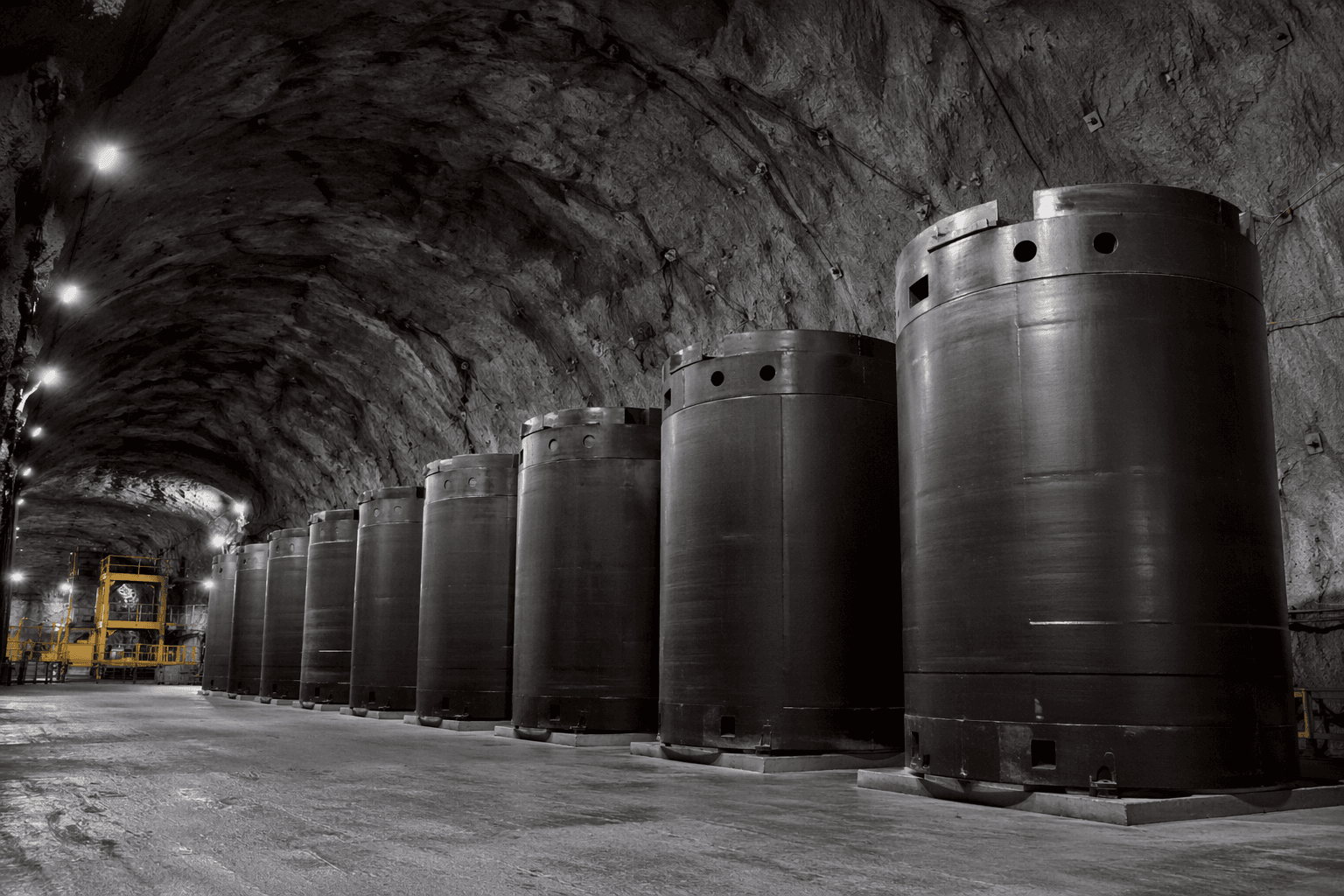
Perhaps the most consequential development covered in Krause's reporting is the advanced fuel recycling facility taking shape in Oak Ridge. The facility's stated purpose is direct and ambitious: "The Oak Ridge facility will convert unused nuclear fuel, currently in storage at the taxpayers' expense, into new nuclear fuel for what will be a growing fleet of Aurora powerhouse commercial reactors." That sentence alone reframes how the facility fits into the broader energy picture; it's not just a new plant, it's a solution to a long-standing liability, turning stranded nuclear material into a productive domestic resource.
The significance of the facility extends beyond its immediate function. As described in Krause's reporting, "the nation's first privately funded advanced fuel recycling facility in Oak Ridge is expected to help create a secure domestic supply chain of next-generation nuclear fuel for advanced nuclear power plants to ensure American energy dominance into the next century." The phrase "privately funded" is worth pausing on: this is not a federal construction project, even as it serves goals that align directly with DOE's Manhattan Project 2.0 framework. It represents the kind of public-private alignment that nuclear advocates have long argued is necessary to actually move the needle on deployment.
What's Still Coming: TRISO-X, Standard Nuclear, and Radiant Nuclear
Krause's five-part series is only partially published, and the installments still ahead promise to fill in more of the picture. The next entry will cover TRISO-X, the advanced fuel product owned by X-energy, alongside Standard Nuclear and Radiant Nuclear. TRISO-X, in particular, occupies an interesting position in the fuel chain; TRISO-coated particle fuel is specifically designed for the high-temperature reactors that companies like Kairos Power are building, making X-energy's presence in Oak Ridge not incidental but structurally important to the entire ecosystem.
Standard Nuclear and Radiant Nuclear round out a roster that, taken together, describes a remarkably dense cluster of advanced nuclear activity for a single city. Each company brings a distinct technology approach and market thesis, but they share a zip code and, increasingly, a supply chain.
Why Oak Ridge, and Why Now
The answer to why Oak Ridge has become this particular center of gravity is not mysterious to anyone who follows the nuclear world. The city was born out of the original Manhattan Project, is home to Oak Ridge National Laboratory, and carries decades of accumulated expertise in nuclear materials, reactor design, and fuel processing. What's new is the combination of federal urgency around energy security and AI infrastructure, the arrival of serious private capital, and a national goal, quadrupling nuclear capacity by 2050, that gives every project in the pipeline a clear strategic rationale.
Smith's Historically Speaking column and Krause's embedded reporting from the New Nuclear "Dirt Tour" offer something the press releases and policy documents cannot: a ground-level account of what it actually looks like when a city becomes the staging ground for a national energy transformation. The luxury bus, the well-briefed lunch speakers, the construction sites visible from the road, the companies with names that will matter enormously if the next quarter-century of American energy goes anywhere close to the way the DOE intends: it's all happening in Oak Ridge, and the story is still being written, one installment at a time.
This article was produced by Prism’s automated news system from verified source data, official records, and press releases, then run through automated quality and moderation checks before publishing. The system is built and supervised by the people who set the standards it runs under. Read our full AI policy.
Did this article answer your question?