Oak Ridge Lab Captures First Optical Measurements of Nuclear Fuel Cladding Failure
Oak Ridge researchers captured live optical footage of nuclear fuel cladding failing during a simulated coolant-loss accident, shooting four frames per second from outside a radiation-shielded hot cell.
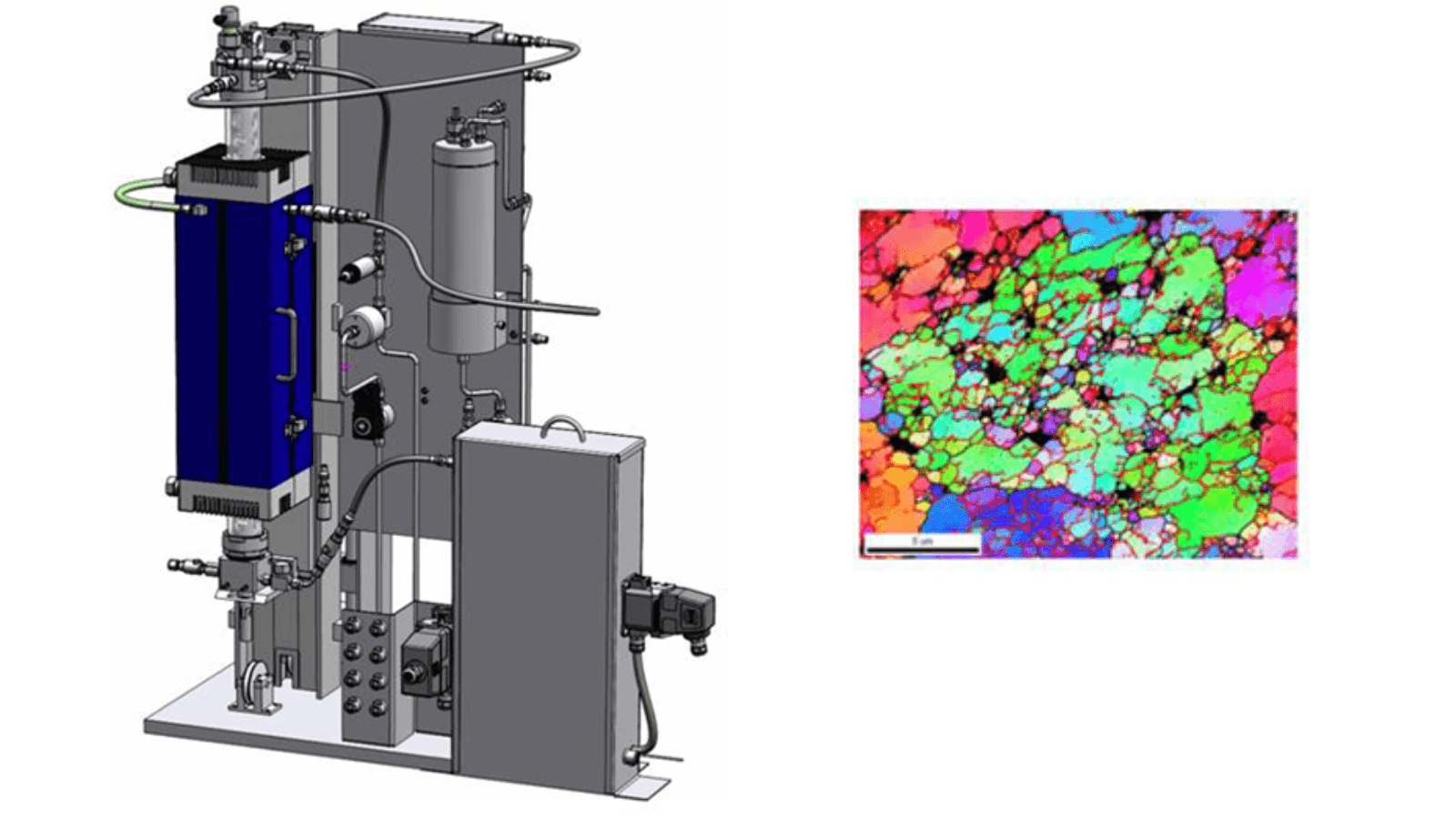
Getting a clear look inside a radiation-shielded hot cell while its contents are failing under simulated accident conditions is exactly the kind of problem that tends to go unsolved for decades. Oak Ridge National Laboratory announced on March 11 that its researchers had done it anyway, capturing first-of-a-kind optical measurements during accident testing of commercially irradiated nuclear fuel cladding.
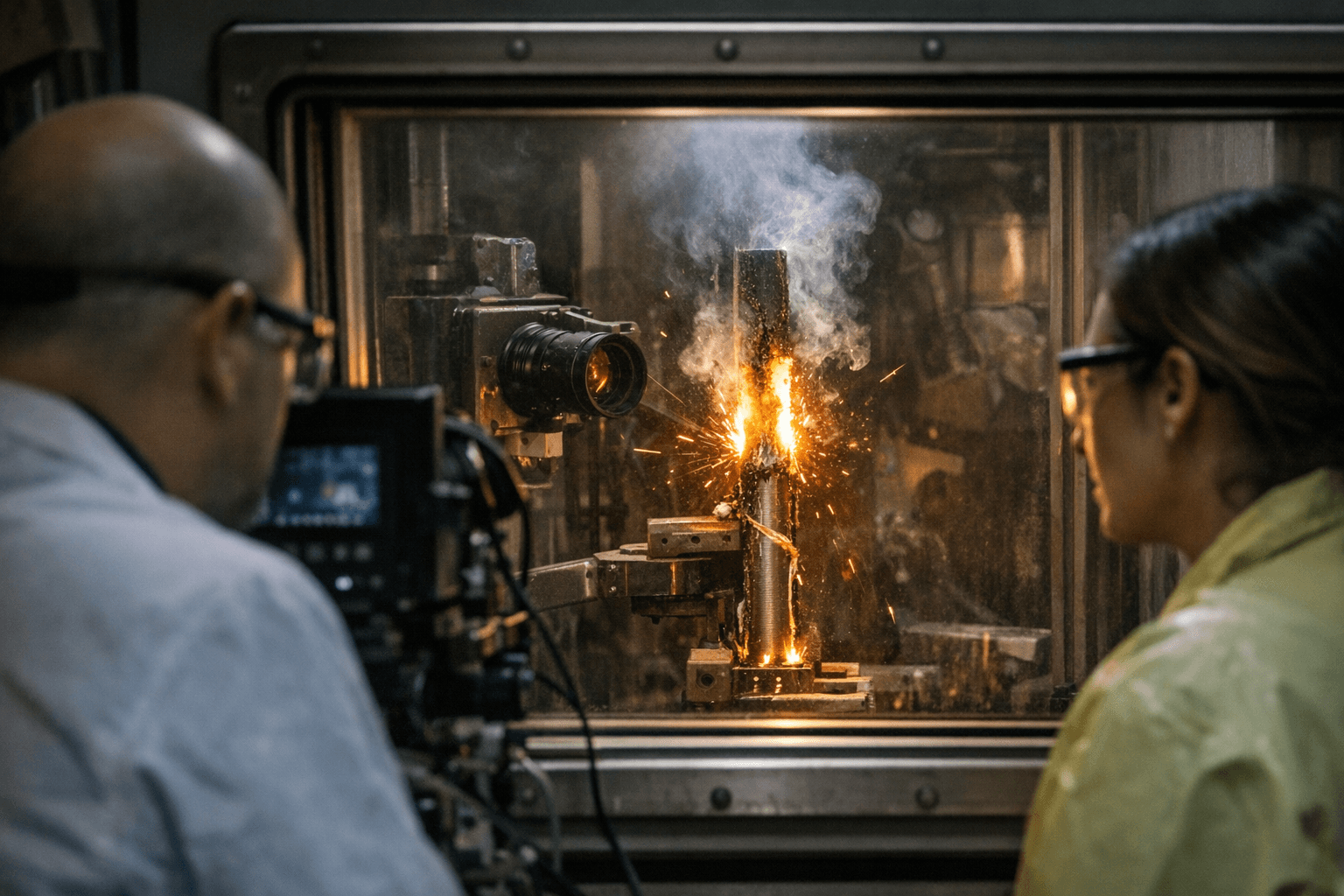
The test simulated a loss-of-coolant accident, a rare but qualification-critical scenario in which fuel cladding must demonstrate how it behaves when cooling is suddenly lost. To capture what actually happens during those moments, the ORNL team modified a camera system to work remotely in a high-heat, high-radiation environment, mounting it on an out-of-cell rig positioned outside the heavily shielded hot cell that housed the irradiated samples. The camera collected continuous, high-quality images at four frames per second.
From that footage, researchers applied digital image correlation, or DIC, to extract detailed, quantitative measurements of how the cladding deformed throughout the simulated event. The technique transforms sequences of optical images into precise behavioral data that traditional in-cell instrumentation cannot easily provide.
"DIC gives us a clearer, more complete picture of what happens during these rare events," said ORNL's Mackenzie Ridley, who is shown in lab photos adjusting the out-of-cell DIC testing rig. The measurements, Ridley added, "feed models that can refine and expand safety qualification parameters for high burnup and accident-tolerant fuel."
The engineering challenge the team had to solve was not trivial. Electronics capable of surviving the combination of intense heat and radiation while operating entirely by remote control represent a meaningful materials and systems problem in themselves. The modified camera system addresses that directly, enabling a testing capability that ORNL describes as significant in what had been a genuinely complex measurement environment.
ORNL operated alongside Peter Doyle and Nathan Capps as listed members of the research team. The commercially irradiated nature of the cladding tested matters here: qualification data drawn from already-irradiated fuel samples more accurately reflects real-world reactor conditions than tests on fresh, unirradiated material.
The data produced will feed directly into safety qualification work for high-burnup fuels and accident-tolerant fuel concepts, areas drawing intense industry attention as reactor operators push toward higher performance and as new cladding materials, including silicon carbide composites and iron-chromium-aluminum alloys, move through qualification pipelines. General Atomics Electromagnetic Systems, for instance, is currently irradiating its SiGA silicon carbide ceramic matrix composite cladding at ORNL, MIT, and Idaho National Laboratory under the Accelerated Fuel Qualification framework, with a commercialization target in the 2030s. The optical measurement capability ORNL demonstrated could prove directly relevant to that and similar programs.
The broader context at ORNL includes a re-established domestic loss-of-coolant accident test capability, hot cell infrastructure including the remote weld repair capability in the REDC hot cell, and advanced characterization tools spanning x-ray computed tomography, neutron imaging, and AI-assisted image labeling feeding into the MOSAIC microstructure simulation platform. The optical DIC work slots into that expanding toolkit as the lab works to close data gaps that have long limited how precisely engineers can model fuel behavior under accident conditions.
This article was produced by Prism’s automated news system from verified source data, official records, and press releases, then run through automated quality and moderation checks before publishing. The system is built and supervised by the people who set the standards it runs under. Read our full AI policy.
Did this article answer your question?


