OpenAI Pursues Helion Fusion Power Deal, Altman Exits Board
Sam Altman stepped down from Helion's board as OpenAI negotiated rights to 12.5% of its fusion output, potentially 50 GW by 2035.
The gap between OpenAI's proposed deal with Helion Energy and any prior corporate commitment to fusion power is not incremental. It is a factor of 100. While Microsoft locked in 50 megawatts from Helion's first plant in 2023 under a firm contract with financial penalties and market-rate pricing tied to a 2028 delivery date, the framework under negotiation between OpenAI and the Everett, Washington-based startup targets 5 gigawatts by 2030 and 50 gigawatts by 2035. That 12.5% slice of Helion's projected output would, if delivered, represent one of the largest single corporate energy procurement deals in history.
OpenAI CEO Sam Altman stepped down from Helion's board on March 23, 2026, as the scope of the negotiations became public. The exit was framed as a conflict-of-interest management step: Altman is Helion's largest individual backer, having led its $500 million funding round in 2021 with $375 million of his own capital, while simultaneously running the company that would become Helion's single biggest power customer. "I will have a financial interest in Helion, so still be recused from negotiations, but from a governance perspective, this will make things easier for both companies," Altman said. Helion CEO David Kirtley confirmed the departure, saying he looked forward to working with Altman "in this new capacity."
The contrast in deal structure exposes how quickly the sector has escalated. The 2023 Microsoft PPA was precise: 50 megawatts or greater, with a one-year ramp-up period after a 2028 go-live and explicit financial penalties for missed delivery at market-rate pricing. The OpenAI talks remain a basic framework. Key conditions are unresolved, including site selection for where Helion would actually produce the power. No price per megawatt-hour has been disclosed publicly. The deal is structured around percentage of output rather than a fixed capacity figure, meaning the gigawatt projections hold only if Helion's full buildout materializes on schedule.
That assumption carries enormous technical weight. Each Helion reactor is expected to produce approximately 50 megawatts, meaning the 2030 target alone would require roughly 100 reactors operating simultaneously. Helion broke ground on Orion, its first commercial plant serving the Microsoft commitment, in July 2025. In February 2026, its Polaris prototype reached plasma temperatures of 150 million degrees Celsius, a significant hardware milestone. No private fusion company has yet crossed scientific breakeven, the threshold where a reaction produces more energy than it consumes, though Helion has said it believes it is approaching that point.
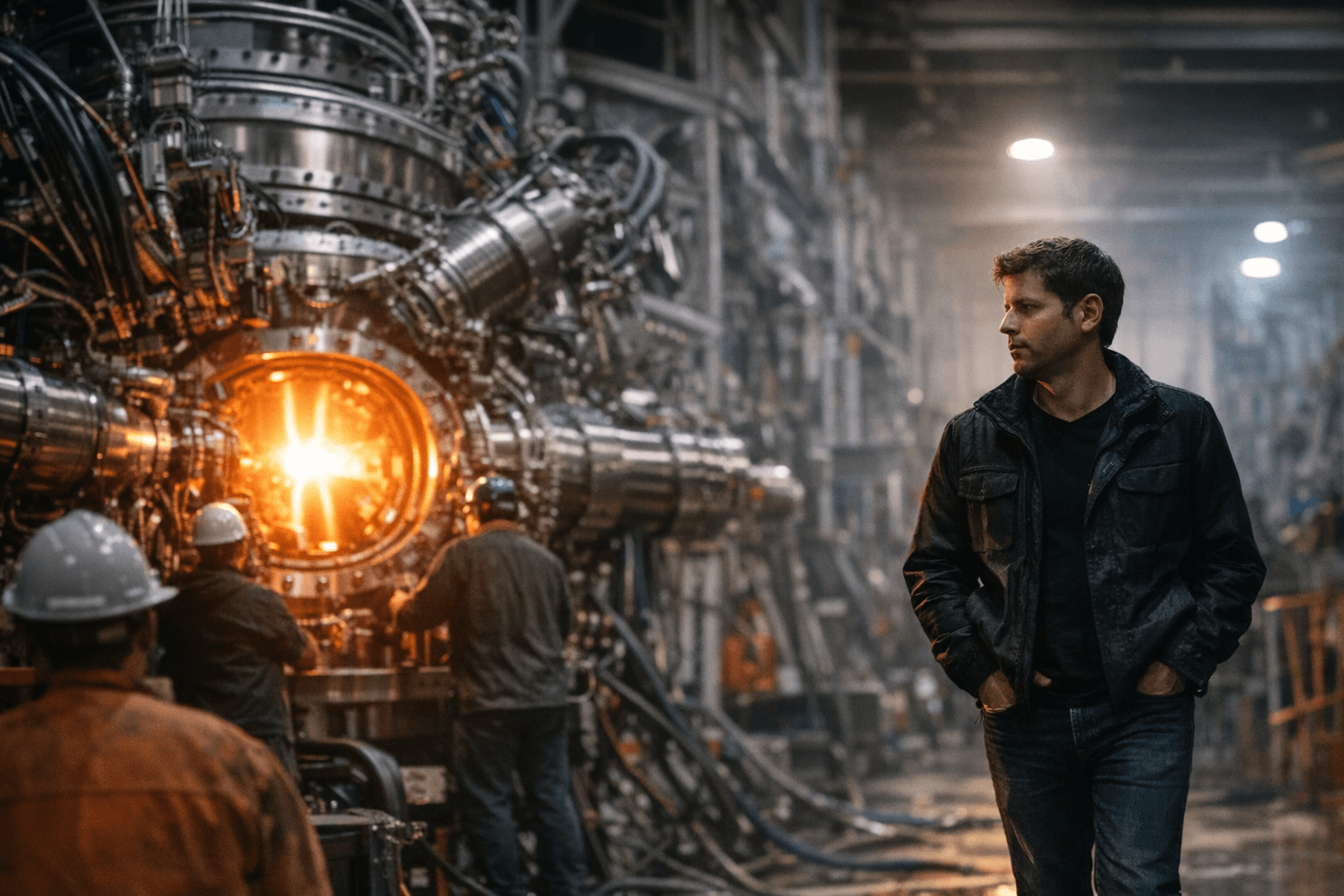
For anyone tracking whether fusion is moving from deferred promise toward bankable power, the sequence of milestones that would validate this deal is specific. Scientific breakeven must come first. Then net electricity to the grid at any sustained scale. Then commercial performance from Orion meeting the Microsoft 50-megawatt target by 2028. Then demonstrated replication across multiple units. Then site selection, permitting, and grid interconnection at gigawatt volumes. Only after clearing all of those gates would OpenAI's 5-gigawatt-by-2030 commitment shift from a bold governance statement into an executable contract.
Altman's $375 million personal stake stays intact throughout. The board seat is gone; the bet remains.
This article was produced by Prism’s automated news system from verified source data, official records, and press releases, then run through automated quality and moderation checks before publishing. The system is built and supervised by the people who set the standards it runs under. Read our full AI policy.
Did this article answer your question?