ORNL Launches Two Major Initiatives to Advance Targeted Alpha Therapy Research
ORNL launched ARM and DART, two initiatives targeting the chemistry and clinical translation of alpha therapy, with DART backed by $20M over five years.
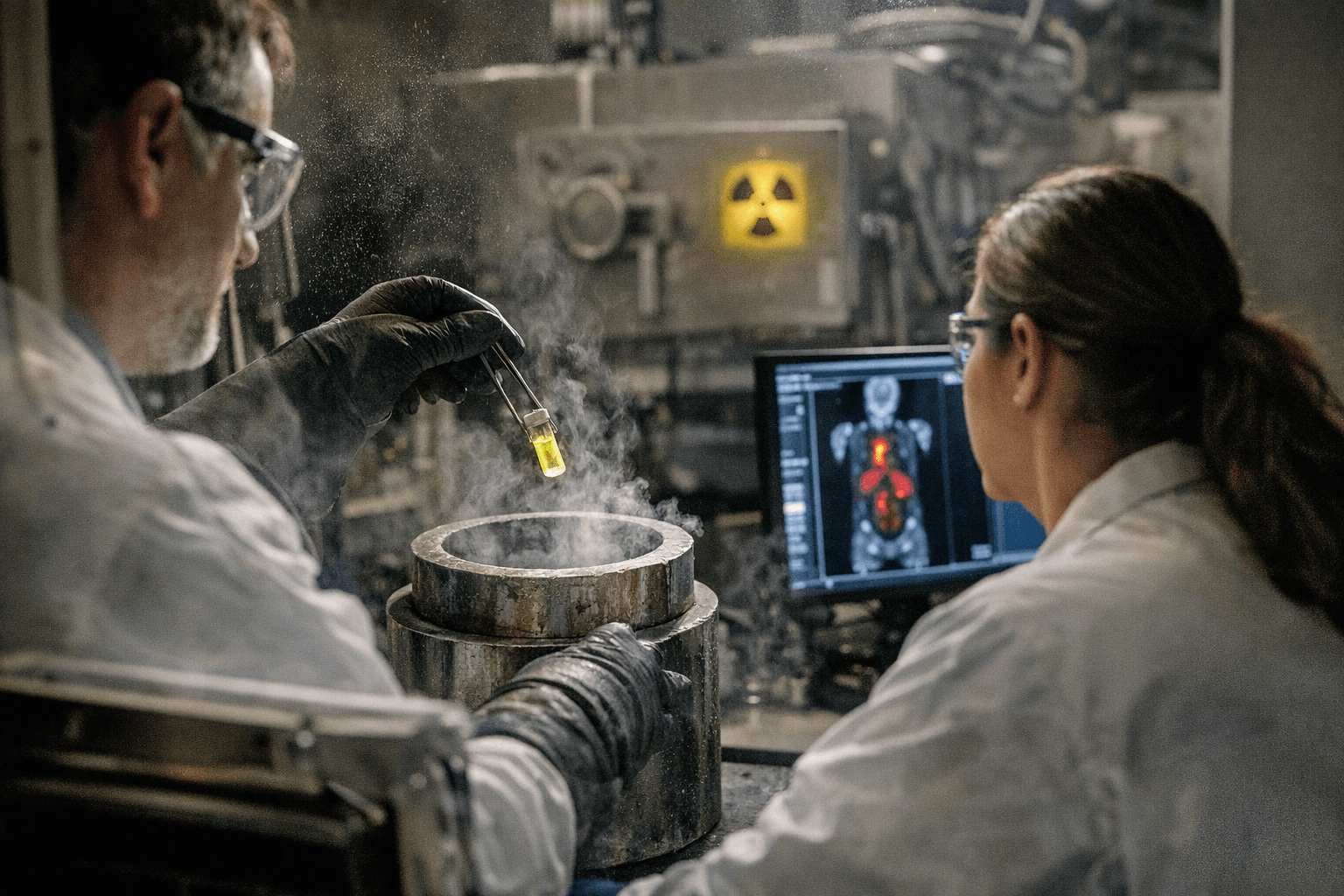
Oak Ridge National Laboratory put serious institutional weight behind targeted alpha therapy yesterday, announcing two distinct research programs designed to push radiopharmaceuticals from laboratory chemistry through to clinical application. The programs, ARM and DART, attack the problem from different angles: one refining the molecular tools used to attach radioisotopes to cancer-seeking biologics, the other pooling $20 million across three institutions to advance theranostics at scale.
Sandra Davern, head of ORNL's Radioisotope Research and Development Section, is leading both efforts. The first, ARM, short for Accelerating Radiotherapeutics through Advanced Molecular Constructs, was launched through ORNL's Laboratory Directed Research and Development program. Its core focus is chelator chemistry: specifically, designing molecular constructs that allow radioisotopes to be labeled onto targeting molecules under mild, physiologically relevant conditions. The practical motivation is straightforward. Current labeling technologies can require intense heating, which destroys sensitive biological molecules like antibodies before they ever reach a patient. ARM aims to eliminate that constraint.
The second initiative, DART (Development and Advancement of Radiopharmaceutical Therapies), operates under a different organizational model. It sits within the University of Tennessee-Oak Ridge Innovation Institute as a Convergent Research Initiative, drawing together researchers from ORNL, the University of Tennessee, and the UT Health Science Center. The collaboration runs five years with $20 million in funding and centers on theranostics, the approach of combining targeted alpha therapy and imaging radioisotopes so that a single radiopharmaceutical agent can simultaneously diagnose and treat disease.
To make theranostics work across multiple radioisotope types, researchers are designing chelators and nanoparticles capable of holding either a diagnostic radioisotope or an alpha- or beta-emitting therapeutic radioisotope. Actinium-225, an alpha emitter, serves as one of the primary illustrated examples: linked to a targeting molecule, it binds to a cancer cell and delivers highly localized radiation to destroy it while largely sparing surrounding tissue.
ORNL's position in this space is not incidental. The laboratory has long served as both a developer of advanced radiotherapies and a supplier of the radioisotopes those therapies require, a dual role that gives it unusual leverage in accelerating the pipeline from isotope production through molecular design to clinical use. The expanded manufacturing capacity push announced alongside ARM and DART signals that ORNL intends to hold both ends of that chain as the field grows.
This article was produced by Prism’s automated news system from verified source data, official records, and press releases, then run through automated quality and moderation checks before publishing. The system is built and supervised by the people who set the standards it runs under. Read our full AI policy.
Did this article answer your question?