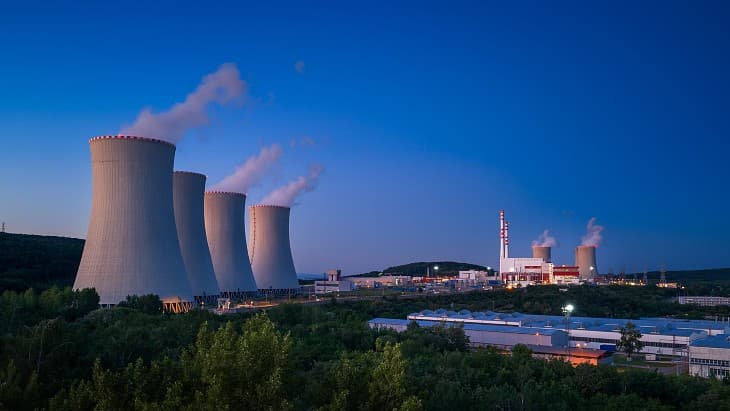
Perma-Fix Wins $24 Million Contract for Lawrence Livermore Demolition Work
Perma-Fix secured a $24M contract at Lawrence Livermore; the radiological waste streams involved can only be legally handled by a handful of U.S. firms.
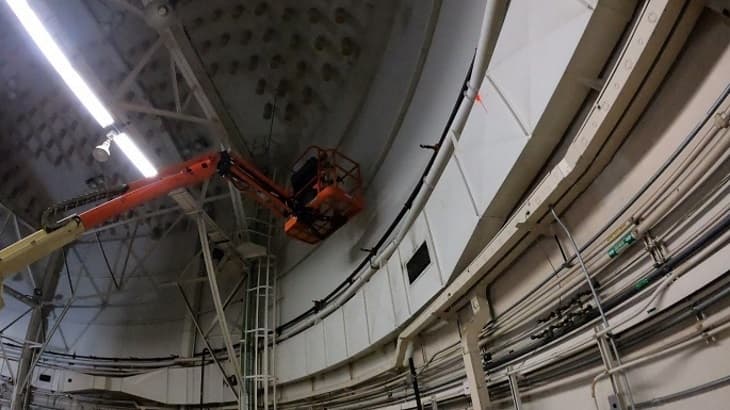
Perma-Fix Environmental Services landed a $24 million, two-year master task agreement from Lawrence Livermore National Security, LLC to demolish and dispose of legacy facilities at Lawrence Livermore National Laboratory in Livermore, California, a win that signals just how tightly controlled the DOE decommissioning supply chain has become for publicly traded nuclear services firms.
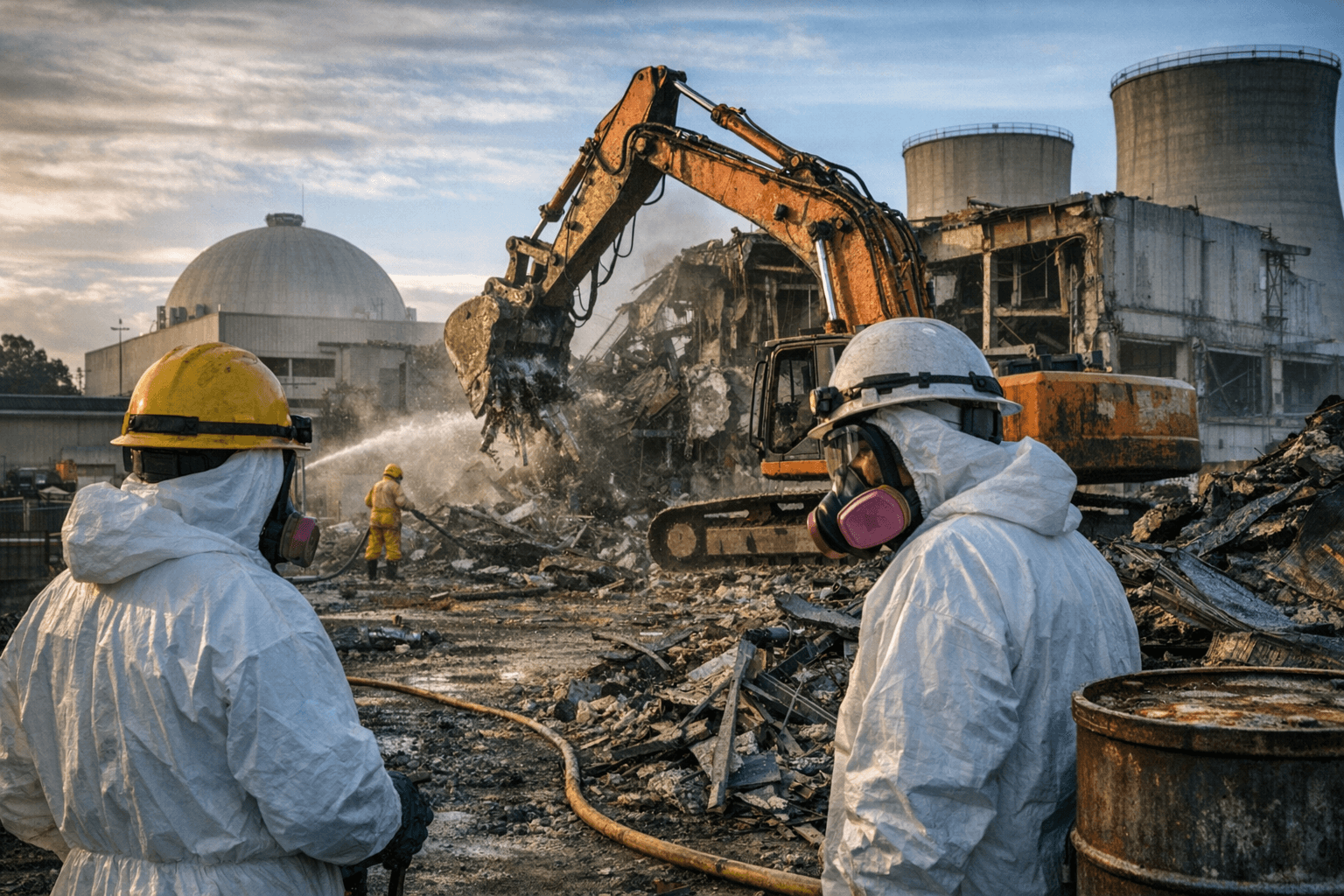
The contract scope covers demolition, excavation, and waste management services at LLNL, a site running both defense and science missions that periodically retires legacy infrastructure as its national security work evolves. That combination of active classified operations and mixed radiological waste streams is exactly what makes these awards difficult to execute and difficult to win: any contractor entering a live DOE national lab carrying radiological and hazardous material must clear compliance thresholds that effectively filter out generalist demolition firms before the first task order is even written. Perma-Fix, which operates four nuclear waste treatment facilities and serves clients ranging from hospitals and research institutions to the U.S. Department of Energy, has built its competitive position precisely in that narrow lane.
Mark Duff, Perma-Fix's president and CEO, said the award reflects the company's long-standing relationship with LLNS and its track record on similar projects at LLNL. Perma-Fix will execute the work in partnership with three local subcontractors, coordinating closely with site stakeholders to minimize disruption to surrounding operations, a constraint that carries more weight at an active national lab than at a standalone cleanup site, where sequencing errors can ripple into sensitive adjacent programs.
The master task agreement structure, standard at DOE sites, allows LLNS to issue flexible, task-specific orders across the two-year period rather than committing to a rigid schedule upfront. For Perma-Fix and its NASDAQ investors, that architecture provides backlog visibility without requiring LLNS to pre-define every scope item; but it also means realized revenue tracks task order cadence, not just the $24 million agreement value. The distinction matters: a master task agreement ceiling is not guaranteed spend, and the pace at which LLNS activates individual tasks will determine how cleanly that $24 million converts into margin.
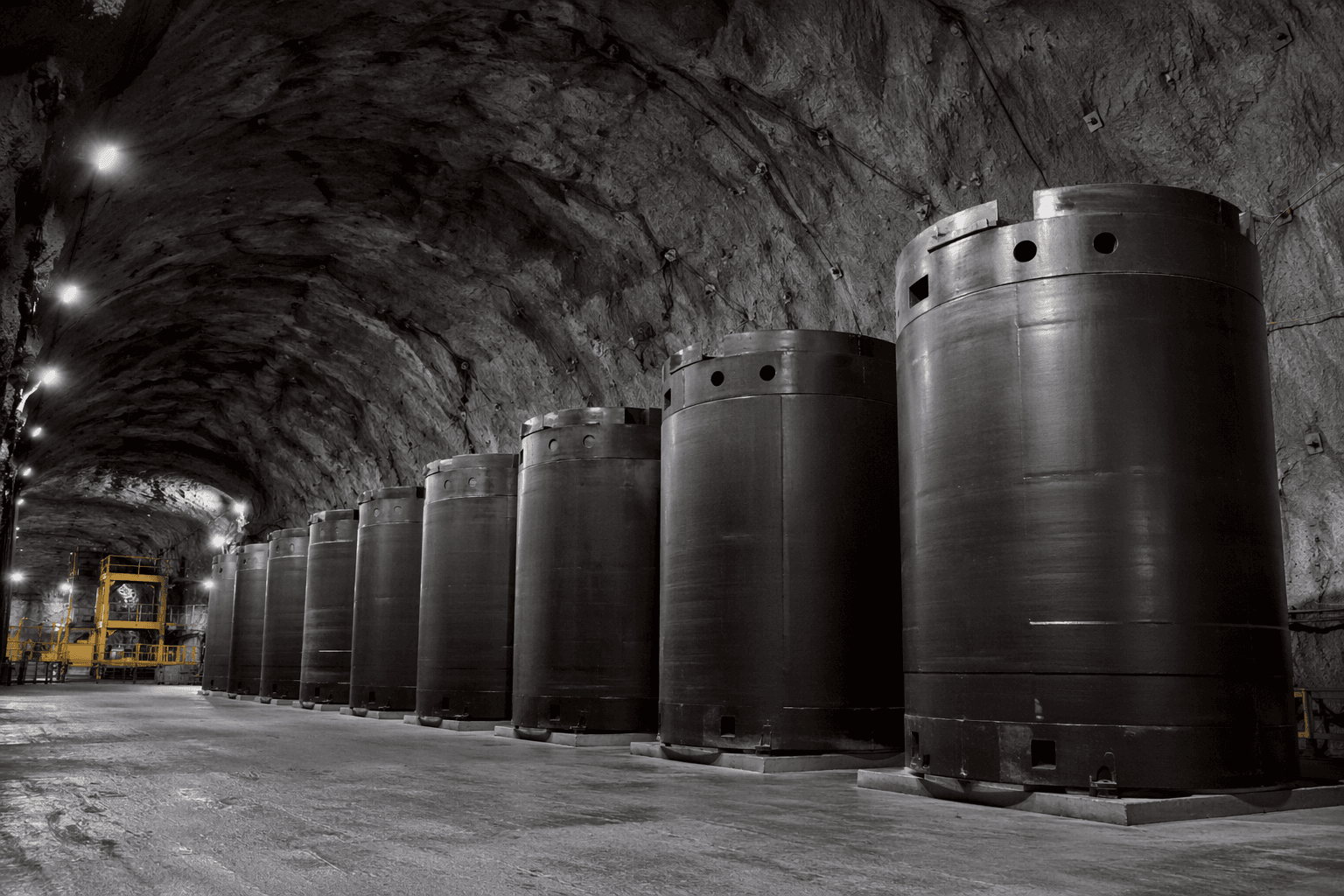
The underlying regulatory picture is what makes execution risk concrete. LLNL's disposition activities generate waste streams that require documented radiological characterization, proper packaging, and transportation to a licensed treatment or disposal facility. That last step is where the compliance moat becomes visible: Perma-Fix's four treatment facilities give it an internal routing pathway that competitors without equivalent licensed infrastructure must solve through third-party arrangements, adding cost, scheduling risk, and regulatory exposure. A contractor that cannot manage waste from point of generation through final disposition at a facility permitted to receive it does not just face a logistical problem; it faces a legal one.
Perma-Fix describes its approach as grounded in disciplined project execution, risk management, radiological protection, and industrial hygiene, with an explicit emphasis on minimizing impacts to ongoing operations at the site. For LLNS, those are not boilerplate commitments; they are performance benchmarks built into a contract structure that allows task orders to be issued or withheld based on how the work proceeds. With approximately $24 million on the table at one of the country's premier national security laboratories, Perma-Fix's ability to execute cleanly at LLNL will either deepen a client relationship that has taken years to build or demonstrate exactly why the regulatory barriers to this market exist.
This article was produced by Prism’s automated news system from verified source data, official records, and press releases, then run through automated quality and moderation checks before publishing. The system is built and supervised by the people who set the standards it runs under. Read our full AI policy.
Did this article answer your question?