Projectile Strikes Bushehr Nuclear Plant Grounds, IAEA Urges Restraint
An unidentified projectile struck Bushehr Nuclear Power Plant's grounds at 9:08 p.m. local time on March 24, the second strike near Iran's only commercial reactor in eight days.
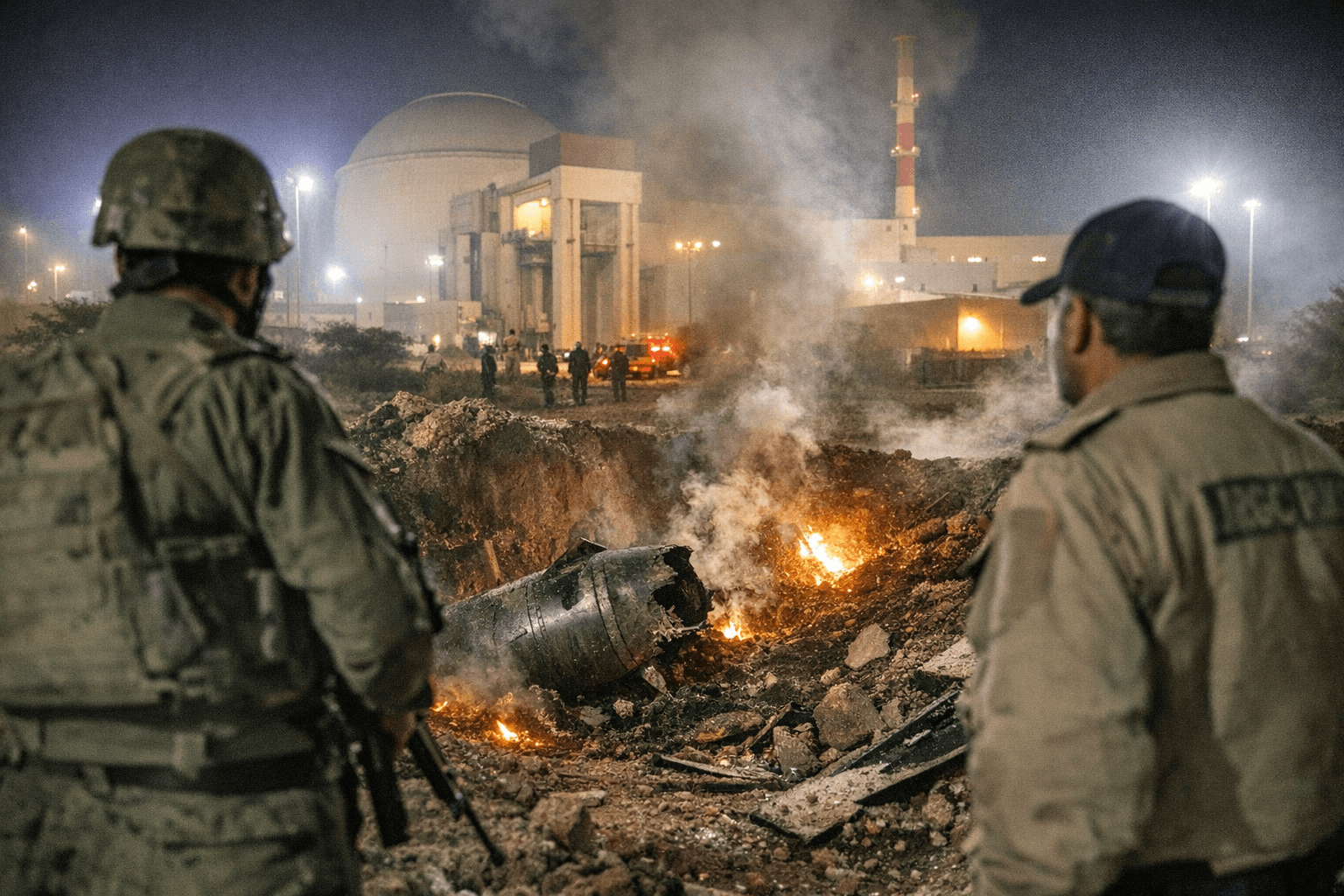
For the second time in eight days, an unidentified projectile hit within the enclosure of Iran's Bushehr Nuclear Power Plant on the evening of March 24, striking the facility's grounds at approximately 9:08 p.m. local time. Iran's Atomic Energy Organization reported no casualties and no damage to the reactor itself, stating in preliminary assessments that all sections of the facility remained safe and operational. The IAEA confirmed it had been informed and said the plant was operating normally.
IAEA Director General Rafael Grossi reiterated his call "for maximum restraint to avoid nuclear safety risks during conflict." Iran's AEO pushed back publicly, tagging the IAEA in a social media post that read: "Attacking peaceful nuclear facilities is not only a violation of international regulations and rights, but also seriously endangers #regional security." The organization added that it expected "international institutions will adopt a responsible and transparent stance in response to such actions."
No responsibility has been assigned for the strike. The projectile remains unidentified in type, origin, and trajectory, and the IAEA did not assign blame.
Bushehr is Iran's only operating commercial nuclear power plant, located near Bushehr city on the country's southwest Persian Gulf coast. Construction began in 1975, but the original German contractor abandoned the project following the Islamic Revolution four years later. Russia agreed to complete Bushehr Unit 1 in the mid-1990s, and the reactor began operating in 2011, according to the U.S. Congressional Research Service.
The March 24 strike came eight days after a first unidentified projectile struck near the plant on March 17. UPI reported that the March 17 incident was itself the first strike near Bushehr since the war between Iran and the United States and Israel began late last month, making the March 24 hit the second such threat to the facility in a little more than two weeks.
Even when a reactor emerges structurally intact, the IAEA has repeatedly warned that military actions near nuclear sites can damage the infrastructure a plant depends on: cooling systems, off-site power connections, instrumentation, switchyards, and spent fuel storage. Any of those disruptions can degrade emergency preparedness before a radiological release ever occurs. Independent IAEA field inspections and formal radiation monitoring data will be necessary to corroborate Tehran's preliminary assessment, and scrutiny is now turning to whether ancillary systems sustained impacts that have not yet been disclosed.
Know something we missed? Have a correction or additional information?
Submit a Tip

