Record electricity demand lifts renewables, fossil fuels and nuclear together
Record demand pushed renewables, fossil fuels and nuclear higher at once, while global energy supply hit 592 EJ and emissions rose again.
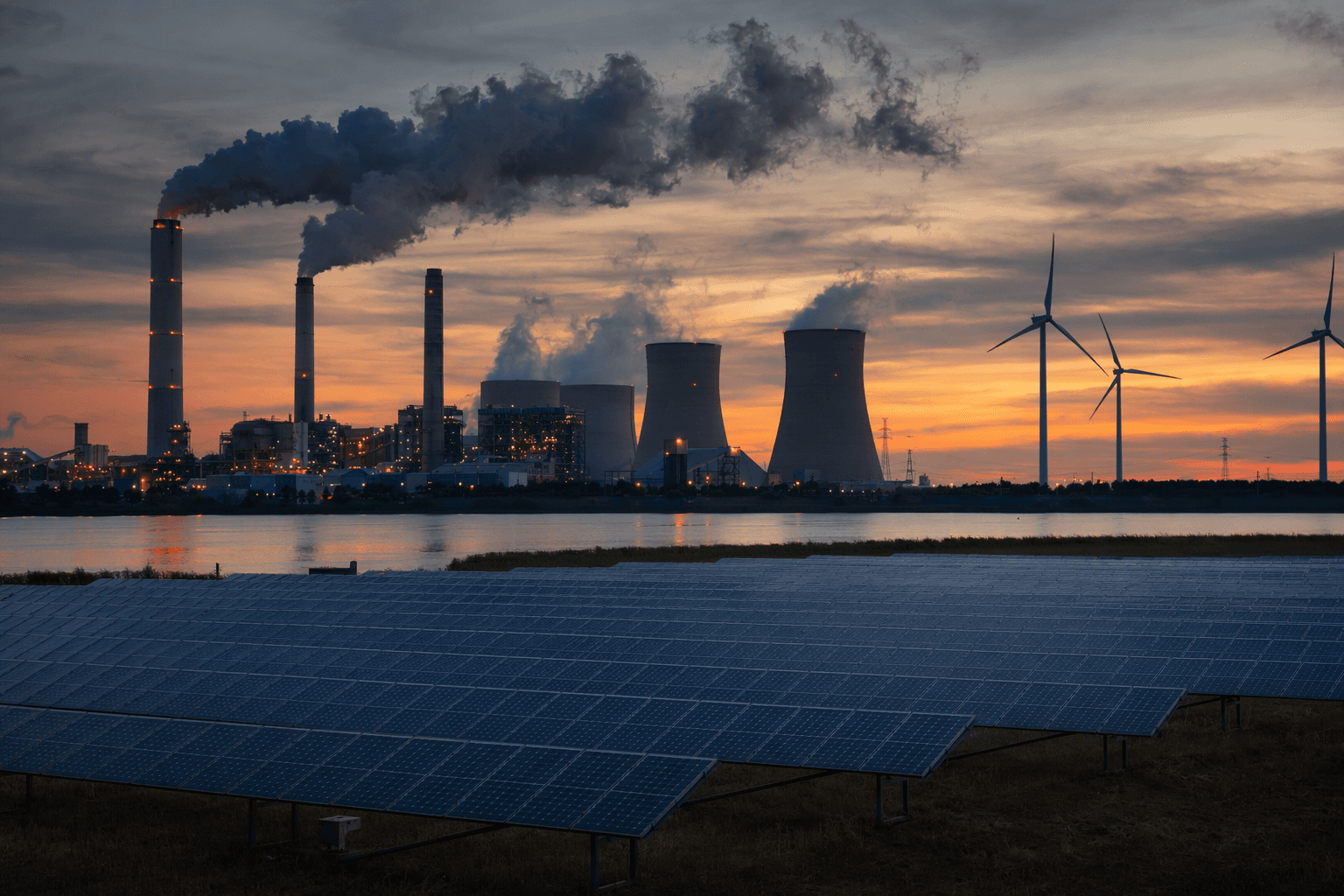
Rising nuclear output is not replacing fossil fuels. It is joining them, along with renewables, in a global power system that is expanding so fast it can absorb more of almost everything at once.
That is the uncomfortable message inside the Energy Institute’s Statistical Review of World Energy 2025, released on June 26, 2025 and covering full-year 2024 data. Global energy supply climbed 2 percent to a new high of 592 exajoules, while energy-related CO2-equivalent emissions rose another 1 percent, the fourth straight annual record. The review’s blunt takeaway is that the world is in an era of “energy addition rather than substitution.”
For nuclear, that matters because it changes the basic reading of every gain in the data. The 2024 Statistical Review includes a dedicated nuclear energy section, and broader reporting on the 2025 edition shows all major sources increased year-on-year in 2024, including nuclear. The point is not that nuclear stalled. It is that nuclear growth, even alongside rapid renewables expansion, still did not force fossil fuels into retreat at the global level.
The reason is demand. Electricity use is rising quickly, and the International Energy Agency’s World Energy Outlook 2024 puts that surge in a wider frame of geopolitical tension and energy-security concerns. The outlook tests how renewables, electric mobility, LNG, heatwaves, efficiency policies and artificial intelligence could alter electricity demand, a sign that the load curve is being pushed by everything from data centers to air conditioning to vehicle electrification.
That is why the global mix now looks less like a clean-energy handoff and more like a crowded grid trying to keep up. The Energy Institute, which took custodianship of the Statistical Review from bp in 2023, says the series has provided objective energy data since 1952, with historical data for many sectors stretching back to 1965. That long view makes the current pattern hard to miss: the system is not yet replacing its old fuel base quickly enough, even as new low-carbon capacity continues to rise.
For the nuclear industry, the implication is clear. More reactors, more renewables and more fossil generation can all coexist in a demand boom, but that does not equal transition. Until growth in clean power outpaces growth in total demand, nuclear’s gains will keep adding resilience and capacity without automatically shrinking the fossil share of the world’s energy system.
Know something we missed? Have a correction or additional information?
Submit a Tip_38339.jpg&w=1920&q=75)

_80308_74311.jpg&w=1920&q=75)