U.S. Joins African Partners at Nairobi Nuclear Conference to Boost Civil Nuclear Cooperation
Ryan Taugher's State Dept. delegation signed a nuclear MoU with Kenya at ICoNE as Rosatom holds deals with 20+ African nations and Kenya eyes a $3.8B plant by 2034.
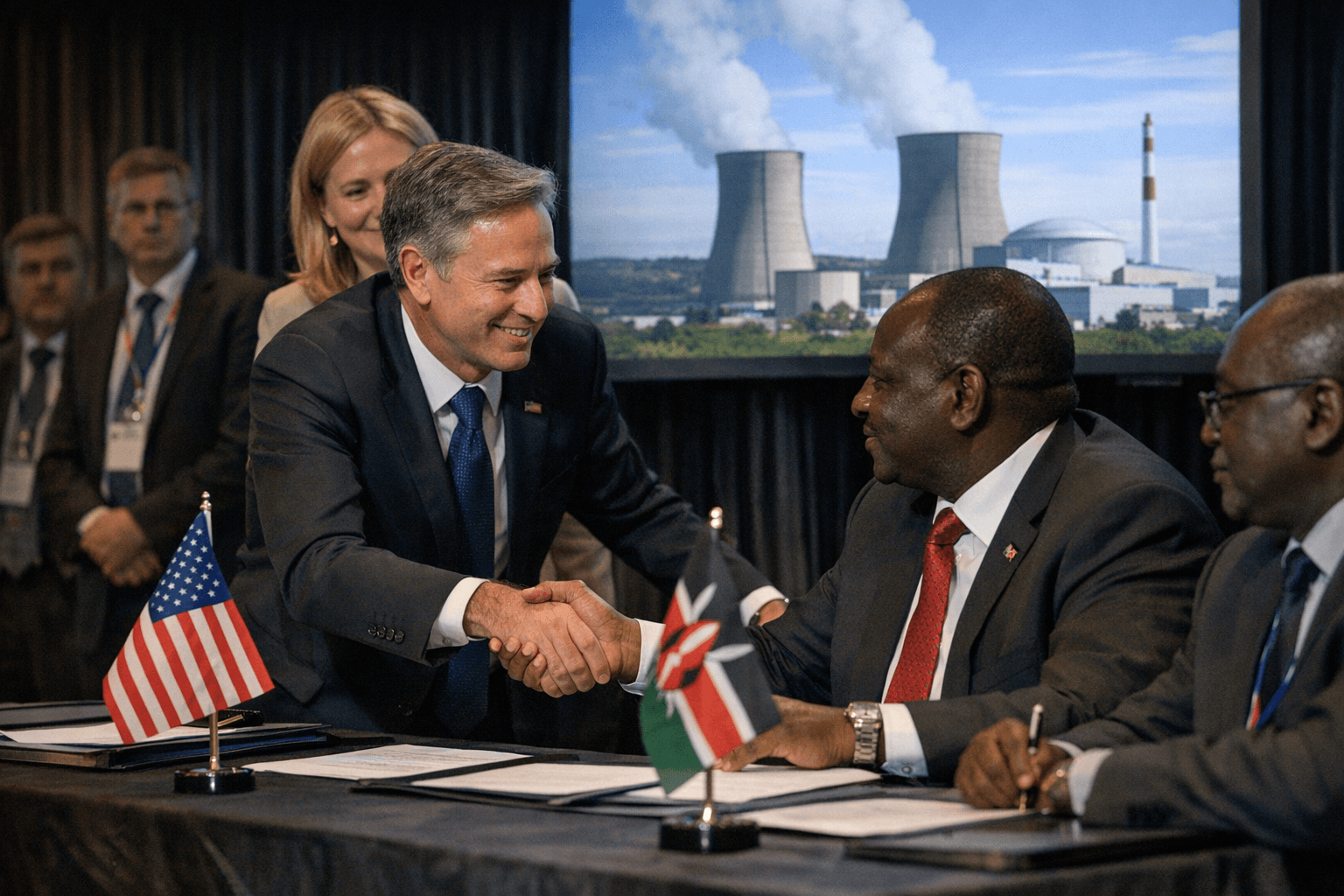
The State Department's Ryan Taugher arrived in Nairobi last week carrying something Rosatom typically brings first: a memorandum of understanding. Taugher, Director of the Office of Cooperative Threat Reduction, led a delegation including Department of Energy representatives to the 2026 International Conference on Nuclear Energy (ICoNE), where the United States disclosed the MoU and a series of bilateral engagements with Kenya, Ghana, Nigeria, Namibia, and Rwanda, five of the African governments most actively advancing civil nuclear programs.
The timing is pointed. Russia's state-owned Rosatom has signed nuclear cooperation agreements with at least 20 African countries, often bundling financing, mining concessions, and fuel supply into a single government-to-government package. China's CNNC is competing for Kenya's vendor slot alongside U.S.-based NuScale. France and South Korea have also maintained civil nuclear footholds on the continent. The FIRST program, the U.S. government's Foundational Infrastructure for Responsible Use of Small Modular Reactor Technology initiative, has been active in Kenya since 2020, but ICoNE marked the most public signal yet that Washington views the African nuclear market as a strategic priority rather than a development footnote.
What the MoU actually delivers matters as much as its announcement. The U.S. framed ICoNE engagements explicitly as capacity-building measures: regulatory framework development, technical standards, workforce training, and alignment on safeguards and non-proliferation norms. The bilateral meetings addressed pathways to future commercial agreements, not procurement commitments. Kenya has not yet selected a reactor vendor, and the MoU does not change that. What it does is lay groundwork for a Section 123 Agreement, the U.S. legal prerequisite for American companies to export nuclear technology, which President William Ruto confirmed Kenya is actively negotiating with Washington.
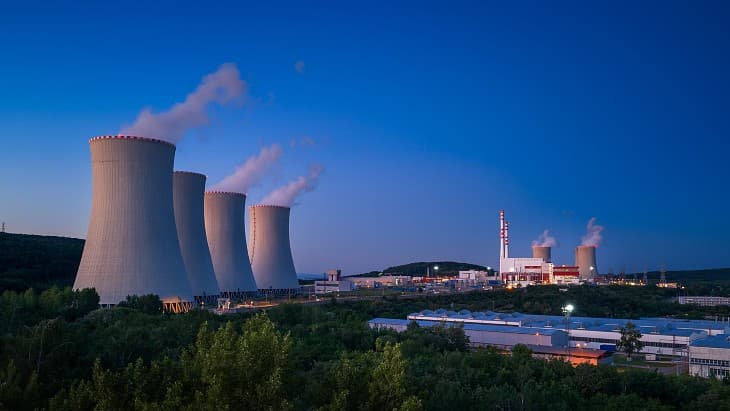
Kenya officially aims to commission its first plant by 2034. The target facility is a 2,000-megawatt installation in Siaya County near Lake Victoria, with a groundbreaking penciled in for March 2027, owned and operated by Kenya Electricity Generating Company and promoted by the Nuclear Power and Energy Agency. The estimated price tag sits at approximately $3.8 billion. Getting there requires Kenya to clear several institutional gates before any shovel breaks ground: completing IAEA milestone reviews, finalizing the regulatory framework under the Kenya Nuclear Regulatory Authority, and securing a financing structure that no African nuclear newcomer has yet fully solved.
"Since 2020, FIRST has worked with Kenya and other African countries to expedite the deployment of secure, safe, responsible civil nuclear reactors meeting the highest standards," Taugher said at ICoNE. "The United States is committed to working with partners, through the FIRST program and beyond, to ensure nuclear technologies are deployed in line with the highest standards of safety, security, and nonproliferation."
The conference itself was jointly funded by the FIRST program, Kenya's Nuclear Power and Energy Agency, and the OECD's Nuclear Energy Agency, a co-funding structure that signals multilateral buy-in rather than a purely bilateral U.S. push. IAEA and NEA officials participated alongside government delegations, reinforcing the diplomatic message that American engagement comes attached to international safeguards architecture rather than the state-financed, vertically integrated deals that have defined Rosatom's African expansion.
For Kenya, the concrete near-term prize is institutional: a 123 framework would open U.S. vendor competition, diversify fuel supply options, and give Nairobi negotiating leverage it currently lacks. The 2034 commissioning target is ambitious. Regulator readiness, grid upgrades to absorb 2,000 megawatts, and the still-unresolved vendor selection decision all sit between the Nairobi conference room and an operating reactor on Lake Victoria's shore.
This article was produced by Prism’s automated news system from verified source data, official records, and press releases, then run through automated quality and moderation checks before publishing. The system is built and supervised by the people who set the standards it runs under. Read our full AI policy.
Did this article answer your question?