WHO, IAEA Warn Bushehr Strike Risks Nuclear Disaster Across Generations
WHO's Tedros warned a Bushehr strike "could devastate generations" after the fourth projectile hit in five weeks killed a guard near Iran's operating 915-MW reactor.

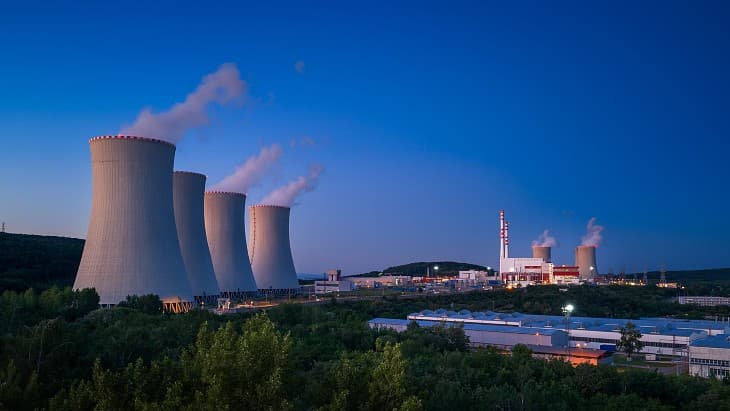
Four projectile strikes in five weeks brought the world's nuclear safety authorities to a level of alarm not seen since Russia seized Zaporizhzhia. The April 4 strike hit close enough to Iran's Bushehr reactor to kill a physical protection staff member and leave an auxiliary building in fragments, prompting WHO Director-General Tedros Adhanom Ghebreyesus to warn the world: "a strike could trigger a nuclear accident, with health impacts that would devastate generations."
Tedros posted directly to X, framing Bushehr not as a geopolitical flashpoint but as a public health emergency in waiting. "I join the International Atomic Energy Agency in raising the alarm again over the safety of nuclear facilities in Iran," he wrote. "The latest incident involving the Bushehr nuclear power plant is a stark reminder." For the WHO chief to invoke generational health consequences places this squarely alongside Chernobyl and Fukushima in the institutional vocabulary of radiological catastrophe, before a single becquerel of elevated radiation has been detected offsite.
The IAEA confirmed those radiation readings remained flat after the April 4 incident. But IAEA Director General Rafael Mariano Grossi has been explicit that clean radiation data after a near-miss is not the same as safety. A March 18 strike destroyed a structure just 350 metres from the reactor core itself. That strike, with no casualties and no radiation increase, was the incident that led Grossi to invoke the "reddest line" of nuclear safety. His core concern, reiterated after the April 4 strike, centers on auxiliary buildings: structures that house backup power switchgear, emergency cooling controls, and safety system instrumentation. None of those functions appear in the reactor pressure vessel, and none of them need a direct hit on the core to fail.
The accident pathways Grossi is flagging are familiar to anyone who followed Zaporizhzhia through 2022 and 2023. Damage to infrastructure surrounding a plant can sever its connection to the external grid, triggering an emergency shutdown. A shutdown reactor still generates substantial decay heat for days and requires continuous active cooling. At Zaporizhzhia, the repeated loss of offsite power forced reliance on diesel backup generators that the IAEA publicly described as the last line of defense. Bushehr presents a compounding variable: its VVER-1000 unit was still operating as of early April, confirmed by Rosatom CEO Alexey Likhachev. An operating reactor carries a far greater decay heat load than a cold-shutdown unit. Bushehr's elevated spent fuel pool, sitting 7.45 metres above grade, carries its own loss-of-coolant risk if cooling infrastructure is compromised, a vulnerability type that drove the most dangerous phase of the Fukushima crisis.
Russia's operational response made the risk calculus visible. Rosatom evacuated a further 198 of its technicians from the site following the latest incident. Russian specialists are essential to running the plant; their withdrawal does not just signal corporate liability management but introduces a direct operational gap in a facility that requires continuous expert oversight of safety-critical systems.
Iran's Atomic Energy Organisation head Mohammad Eslami called the strikes a "clear violation of international law and an instance of a war crime" in a formal letter to Grossi. Iranian Foreign Minister Abbas Araghchi drew the Zaporizhzhia comparison pointedly, noting the stark contrast between international reaction to attacks near the Ukrainian plant under Russian occupation and the relative silence surrounding Bushehr.
What both the WHO and IAEA are pressing for, on-site access, verified monitoring continuity, and a halt to strikes near nuclear infrastructure, remains contingent on a military situation neither agency controls. The radiation monitors at Bushehr showed nothing after April 4. The question emergency planners are now asking is how many more 350-metre near-misses the site's auxiliary safety architecture can absorb before that changes.
This article was produced by Prism’s automated news system from verified source data, official records, and press releases, then run through automated quality and moderation checks before publishing. The system is built and supervised by the people who set the standards it runs under. Read our full AI policy.
Did this article answer your question?