AFA and Harrison’s Bird Foods boost wild parrot conservation grants
Harrison’s Bird Foods has put $25,000 behind AFA’s wild parrot work, steering money into small grants for field projects in Bolivia and Brazil.
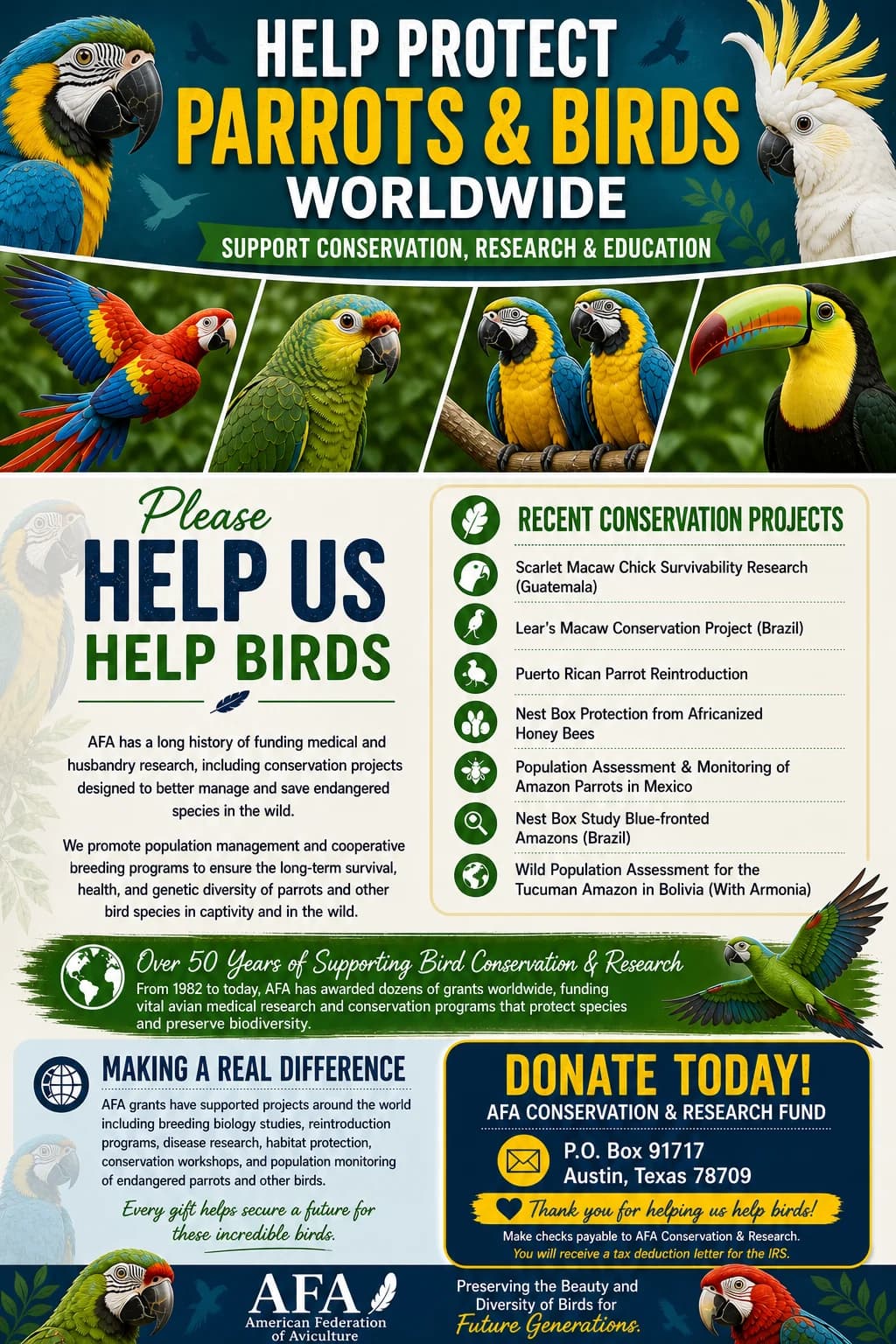
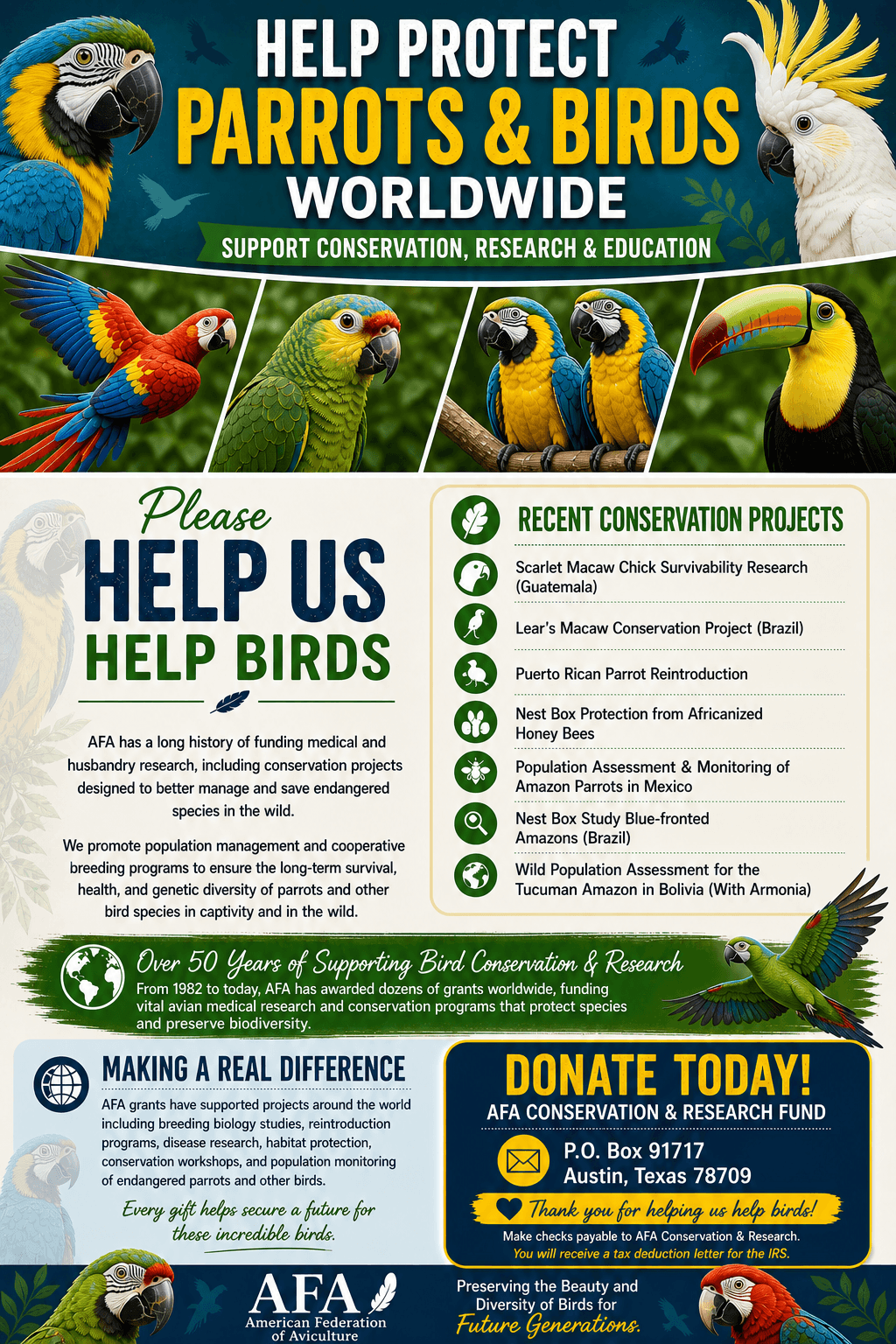
A $25,000 boost from Harrison’s Bird Foods is pushing the American Federation of Aviculture’s conservation money toward small grants and targeted field projects, the kind of support many wild parrot efforts need most. AFA says the funding is helping wild parrot conservation projects in native habitats, including the Tucuman Amazon project in Bolivia with Armonia and the Blue-fronted Amazon Project in Brazil.
That grant model fits the way conservation often works on the ground: a project may need specific equipment, local logistics, or short-term operating help more than a single large pool of unrestricted money. For the parrot-keeping community, it is a reminder that good conservation funding is not just about headlines. It is about giving reputable projects the practical tools to keep nest sites monitored, field teams moving, and habitat work on schedule.
AFA has framed the partnership as part of a broader mission that reaches well beyond a single species or one-country campaign. Established in 1974, the organization says its purpose is to advance aviculture through education, husbandry, conservation, research, and legislative awareness, with the goal of long-term, self-sustaining populations of exotic birds in captivity and in the wild. AFA also says its conservation news bulletin began in July 2019, reflecting a sustained effort to keep breeders, keepers, and field conservationists connected.

That connection shows up in the small-grant history. Harrison’s Bird Foods says AFA has been providing small grants for almost fifty years, and those grants have supported species including Puerto Rican parrots, Socorro Island doves, Lear’s macaws, Spix’s macaws, Red-fronted macaws, Blue-throated macaws, Golden conures, Red Siskins, and Hyacinth macaws. For aviculturists, that list matters because it ties captive-bird knowledge to species awareness, ethical breeding, and conservation priorities that reach far beyond the home aviary.
AFA has also linked its legal and conservation advocacy to the golden conure, noting that the U.S. Fish and Wildlife Service reclassified the species from endangered to threatened on May 26, 2020. That milestone underscored how policy, fieldwork, and responsible aviculture can reinforce one another when a conservation group stays engaged for the long haul.
Harrison’s Bird Foods has been building the same kind of ecosystem from another angle. In October 2024, it announced a separate $25,000 donation to the Association of Avian Veterinarians for grant support, while its own programs now cover avian nutrition, wellness, and conservation. Taken together, the pattern is clear: the most useful conservation money for parrots often arrives in small, precise pieces, and that is exactly the scale where ethical aviculture can make the biggest difference.
This article was produced by Prism’s automated news system from verified source data, official records, and press releases, then run through automated quality and moderation checks before publishing. The system is built and supervised by the people who set the standards it runs under. Read our full AI policy.
Know something we missed? Have a correction or additional information?
Submit a Tip