Parrot group builds disaster team as emergency planning grows urgent
Parrot disasters demand more than a leash-and-carrier plan. The new aviculture push centers smoke protection, records, and evacuation help built before sirens start.
Why parrots need a different disaster plan
Generic pet advice breaks down fast when the pet in question is a parrot. Birds bring a different set of risks to wildfire, hurricane, flood, blackout, or sudden evacuation planning, because their respiratory systems are delicate, smoke and airborne toxins can hit hard, and even moving an untame bird or a breeding pair can become dangerous in seconds.
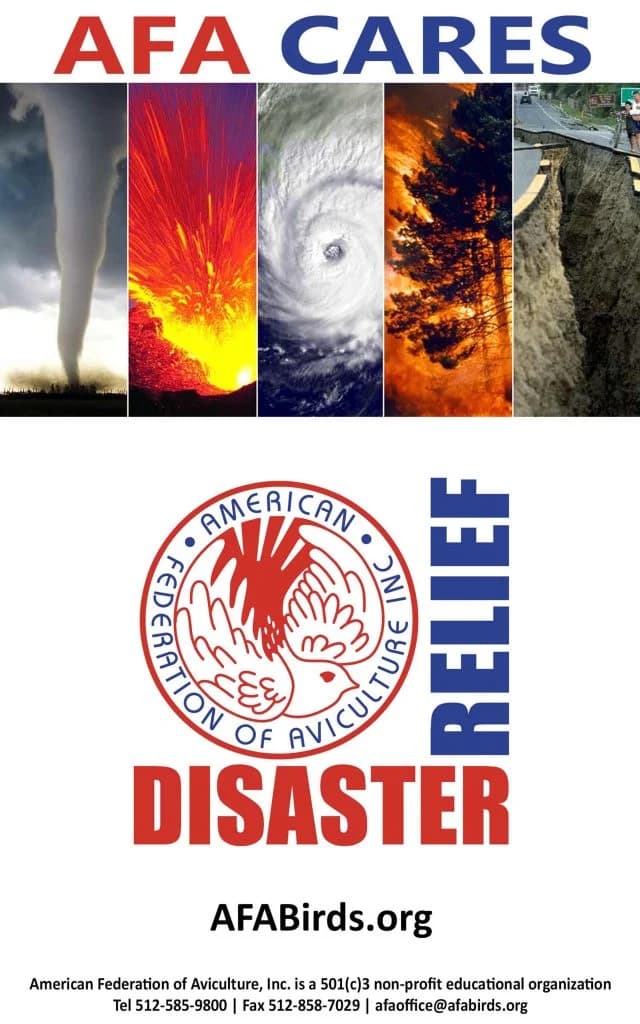
That is why the American Federation of Aviculture has built a Disaster Relief Team with regional directors and local coordinators across the United States. The idea is simple and urgent: when large-scale emergencies hit, help has to move quickly, and bird owners need a network that understands cages, carriers, and avian stress, not just generic pet sheltering.
Former CalFire Chief Mary Ellen LePage puts the timeline bluntly. In disaster work, the rescue is often decided weeks or months before the fireline or storm arrives. For parrots, that means the real emergency plan starts long before the first evacuation notice.
Build the parrot-specific evacuation kit now
Ready.gov says many public shelters and hotels do not allow pets, so the first step is not packing in a panic, it is choosing where you can actually go. It also recommends a buddy system, so someone else can evacuate or care for your animals if you cannot get home, and it urges owners to keep carriers, pet records, and emergency supplies ready in advance.
For parrots, that readiness has to be more than a tote bag in the closet. You need a plan that works for a bird that may panic at noise, refuse unfamiliar handling, or need extra time to transfer safely from cage to carrier.
1. Identify pet-friendly destinations before you need them.
If your usual shelter, hotel, or relative’s house cannot take birds, that is not a plan.
2. Keep carriers ready for every bird you own.
The bird that is calm in the home may not tolerate a scramble in smoke or high wind.
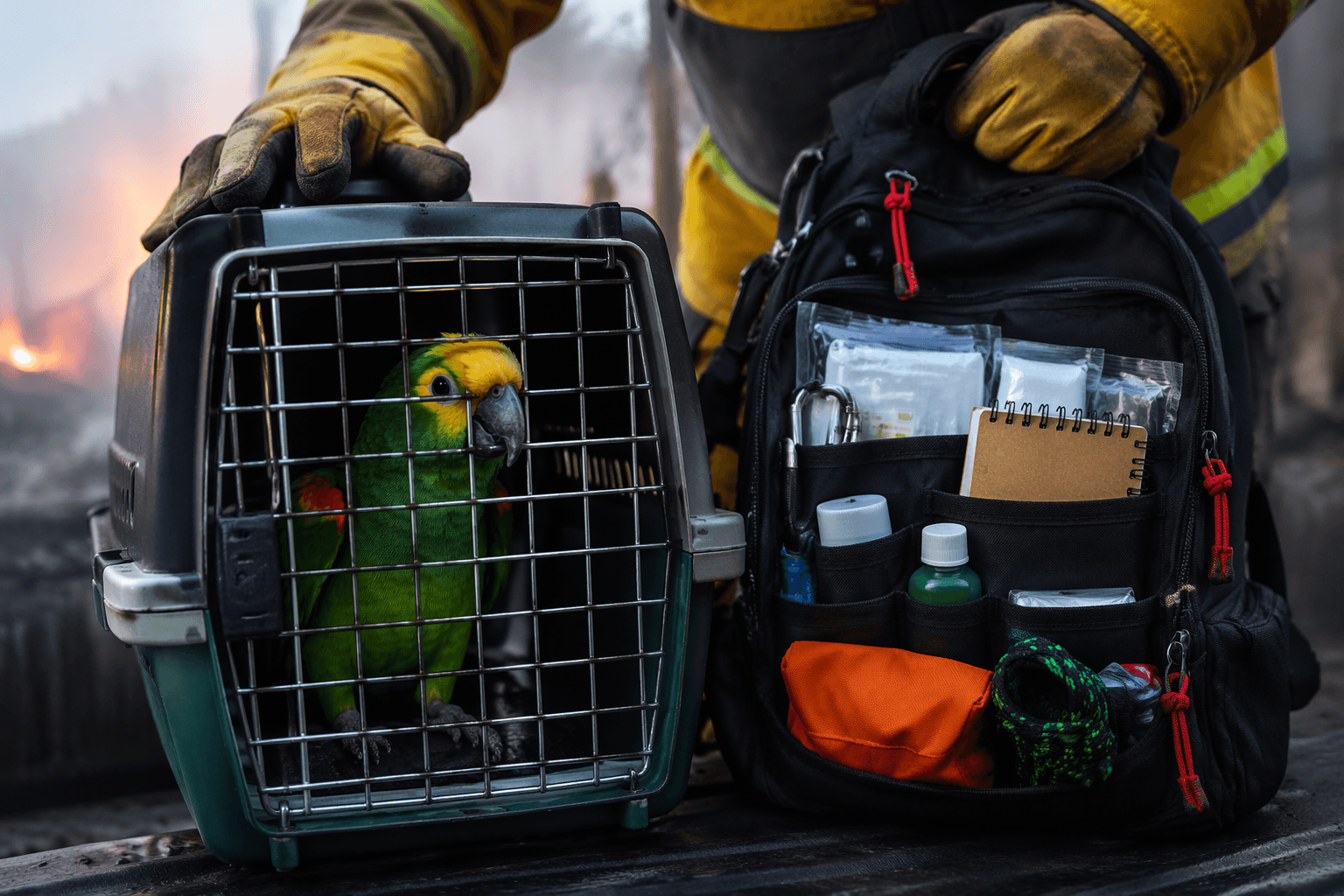
3. Gather medical paperwork now.
Keep vet records, medication instructions, and any ongoing treatment details together so you are not searching for them while power is out or roads are closing.
4. Set up a buddy system with someone who knows your birds.
If you are at work, traveling, or trapped by road closures, that backup person should know where the carriers are and how each bird needs to be handled.
5. Pack emergency supplies before the season turns rough.
Ready.gov’s guidance is straightforward: do not wait until the evacuation order to build the kit.
The goal is not a perfect pack-out. The goal is to make sure your birds can leave with as little handling, delay, and stress as possible.
Treat smoke and fumes as a bird emergency
The American Veterinary Medical Association is especially clear about wildfire smoke. Birds are particularly susceptible to smoke and particulate matter, and they should not be allowed outside when smoke is present. That warning matters far beyond major fire zones, because smoke can travel, air quality can shift quickly, and parrots pay the price faster than most pet owners realize.
The hazard does not stop at wildfire smoke. AVMA says birds are especially sensitive to inhaled particles and fumes from aerosol sprays, overheated nonstick cookware, essential oils, tobacco smoke, glues, paints, and air fresheners. In an evacuation or blackout, when people reach for candles, cleaners, or quick fixes, those everyday products can become a serious threat to a bird’s lungs.
That is why heat protection and ventilation belong in the same conversation as evacuation. If the power goes out or you have to shelter in place, keep the air as clean and cool as you can, and avoid anything that puts fumes into the room. For parrots, clean air is not a comfort item. It is part of emergency survival.
AVMA updated its wildfire-smoke guidance in 2025 after smoke from major fires triggered air-quality alerts across multiple U.S. regions. This is not a one-off warning. It is a recurring reality, and avian owners need to plan accordingly.
Make the plan fit the bird, not just the disaster
Bird owners know that stress changes everything. An untamed bird, a bonded pair, or a flock that lives on routine can become difficult to move safely once alarms sound. That is why aviculture planning has to account for the bird’s temperament, the cage layout, and the time it takes to transfer each bird without injury.
The AVMA also emphasizes that veterinarians are important in disaster preparedness, response, and recovery. That matters because your bird’s doctor can help you think through medications, travel stress, and the medical priorities that should move with you if you have to leave quickly. If your bird has special needs, the documents and contact numbers should already be in the bag.
Biosecurity belongs on the checklist too. AVMA says avian influenza can infect domesticated birds, including pet birds rarely, which makes movement planning during emergencies even more important for flocks and rescues. When birds are being moved under pressure, the less improvisation you do, the better.
Why the community is building stronger response systems
The push for specialized avian disaster planning is part of a bigger shift in animal emergency response. After the 2005 Atlantic hurricane season, animal-disaster response in the United States expanded significantly, and later events pushed the system further. AVMA journal reporting on the 2018 Camp Fire described the animal-health database it used as, to the authors’ knowledge, the first reported animal-health database for disaster response.
That history explains why the aviculture community is leaning into decentralized teams instead of waiting for a single rescue hub to do everything. It also explains why larger welfare groups are involved. ASPCA says shelters and family pets become vulnerable populations during hurricanes, wildfires, tornadoes, and other disasters, and it created a $5 million California Wildfire Response & Preparedness Fund to support animal-welfare organizations, search-and-rescue, feeding-in-place, and sheltering support in wildfire-affected communities.
For parrot owners, the lesson is direct. You do not wait for the smoke to build the plan, and you do not trust generic pet advice to cover a bird’s lungs, stress, or transport needs. The safest evacuation is the one that already knows where the carriers are, who can help, which records travel with the bird, and how your parrot gets out before the air turns bad.
This article was produced by Prism’s automated news system from verified source data, official records, and press releases, then run through automated quality and moderation checks before publishing. The system is built and supervised by the people who set the standards it runs under. Read our full AI policy.
Know something we missed? Have a correction or additional information?
Submit a Tip