Avian vets spotlight urban parakeets, invasive parrots spreading across Europe
Lisbon’s 650-strong rose-ringed parakeet roost is more than a sighting. It’s a warning about how fast urban parrots are reshaping welfare and management choices.
Lisbon’s parrots are a live example of a bigger urban shift
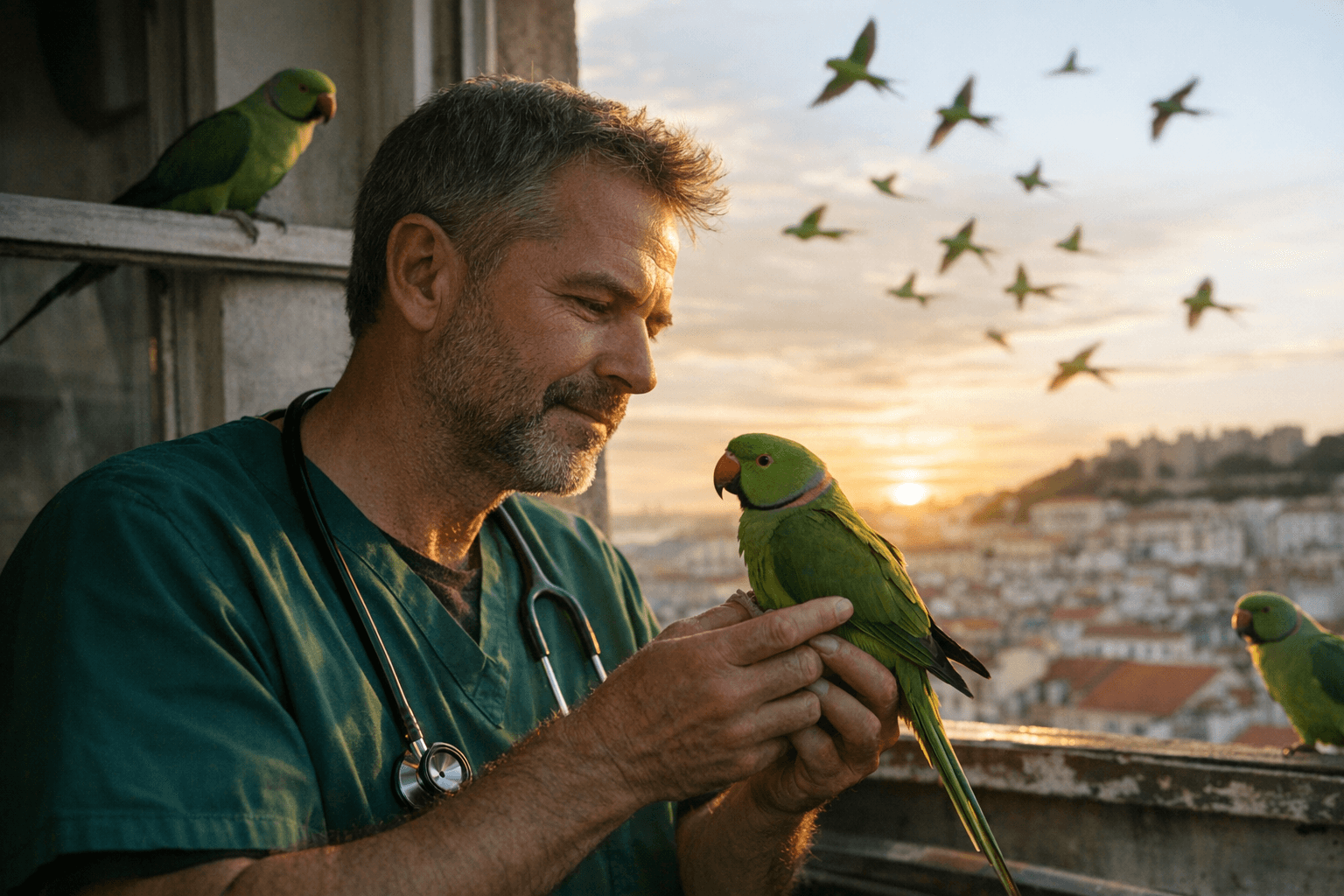
The standout image from the avian vets’ April update is not a pet cage or a clinic exam room, but a city flock. In Lisbon, rose-ringed parakeets have built a visible foothold, with one major roost in Campo Grande reaching 644 birds in a July 2015 count, and later reporting putting the city’s total at about 650. That matters because rose-ringed parakeets have been recorded in Portugal since the late 1970s, which shows how quickly a few birds can become a long-term urban presence.
The Lisbon scene also fits a wider pattern. A 2024 study on alien birds in cities found that the probability of seeing Senegal parrots, rose-ringed parakeets, blue-crowned parakeets and crested mynas increased over time in urban areas. ParrotNet goes further, listing the rose-ringed parakeet among Europe’s top 100 worst alien species and noting that it has established populations in more than 100 cities. For everyday parrot guardians, that is a sharp reminder that parrots are part of city life in ways that go beyond the birds kept in homes.
Why this should change the way you think about urban parrots
The practical takeaway is simple: a wild parakeet in your neighborhood is not just a pretty sighting. It can be a clue that local bird populations are adapting, spreading, and interacting with human spaces in ways that may affect what avian vets, rescues, and municipalities have to manage next.
For guardians, that means staying alert to the bird environment around your home, especially if you live in a city where wild parrots are now routine. It is worth asking your avian vet whether local wild flocks change any of the usual conversations about exposure, transport, or contact with outside birds. Even when your own bird never leaves the house, the wider urban bird community can still shape what is normal in rescue intake, rehabilitation, and disease-awareness planning.
A good city-bird checklist now looks less like abstract wildlife watching and more like day-to-day husbandry:
- Keep windows, doors, and outdoor access points secure, because urban parrots make escape-proofing feel less optional and more essential.
- Pay attention to neighborhood bird activity, especially if you see mixed flocks or repeated roosts near your home.
- If your bird is boarded, rehomed, or handled by others, ask how they think about local wildlife exposure and biosecurity.
- Treat any unusual changes in your bird’s behavior after outdoor noise, nearby flock activity, or contact with outside birds as a reason to call the vet rather than wait.
The welfare issue is not just control, it is how control is done
The newsletter’s welfare thread is just as important as the city-bird observations. It notes that bird control in cities can involve non-lethal methods, and that not all approaches are equally humane. That distinction matters because avian welfare professionals often sit right at the boundary between protecting native ecosystems, managing invasive populations, and avoiding unnecessary suffering.
That is where the policy side becomes practical. The European Commission’s technical note says concern over the welfare impacts of lethal control has driven interest in non-lethal techniques, including methods to prevent reproduction. In plain language, that means the conversation is not simply about removing birds. It is increasingly about whether cities can reduce conflict without defaulting to the most harmful option.
The USDA Animal and Plant Health Inspection Service adds an important caution that hits home for monk parakeets in particular: relocating an invasive species creates new problems and is not an effective management method. For guardians, the takeaway is that “move them somewhere else” is not a humane shortcut. If control measures come up in your area, the more relevant questions are whether they are non-lethal, whether they reduce future conflict, and whether they avoid creating fresh welfare issues elsewhere.
Why avian vets are treating this as a profession-wide issue
The Lisbon observations were not floating in a vacuum. They came from a professional update tied to ICARE 2026, held in Lisbon from 11 to 15 April 2026, where the program included practical labs and hands-on workshops. The European Association of Avian Veterinarians describes ICARE as the largest avian, herpetological and exotic mammal conference in Europe, which tells you how central this kind of exchange is to the field.
That matters for parrot caregivers because the advice that reaches homes often starts with this sort of professional conversation. AAV describes itself as a global organization advancing avian health, welfare, and conservation through education, advocacy, and science, and its newsletter closed by inviting members to join the AAV Avian Welfare Committee or Legislative Committee. That is not just organizational housekeeping. It is a signal that avian medicine now treats welfare, science, and policy as linked parts of the same job.
For the parrot community, the real value is in the direction of travel. Urban parrots are spreading, humane management is getting more attention, and avian vets are pushing welfare and policy work into the center of their profession. The birds in Lisbon show how fast that future can arrive, and the numbers already say it is here.
This article was produced by Prism’s automated news system from verified source data, official records, and press releases, then run through automated quality and moderation checks before publishing. The system is built and supervised by the people who set the standards it runs under. Read our full AI policy.
Did this article answer your question?