Cockatoo’s Feather-Fanning Signals Tension as New Parrot Joins Home
Sweet Pea’s feather-fanning was a warning, not a joke. The clip shows how fast a new parrot can trigger stress, and why slow introductions matter.
When Sweet Pea made her opinion obvious
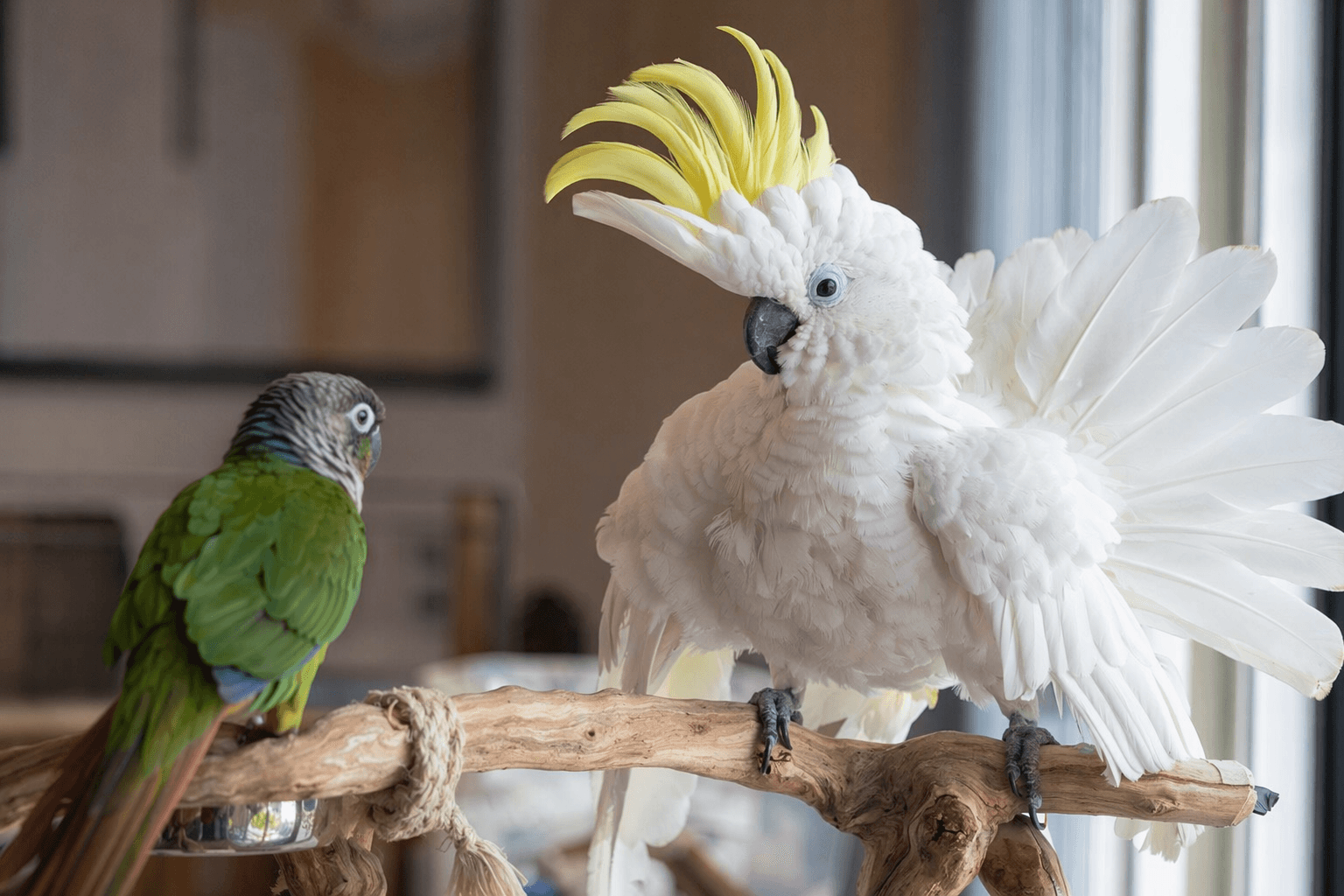
Sweet Pea did not need a bite to make her point. When Ruby, a newly rescued Eclectus parrot, entered the household, the rescued cockatoo fanned her feathers, looked stressed, and acted territorial in a way that was hard to miss. The reaction turned a viral pet moment into a very practical lesson: a new bird can shift the entire mood of a home before the first real confrontation ever happens.
That is what makes this story so useful to parrot people. Sweet Pea was already the established favorite, and other coverage says she was used to being top bird in a busy home that also included other parrots and even a Labrador named Copper. Mom, known online as “The Parrot Lady,” tried to keep the moment calm, even reassuring Ruby with, “She won’t hate you forever!” That line captures the right mindset. A tense first meeting does not automatically mean permanent conflict.
What Sweet Pea’s body language was saying
Feather-fanning is not just a dramatic look for the camera. In cockatoos, spreading feathers can make the body seem larger and less vulnerable, which is exactly why it often shows up when a bird feels uneasy, guarded, or territorial. The key is context. Crest or crown feathers can reflect excitement, curiosity, fear, aggression, or playfulness, so you have to read the whole bird, not one pose in isolation.
That matters because cockatoos do not always announce discomfort with loud, obvious behavior. They often communicate through posture, motion, sound, and facial cues long before they escalate to a bite. Silence is not the same thing as calm. If Sweet Pea looks stiff, puffy, wide-eyed, or repeatedly fans her feathers during an introduction, that is a message to slow down rather than push forward.
The bond behind the blow-up
The drama in a multi-bird home makes more sense when you remember how intensely cockatoos attach. A 2024 review notes that many cockatoos are socially monogamous and can form pair bonds that last for decades, even a lifetime. Rosemary Low has described them as very strong pair-bond birds, sometimes called “velcro” birds because they want so much closeness.
That is a big reason introductions can feel so charged. A cockatoo does not always see a new bird as a casual roommate. The arrival can look like a threat to routine, attention, or access to a favored person or space. In Sweet Pea’s case, the response was dramatic, but it was also normal in the sense that it reflected a species built for deep social attachment.
Slow the setup before the tension builds
The safest takeaway from this story is simple: do not rush bird introductions. VCA Animal Hospitals advises quarantining a new bird first, since a bird with an unknown history may carry contagious illnesses such as chlamydia, salmonella, polyomavirus, or psittacine beak and feather disease. That first separation protects the whole household before any social pressure even starts.
After quarantine, the next move is controlled distance. VCA recommends placing the cages in the same room but apart, then gradually moving them closer as both birds get comfortable with the sight and sound of each other. That gives you a clean read on stress levels without forcing contact too soon. The Association of Avian Veterinarians also advises that newly acquired birds get a prompt medical examination, which is the right time to ask about species-specific risks, behavior concerns, and whether the birds are healthy enough for a slow introduction plan.
A practical playbook for the first meetings
The goal is not to rush friendship. The goal is to prevent one bad first impression from becoming a long-term household problem. Start with separate spaces, even after the quarantine phase, so each bird has a territory that still feels secure. Then use distance to let them hear and see each other without having to negotiate perch space, toys, food, or attention.
- feather-fanning or puffing that makes the bird look larger
- a tense posture or fixed stare
- crest or crown changes that look more alarmed than curious
- territorial behavior around cages, people, or toys
- escalating vocalizing that sounds sharper or more defensive
When you do move closer, keep the sessions short and watch for the details Sweet Pea gave away so clearly:
If those signs show up, stop the meeting before it becomes a fight. That is not failure. It is good handling. A bird that is allowed to calm down and try again later is far more likely to build a workable relationship than one pushed through a stressful encounter.
Why this viral clip matters beyond the laugh
Sweet Pea’s reaction got attention because it was funny, but the real value is in how clearly it showed the early warning signs. A new parrot can bring joy, companionship, and a richer household, yet it can also expose how much birds rely on familiar routines and carefully managed social distance. The first meeting is not the finish line. It is the start of a process that depends on quarantine, veterinary clearance, pacing, and close reading of body language.
Ruby may still become part of the flock, but only if the humans let the relationship develop on the birds’ terms. In a multi-parrot home, the smartest move is to treat feather-fanning as information, not entertainment, and to let a tense first impression cool off before it hardens into a lasting feud.
This article was produced by Prism’s automated news system from verified source data, official records, and press releases, then run through automated quality and moderation checks before publishing. The system is built and supervised by the people who set the standards it runs under. Read our full AI policy.
Did this article answer your question?