Finding the Right Avian Vet, A Top Priority for Parrot Owners
Most vets graduate with almost no bird training — here's how to find one who actually knows psittacines before your parrot needs urgent care.

Most parrot owners spend serious time researching diet, enrichment, and housing before bringing a bird home. The vet search? It often gets treated as an afterthought. That's a mistake, and one that can cost you dearly, both financially and in terms of your bird's health. Finding the right veterinarian is genuinely one of the highest-priority care decisions a parrot owner can make, and the process requires more scrutiny than simply typing "bird vet near me" into a search engine.
Why General Vets Usually Aren't Enough
Here's something most new parrot owners don't realize: standard veterinary school provides very little training in bird care. As Zupreem puts it directly, "most new graduate veterinarians are ill-equipped to care for this unique species." That's not a knock on general practitioners — it's a structural reality of how veterinary education works. Birds are physiologically complex animals with completely different disease presentations, drug sensitivities, and surgical considerations compared to cats or dogs.
To develop genuine expertise, a vet needs to go well beyond that baseline. At minimum, meaningful avian training requires a one-year internship, potentially followed by a two-year residency in bird and exotic animal medicine and surgery. Veterinarians who pursue full specialization commit to 3 to 6 years of advanced training beyond veterinary school, and once they've earned that specialty designation, they must recertify every 10 years to maintain it. Many general vets have made real efforts to teach themselves about birds, and any licensed veterinarian may legally treat a bird. But unless they have that advanced postgraduate training, they cannot call themselves bird specialists — and for a parrot with a serious illness, the difference matters enormously.
How to Find a Qualified Avian Vet
Two directory tools are your best starting points. Lafeber's "Find an Avian Vet" page is specifically designed to help bird owners locate board-certified avian specialists and clinics experienced with psittacine species. The Association of Avian Veterinarians (AAV) runs a parallel "Find a Vet" function on its website where you can search for veterinarians in your area who have documented training in bird care. Both resources are purpose-built for this search, and using them is a smarter starting point than a general veterinary directory.
Once you have some names, do your homework. Proximity should not be your deciding factor. As the guidance from Birdsupplies states plainly, "it's important to look beyond proximity and consider the quality of care they offer." If the most qualified avian vet in your region is a 45-minute drive, that's the vet worth going to. The ideal candidate has a solid background in avian medicine, comes highly recommended by other bird owners, and holds active membership in professional associations like the AAV. That membership signals ongoing engagement with advances in avian medicine; it's not just a credential to hang on a wall.
Peer recommendations carry real weight here. Parrot community groups, bird club networks, and online forums are full of owners who have already done this search in your region. Their firsthand experience with how a particular vet handles psittacines, manages stressful exams, and communicates diagnoses is information you can't get from a directory listing alone.
The Rapport Factor
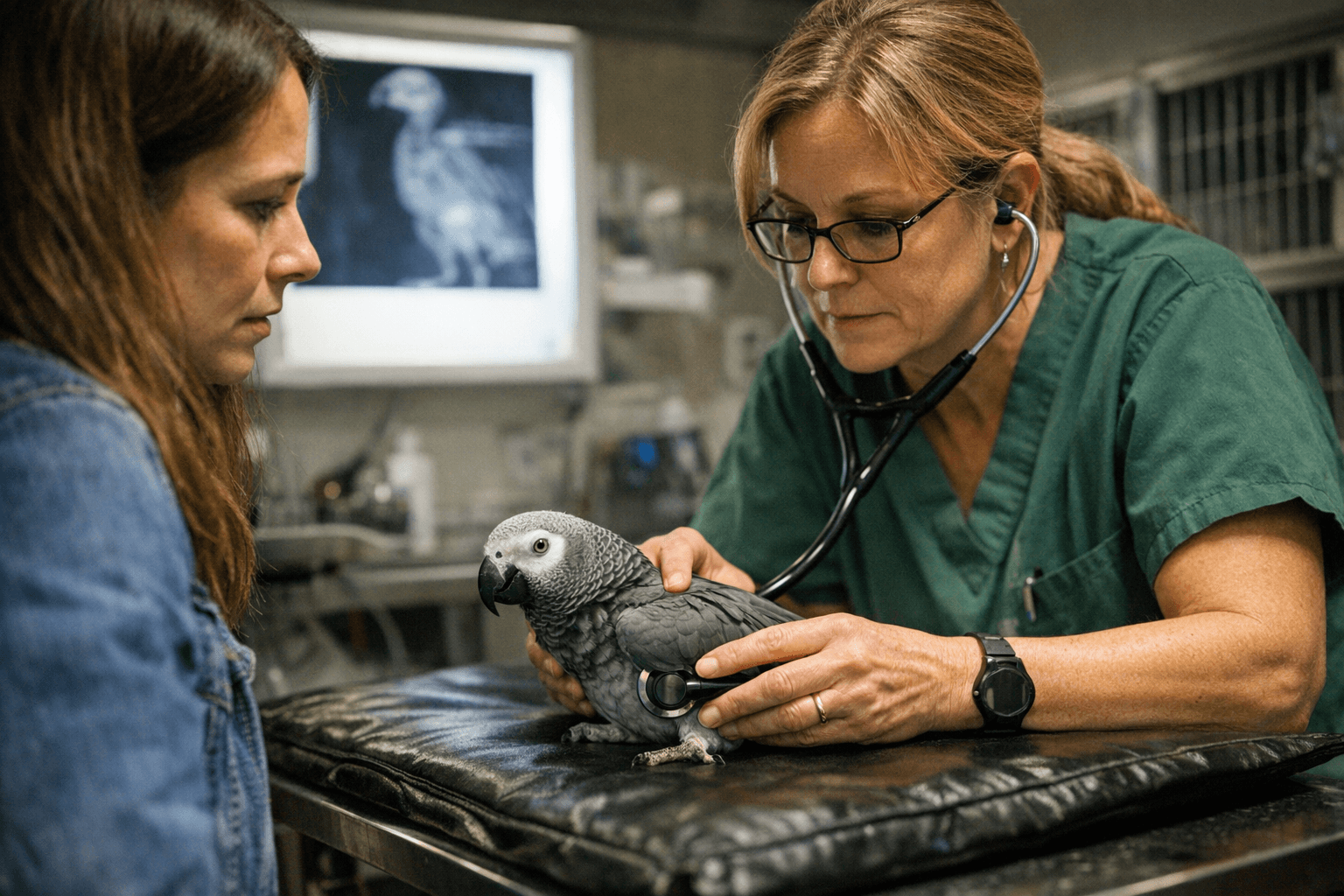
Don't underestimate the vet-bird-owner relationship. Avian exams can be stressful for birds, and a vet who handles psittacines confidently and calmly makes a measurable difference. "A good rapport between the vet, the bird, and its owner is indispensable for providing a stress-free medical experience." Your own comfort matters too; if you feel rushed, dismissed, or unclear on what you're being told, that's a problem. You need to be able to describe subtle behavioral changes accurately, and a vet who doesn't listen carefully is going to miss things.
When to Go and How Often
Annual wellness checks are the baseline, and they're non-negotiable if you're serious about your bird's long-term health. The purpose of those yearly visits isn't just to confirm everything looks fine — it's to catch illness early, when treatment outcomes are dramatically better and, importantly, cheaper. Avian medicine is not inexpensive, and early diagnosis almost always costs less than managing a condition that has been allowed to progress.
Beyond the annual schedule, know your bird well enough to recognize deviations. Seek veterinary attention immediately if you notice any changes to appetite, energy level, or behavior. This urgency is not overstated. Unlike cats and dogs that can manage several days without a meal, many birds have fast metabolisms and cannot go more than a day without eating. There's also a harder challenge at play: most birds instinctively hide signs of illness, a survival behavior carried over from wild ancestors who couldn't afford to appear vulnerable to predators. Pet parrots do the same. By the time the signs are obvious enough for you to notice, your bird has likely been sick for a while and can no longer mask it. Waiting to see if things improve on their own is not a strategy that works with birds.
Monitor food intake daily. Track droppings. Notice if your bird is less vocal than usual, sitting lower on the perch, or fluffing up outside of normal napping behavior. These are the details that matter, and your vet needs you to report them accurately.
Daily Husbandry as Preventive Care
Veterinary care doesn't happen in a vacuum. A bird whose physical and emotional needs are consistently met is, as the Shubolt Parrot Wellness framework notes, "less likely to get stressed out and more likely to maintain optimum health." That means building a daily parrot care routine that covers diet, social interaction, enrichment, and rest — not just reacting to problems when they arise. Honing your husbandry skills is genuinely one of the most effective ways to reduce illness risk and vet visits.
For owners who aren't sure where to begin, a bird behavior consultation is a worthwhile investment. Diane Burroughs, LCSW is a licensed psychotherapist trained in ABA therapy techniques who specializes in avian anxiety disorders and is certified in Nutrition For Mental Health. She has written multiple bird behavior books, offers behavior consultations, and developed the UnRuffledRx line of science-backed parrot wellness supplies. That combination of behavioral and nutritional expertise is exactly the kind of support that can fill gaps between vet visits.
Building Your Avian Care Team
The strongest approach treats avian veterinary care and daily husbandry as two sides of the same commitment. Find a vet with verified avian credentials through the AAV or Lafeber directories, confirm they hold active professional association membership, and get a recommendation from other parrot owners in your network before you're in an emergency. Schedule that first wellness exam before any health concerns arise, so your vet already has a baseline for your bird. And build daily routines robust enough that subtle changes are easy to spot, because in avian care, the owner's observation skills are often what makes a timely diagnosis possible.
This article was produced by Prism’s automated news system from verified source data, official records, and press releases, then run through automated quality and moderation checks before publishing. The system is built and supervised by the people who set the standards it runs under. Read our full AI policy.
Did this article answer your question?