Goffin’s cockatoos learn when a reward system permanently stops working
Goffin’s cockatoos can spot when a once-working reward is truly dead, not just delayed. For keepers, that means broken toys and stale routines need faster resets.
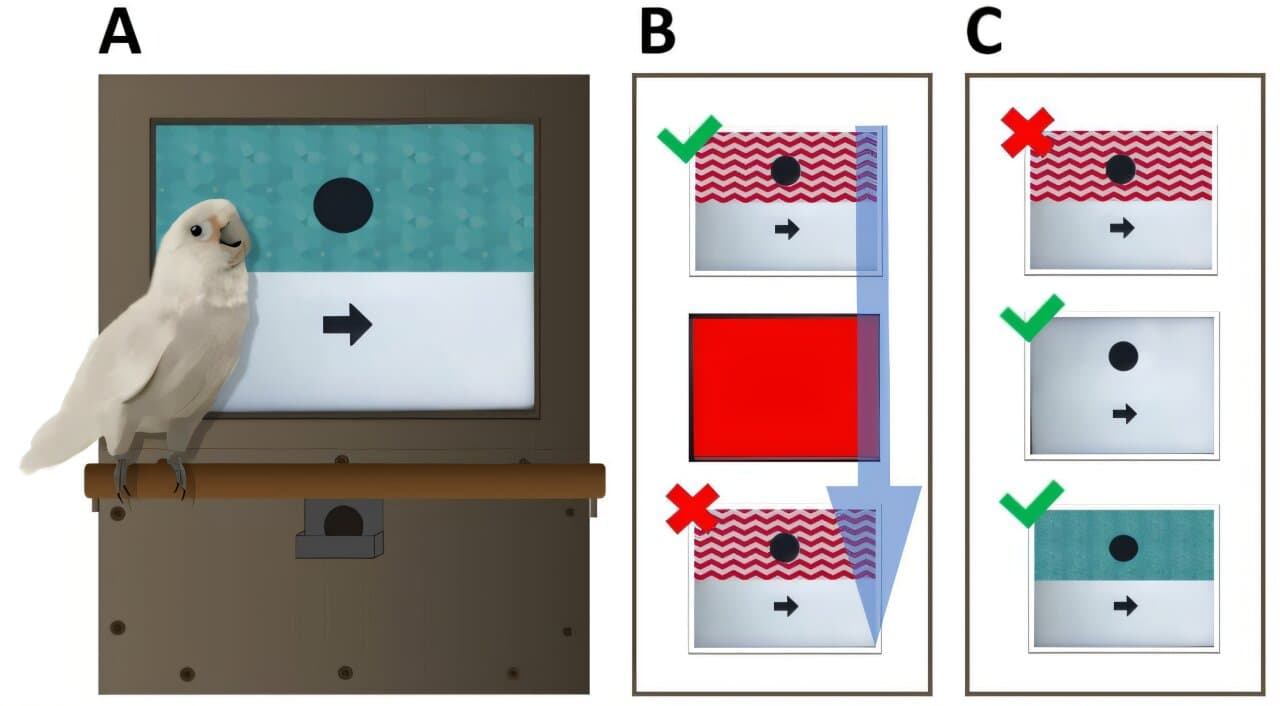
A cockatoo that keeps tapping a dead touchscreen icon is not just being stubborn. In new work on Goffin’s cockatoos, researchers asked whether the bird can learn that a reward system has permanently stopped working, then carry that lesson into a different setting.
That is a lot more interesting than a simple yes-or-no trick. The paper, titled *Sensitivity to permanent non-functionality in Goffin’s cockatoos*, tackles one experimentally testable piece of a “minimal concept of death,” which is not the same as saying birds think about mortality the way humans do.
What the study was really asking
The core question is practical once you strip away the philosophy: when something that used to pay off no longer does, can a bird recognize that the failure is permanent rather than temporary? In the study’s setup, the cockatoos had to learn that an interactive touchscreen element that once produced a reward had stopped working in one context, then see whether they would apply that lesson somewhere else.
That distinction matters because parrots live on expectations. If a toy used to dispense a nut, if a training target used to earn a sunflower seed, or if a puzzle box used to open after a certain move, the bird is not just reacting to the object in front of it. It is tracking whether the object still has a future. The researchers report that the birds flexibly and spontaneously treated specific interactive elements as persistently non-functional after a single negative event, which is a stronger pattern than simple trial-and-error.
Why Goffin’s cockatoos are such a good species for this kind of test
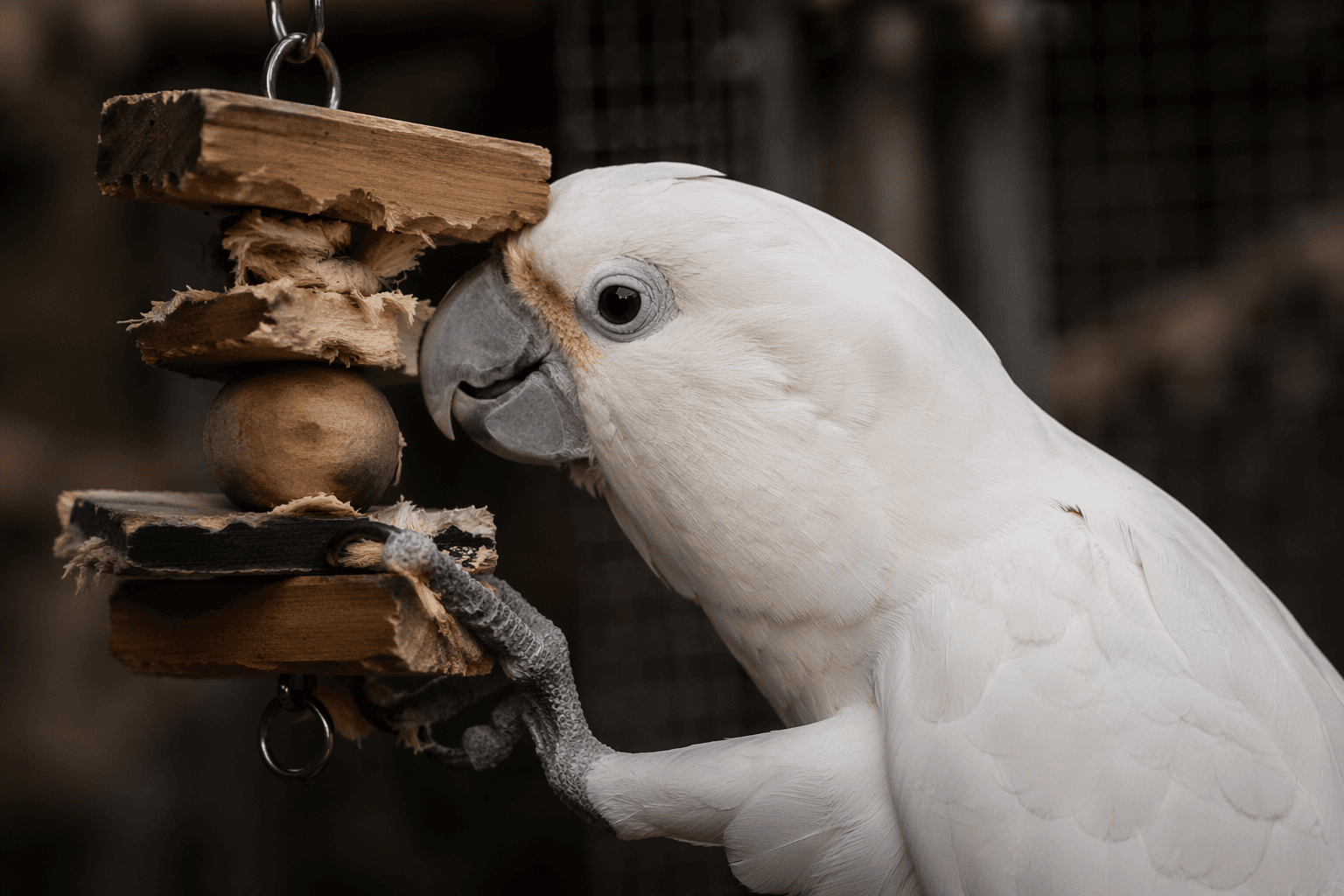
Goffin’s cockatoos are not random test subjects. Vetmeduni describes them as opportunistic feeding generalists with inquisitiveness, sophisticated object manipulation, and serious tool-making ability. They are endemic to the Tanimbar Islands in Indonesia, and their reputation for poking, pulling, and inventing has made them one of the most useful species for asking how flexible parrot cognition really is.
That background matters because the new touchscreen study sits inside a bigger body of work showing that these birds do not just memorize a single trick. A prior wild study found Goffin’s cockatoos could flexibly manufacture and use tool sets in the field. A 2021 Frontiers in Psychology study found some birds could solve a novel problem by choosing relevant past experience over misleading experience. A 2024 Vetmeduni study found cockatoos preferred lighter objects in transport tasks, with the options differing by 30 percent in weight. Put together, that is the profile of a bird that does not merely repeat what worked once, but recalculates when the situation changes.
The people behind the project
The work grew out of collaboration between philosopher Susana Monsó and cognitive biologists Antonio J. Osuna-Mascaró and Alice Auersperg. That mix is not window dressing. The Messerli Research Institute was built to cross boundaries, bringing together biology, veterinary medicine, human medicine, philosophy, psychology, and law, and this study is exactly the kind of question that benefits from that range.
Monsó, who wrote *Playing Possum: How Animals Understand Death*, frames the issue as something that can be broken into simpler components. That approach keeps the science honest. Instead of claiming a cockatoo understands death in a human sense, the study asks a narrower, cleaner question: can the bird recognize permanent loss of function? For comparative cognition, that is the right place to start.
What this means when your bird gets bored, frustrated, or stuck
Here is where the study becomes genuinely useful for parrot people. If your bird understands when a reward system is truly dead, then stale enrichment is not just boring, it is information. A broken foraging toy that no longer opens, a treat rule you changed without a clear reset, or a training plateau where the old cue stops producing reinforcement can all become the bird-room version of that dead touchscreen.
That should change how you set up enrichment at home:
- If a foraging device is broken, repair it or retire it. A dead mechanism is not the same as a hard puzzle.
- If you change the treat rule, make the new rule obvious. Parrots are good at updating, but they still need a clear context shift.
- If a bird is banging on something that no longer pays, do not assume persistence equals engagement. Sometimes it is frustration with a reward system that has already expired.
- When training stalls, vary the task instead of grinding the same failed cue. A fresh context can help the bird understand that the rules have genuinely changed.
That is the owner payoff here. Goffin’s cockatoos are telling us that parrots can track not just what works, but what has stopped working for good. That makes them brilliant problem-solvers, but it also means their environment has to keep pace with their brains.
Why this matters for the bird in front of you
The strongest takeaway from this study is not philosophical, it is practical: parrots notice failure, and they do not always treat failure as temporary. The bird that keeps checking the dead touchscreen icon, the jammed foraging wheel, or the old treat station is not being silly. It is testing whether the world has changed in a lasting way.
For Goffin’s cockatoos, the answer in this study was yes, they could tell. For keepers, that is a reminder to build homes and training sessions that stay alive. A cockatoo that can recognize a dead reward system needs enrichment that is still worth solving, not just something to tap after the payoff is gone.
This article was produced by Prism’s automated news system from verified source data, official records, and press releases, then run through automated quality and moderation checks before publishing. The system is built and supervised by the people who set the standards it runs under. Read our full AI policy.
Know something we missed? Have a correction or additional information?
Submit a Tip