Parrot Essentials Guide Covers Cuttlebone Benefits for Calcium and Beak Health
Cuttlebone isn't just a cage accessory — African Greys prone to hypocalcemia may need it daily for calcium and beak health.
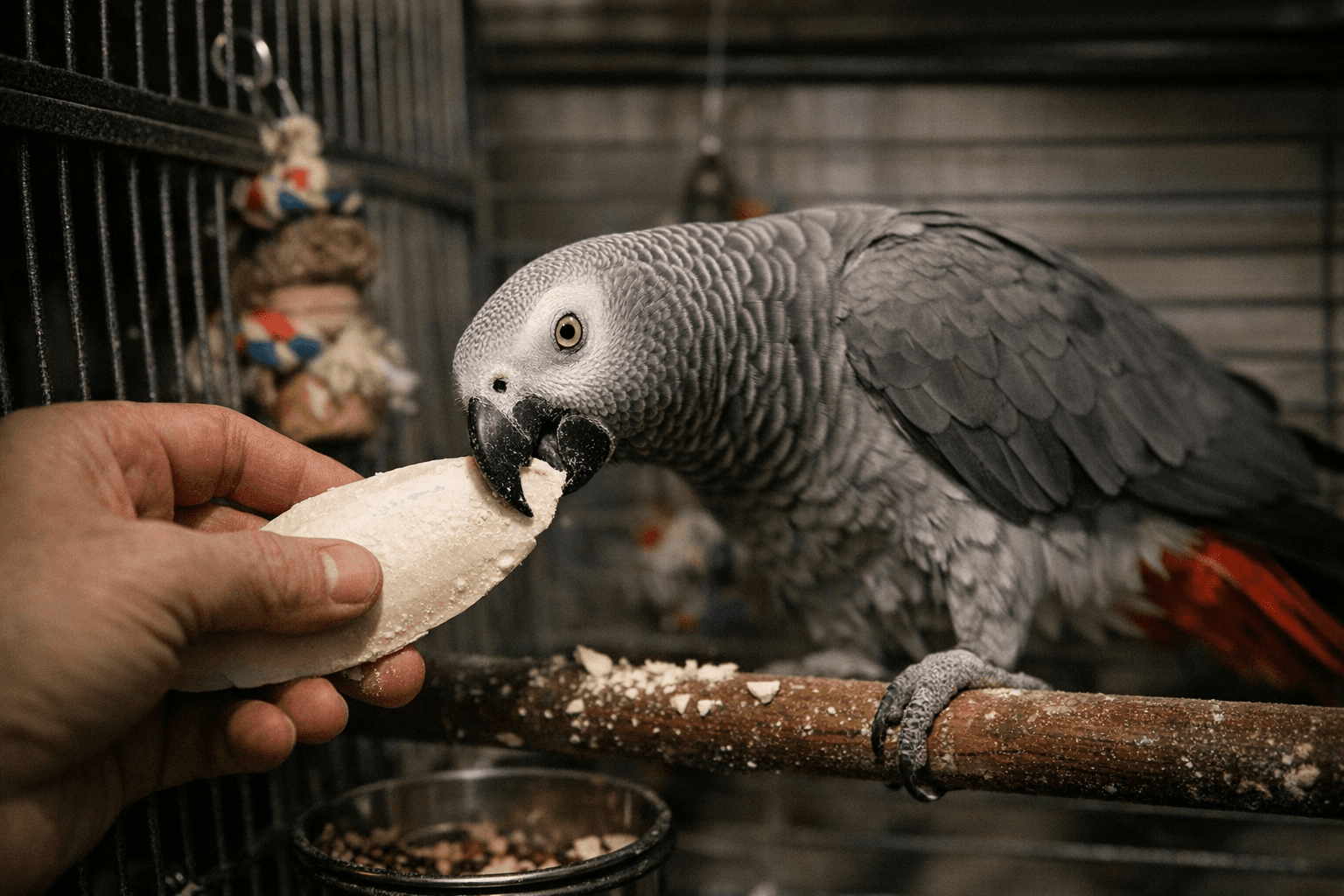
Cuttlebone is one of those cage staples that often gets clipped in and forgotten, yet the science behind it is surprisingly substantive. Parrot Essentials, a UK-based parrot supplies and care information site, published a practical blog post titled "Cuttlebone for Birds: Why Your Parrot Needs It" on March 23, 2026. The guide brings renewed attention to something many bird keepers underestimate: not all cuttlebone is created equal, and for certain species, getting it right is a genuine health priority.
What Cuttlebone Actually Is
Cuttlebone is the internal shell of a cuttlefish. Birds use it as a natural calcium source and to help maintain beak condition. That deceptively simple description covers a lot of physiological ground. Beyond shaping the beak, cuttlebone provides mostly calcium carbonate with trace minerals, an easy, low-calorie way to support bone strength and eggshell formation. It is not a treat and not a toy in the conventional sense; it sits at the intersection of nutrition and enrichment, doing both jobs quietly every time your bird gnaws at it.
A good cuttlebone supports daily beak conditioning while delivering bioavailable calcium that birds can self-regulate, making it a practical alternative to many bird calcium supplements. That self-regulation factor matters: birds typically take what they need rather than overconsume, which is one reason cuttlebone is considered a lower-risk calcium source compared to drops or powder added to food or water.
Why Calcium Matters Beyond the Beak
The beak-conditioning angle is the most visible benefit, but the nutritional role runs deeper. Beyond beak conditioning, cuttlebone serves as a natural calcium source for parrots, supporting bone strength, egg production in hens, and proper nerve and muscle function. For breeding hens especially, calcium demand spikes dramatically during egg production, and an accessible cuttlebone gives them a self-service source they can turn to instinctively.
African Greys, in particular, can be prone to hypocalcemia, so consistent access to pure cuttlefish bone can help complement a balanced diet and appropriate vitamin D3/UVB exposure. Hypocalcemia in African Greys can present as seizures and tremors, making this more than a casual dietary footnote. Vitamin D3 and UVB light remain essential companions to calcium intake, since calcium absorption depends on them; cuttlebone addresses supply, but the full picture requires adequate light exposure too.
Species That Benefit Most
African Greys and Cockatoos are powerful chewers with higher calcium needs, making natural cuttlebone for birds an essential daily staple. These are not birds that will politely nibble at a piece once a week; they work through cuttlebone with intent, and that mechanical engagement also contributes to beak maintenance over time.
Large parrots like macaws, cockatoos, and Amazons exert serious pressure when they chew. That makes dense, intact, whole cuttlebone essential for both beak conditioning and a steady natural calcium source for parrots. A flimsy or poorly processed piece will crumble under those beaks before it delivers much value, which is why density and intactness are non-negotiable for the large-parrot household. Smaller species such as finches and canaries can also benefit, though their requirements and chewing force are considerably different.
How to Choose Quality Cuttlebone
Choosing natural cuttlebone for birds starts with understanding what makes a piece safe, effective, and species-appropriate. Not all options are equal: processing, density, hardware, and size all influence quality and safety. Here is what to evaluate before buying:
- Processing: How the cuttlebone has been cleaned and prepared affects purity. Look for pieces described as pure or minimally processed, without chemical treatments.
- Density: Critical for large chewers. A dense piece holds up to macaw and cockatoo beaks and provides sustained engagement rather than disintegrating in a session.
- Hardware: Some cuttlebones come with metal clips or wires for cage attachment. Ensure any hardware is bird-safe or removable, as exposed metal can pose a hazard.
- Size: Match the piece to your bird. An 8-inch cuttlebone is ideal for medium to larger birds and can be offered as a regular enrichment option alongside a balanced diet.
- Intactness: Whole pieces are preferred for large parrots; pre-broken or fragmented product reduces the structural benefit.
A Premium Example: Captain Cuttlebone
Squawkshop's Captain Cuttlebone is an 8-inch natural white cuttlebone for birds, providing a healthy calcium supplement and aiding in keeping beaks trimmed and smooth, and is described as ideal for parrots, finches, canaries, and other pet birds. The product is marketed under the heading "8" Natural Cuttlebone for Birds (Calcium + Beak Support)" and positions itself around the criteria that matter most for medium to large species: natural composition, appropriate size, and beak-conditioning function.
Squawk Shop describes its sourcing philosophy directly: "We carefully curate every product to meet the highest standards of quality, ensuring it supports your bird's instinctive needs while enhancing their daily life in meaningful ways." The retailer offers free returns within 30 days of purchase, with options for store credit, a different product, or a refund to the original payment method, alongside 24/7 customer support.
Frequency, Safety, and the Vet Rule
Most birds can have access to cuttlebone regularly, but it should complement, not replace, a balanced diet. If your bird over-consumes, limit access and check with an avian vet. For the vast majority of parrots, regular access is perfectly safe; the concern arises mainly when a bird fixates on cuttlebone to the exclusion of other food sources, which can occasionally happen with birds on nutritionally incomplete diets.
Cuttlebone is generally safe for parrots when it is bird-safe and replaced if it becomes dirty, moldy, or breaks into sharp pieces. A quick visual check each week is good practice: a piece that has become soiled from food or droppings, or that has fractured into jagged shards, should be swapped out promptly.
Always consult an avian vet before adding or changing bird calcium supplements, especially if your parrot eats fortified pellets. Pellet-fed birds already receive supplemented calcium, and doubling up without guidance from an avian vet could, in rare cases, tip the balance. This is especially relevant for African Greys already on a managed diet protocol.
Incorporating Cuttlebone as Enrichment
Beyond the nutritional role, cuttlebone earns its place as a low-key enrichment item. The texture invites exploratory chewing, the act of working through it engages the beak constructively, and the self-regulated calcium delivery means your bird is participating actively in its own nutritional maintenance. Positioned within reach in the cage, it requires no preparation and no special scheduling; it simply becomes part of the environment your bird interacts with on its own terms.
For species like African Greys with documented susceptibility to calcium deficiency, treating cuttlebone as a daily staple rather than an optional extra is a meaningful shift in how you manage the cage setup. Paired with appropriate UVB lighting or vitamin D3 supplementation and a varied, balanced diet, it becomes one component of a genuinely well-considered care routine.
This article was produced by Prism’s automated news system from verified source data, official records, and press releases, then run through automated quality and moderation checks before publishing. The system is built and supervised by the people who set the standards it runs under. Read our full AI policy.
Did this article answer your question?