Safe and Stimulating Parrot Housing: A Practical Setup Checklist
Your parrot's cage setup can make or break their health and happiness — here's the exact checklist that covers every detail, from bar spacing to foraging toys.
Getting a parrot's housing right isn't a one-time task you check off and forget. It's the foundation of everything: their physical health, their mental state, their relationship with you. Whether you're setting up for a budgie, a cockatiel, or a larger species like an African grey or an Amazon, the principles are the same even if the scale shifts dramatically. Here's what actually matters, broken down into the categories that will make or break your bird's quality of life.
Cage size and bar spacing: start here, not with price
The single biggest mistake new parrot keepers make is buying a cage that looks impressive in the store but is functionally too small for the bird they're housing. For budgerigars, the minimum recommended cage width is 18 inches, but wider is always better since budgies are horizontal fliers. Cockatiels need at least 24 inches wide, ideally more. For larger parrots, the rule of thumb is that your bird should be able to fully extend both wings without touching the sides. If they can't do that, the cage is too small, full stop.
Bar spacing is equally critical and often overlooked. Bars spaced too wide are a strangulation and escape hazard. For small birds like budgies and parrotlets, bar spacing should be no more than half an inch. Cockatiels and conures sit comfortably at half an inch to three-quarters of an inch. Larger parrots like amazons, African greys, and macaws can handle one inch to one-and-a-half inches. Get this wrong and you're creating a genuine safety risk.
Bar orientation matters too. Horizontal bars on at least two sides give your parrot climbing surfaces, which they'll use constantly. A cage that's all vertical bars is a missed opportunity for exercise and enrichment.
Placement: where the cage lives in your home
Position the cage against a wall, not in the center of a room. Parrots feel more secure with at least one solid side behind them. Avoid placing the cage in a kitchen: cooking fumes, non-stick cookware (Teflon and similar PTFE-coated surfaces release fumes that are lethal to birds at normal cooking temperatures), and temperature fluctuations make kitchens genuinely dangerous.
Natural light matters, but direct sun without shade is a problem. Position the cage so part of it receives indirect natural light during the day, but make sure the bird can move to a shaded section if they want to. Drafts from air conditioning vents and windows are another placement pitfall that causes respiratory issues over time.
Height is also a factor. Parrots are prey animals with a strong instinct to be at height. Keeping the cage at roughly eye level or slightly above tends to produce a calmer, more confident bird than a cage sitting low on the floor.
Perches: variety is the whole point
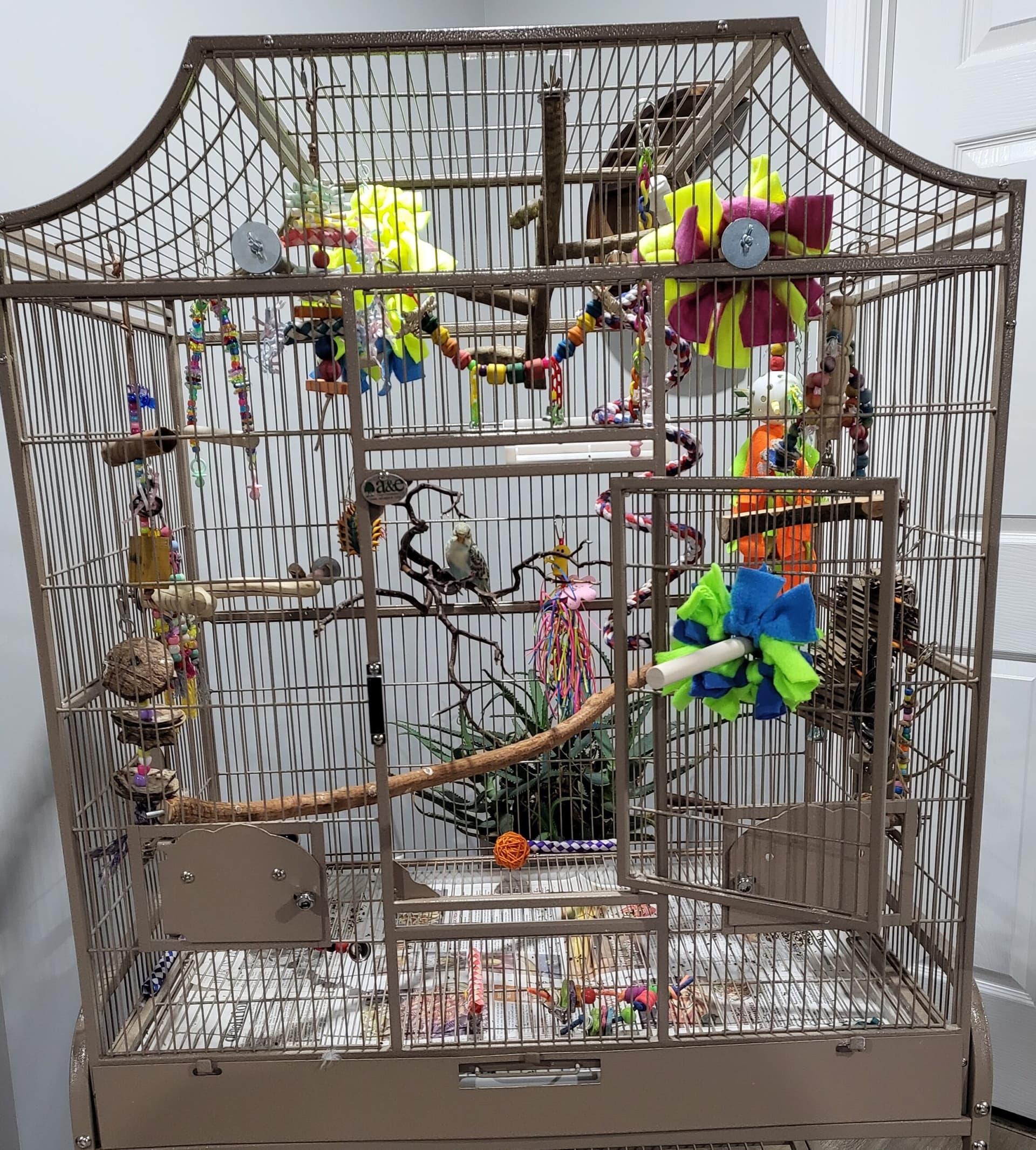
Stock cages almost always come with two identical smooth dowel perches. Replace them or supplement them immediately. Uniform perching surfaces are a leading cause of pressure sores and bumblefoot in companion parrots. What you want is a variety of diameters and textures across the cage height.
Natural wood perches from bird-safe species are the gold standard: manzanita for durability, dragonwood for interesting shapes, and fresh-cut branches from apple, willow, or eucalyptus (unsprayed) for texture and the bonus enrichment of chewing. Rope perches add a flexible, comfortable option that works especially well at sleeping spots. Cement or sandy perches near food dishes help with nail maintenance, though they shouldn't be the only perch type since they can be abrasive if overused.
Aim for at least three to five distinct perch types in any setup. The variation keeps foot muscles engaged and makes the cage environment genuinely interesting rather than static.
Feeding stations: more than just a bowl
Two food dishes are the bare minimum: one for fresh food, one for pellets or seed. A separate water dish or water bottle keeps drinking water clean from food debris. Stainless steel dishes are the practical choice over plastic since they don't harbor bacteria in scratches and can be properly sterilized.
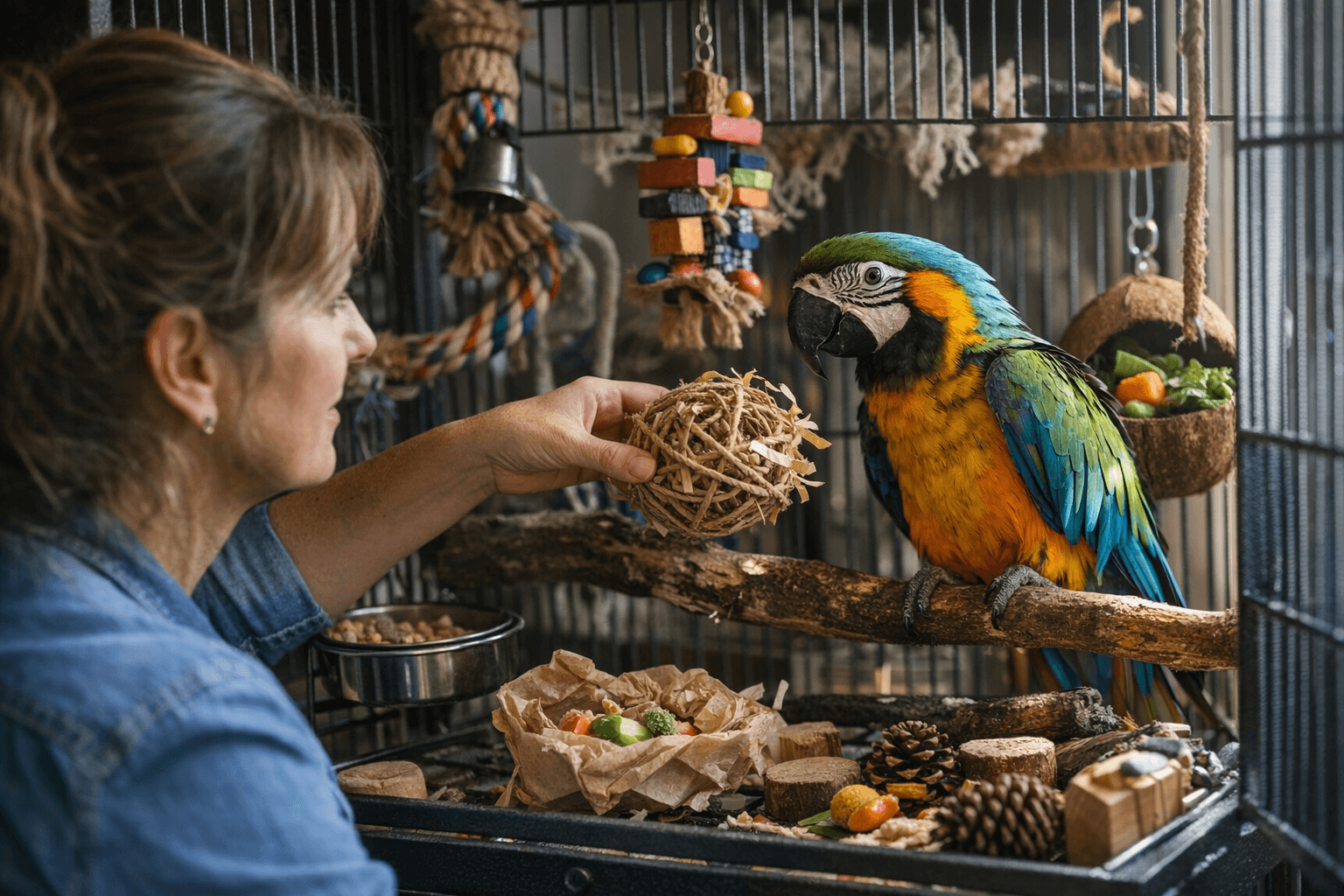
Where you place the dishes matters. Don't position food or water directly under perches where droppings will contaminate them. Keep them accessible but not in a location that forces the bird to awkwardly reach them; a parrot that has to strain to eat will avoid that dish.
Consider adding a foraging element to at least one feeding station. Skewers for threading vegetables, foraging trays filled with shredded paper hiding pellets, or treat-dispensing toys near the food area bridge the gap between feeding and enrichment.
Enrichment: the part most setups underinvest in
This is where a lot of cage setups fall flat. A parrot that has nothing to do will get loud, destructive, or depressed. Enrichment isn't optional; it's as necessary as food and water.
Rotate toys on a weekly basis. A parrot that has the same toys in the same positions for months will ignore them. The rotation principle keeps novelty working in your favor without you constantly buying new items. Good toy categories to cycle through include:
- Foraging toys that hide food and require problem-solving to access
- Destructible toys made from palm fronds, cork, softwood, and paper that satisfy the chewing drive
- Foot toys, smaller items the bird can hold and manipulate independently
- Puzzle and cognitive toys, especially valuable for larger species with high intelligence needs
Avoid toys with small metal rings, loose threads that can wrap around toes, or zinc and lead components. Check hardware on new toys before introducing them. Quick-link carabiners made from stainless steel are a safer alternative to the cheap zinc-plated hooks that come stock on many toy hangers.
Safety audit: before anything goes in the cage
Run a safety check before your bird moves in. Look for:
- Any sharp wire ends inside the cage that can catch a toe or puncture skin
- Paint or powder coating that's chipping; confirm the coating is confirmed bird-safe
- Lock mechanisms the bird can undo; many parrots, particularly larger species, figure out simple latches quickly
- Gaps at cage corners or door hinges that could trap a toe or beak
Outside the cage, scan the room for toxic houseplants, open windows without secure screens, ceiling fans, and other pets with access to the bird's space. Non-stick cookware in adjacent rooms is worth addressing even if the cage isn't in the kitchen, since fumes travel.
A note on getting it right before the bird arrives
Set the cage up fully, including all perches, toys, and dishes, at least a day before your parrot moves in. This gives you time to spot anything that doesn't look right, verify that dishes are stable and won't tip, and confirm that the cage door locks securely. A rushed setup is how avoidable problems happen. The time you spend on this checklist upfront pays back every single day your bird spends in their home.
This article was produced by Prism’s automated news system from verified source data, official records, and press releases, then run through automated quality and moderation checks before publishing. The system is built and supervised by the people who set the standards it runs under. Read our full AI policy.
Did this article answer your question?