Why parrots sound human, and what their mimicry means
A parrot that talks is not showing off, it is showing you how deeply it is wired to learn, bond, and fit in. Silence can be just as normal as speech.

The big myth about talking parrots
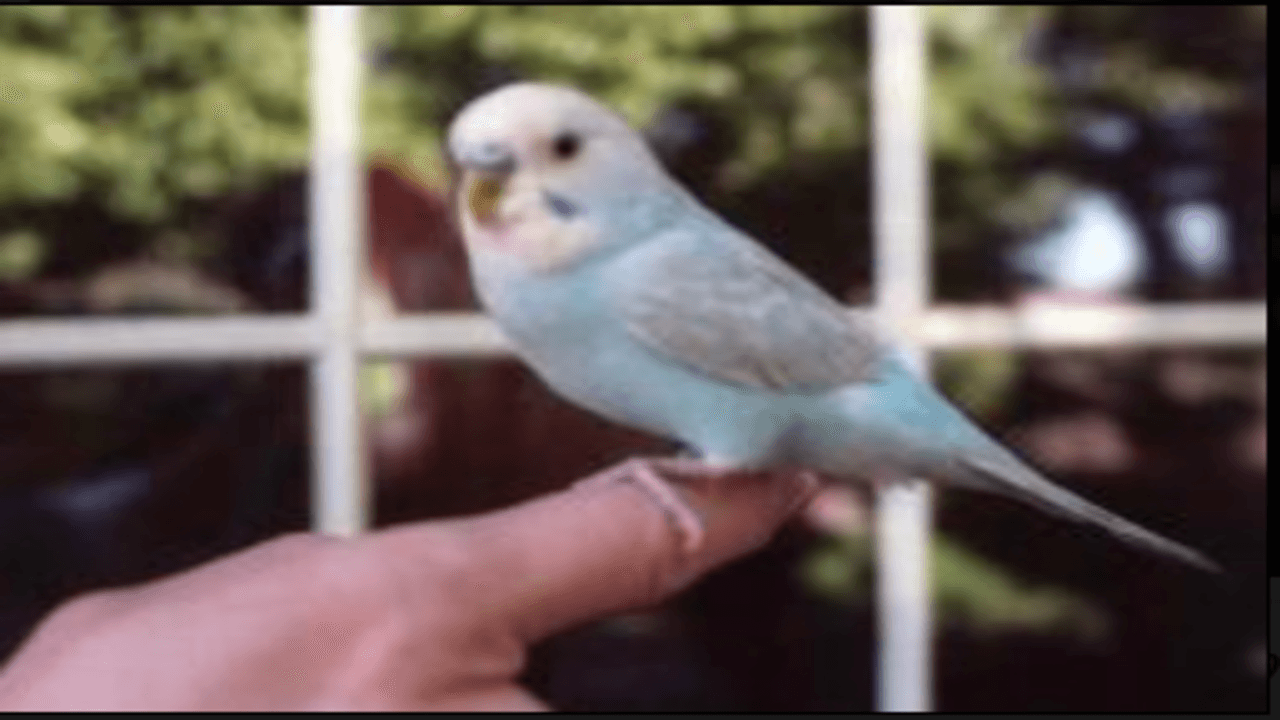
A parrot that blurts out a human phrase is not just performing a trick. Mimicry is one of the clearest windows into how parrots learn, socialize, and make sense of the world around them, and the headline-grabbing example is hard to beat: Puck, a budgerigar owned by Camille Jordan of Petaluma, California, was credited with an estimated 1,728 words before he died in 1994. That is not random noise. It is a reminder that some parrots are extraordinary vocal learners with a capacity that sits far closer to language-like learning than most people expect.
What talking does not mean is just as important. A chatty bird is not automatically “smarter” than a quiet one, and a silent parrot is not automatically unhappy, undertrained, or poorly bonded. Speech is one part of a broader communication system, and the meaning depends on the bird, the species, the household, and the way you respond.
Why parrots sound human
Parrots can sound human because they belong to one of the rare animal groups with lifelong vocal learning. Their vocal system is built for flexibility, which lets them produce a wide range of sounds, including copied human speech, household noises, and species-specific calls. Vocal production learning evolved independently in parrots, songbirds, hummingbirds, and some mammals, which is one reason scientists keep comparing bird vocal control with human speech control.
That comparison has gotten stronger. A 2025 Nature study reported convergent vocal representations in parrot and human forebrain motor networks, which helps explain why parrots can do more than simply imitate a sound once. They can refine, repeat, and adapt it. In practical terms, that is why one bird may pick up a ringtone, another may copy a laugh, and another may learn whole phrases that fit the daily rhythm of a home.
Talking is social, not just novel
The most useful myth to bust is the idea that parrots talk mainly to entertain people. The better explanation is social. In the wild, parrots use their vocal prowess to share information and fit in with the flock, and that same drive follows them into homes, where the human household becomes the flock. Speech, then, is often a sign that your bird is tuned in to the social world around it.
That is why the sounds a parrot repeats often reflect what gets attention. If a phrase, whistle, or squeak reliably makes you look up, laugh, answer, or walk over, your bird learns fast. Human reactions reinforce certain sounds, which is why some parrots become masters of the noises that trigger the biggest response in the room. Talking can reflect bonding and engagement, but it can also reflect repetition, routine, and reinforcement. The bird is learning what works.
What intelligence looks like in a parrot
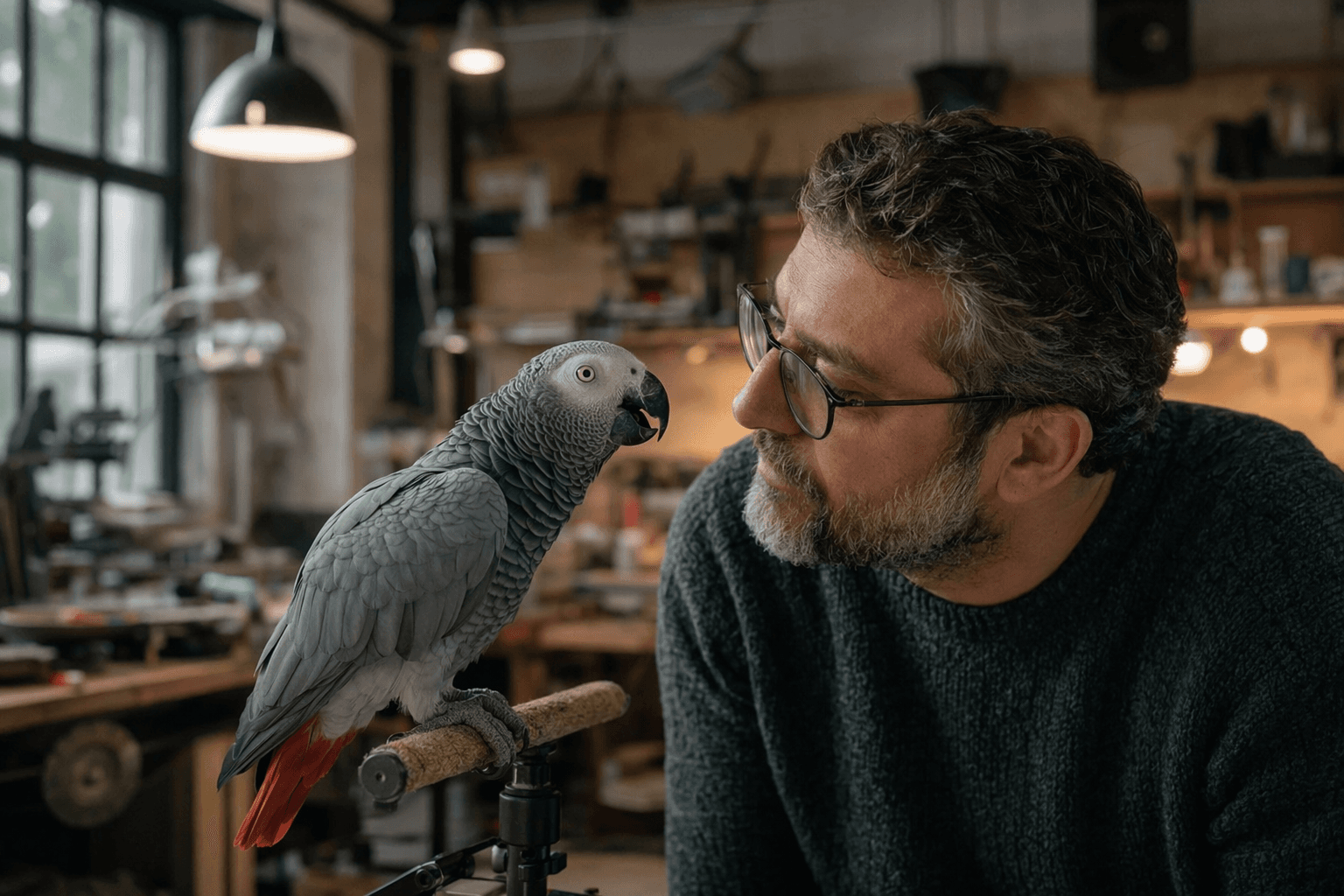
A talking bird is clearly learning, but speech alone is not a complete measure of intelligence. Irene Pepperberg’s work with the African grey parrot Alex helped overturn the old “bird-brained” stereotype by showing that a parrot could learn about 150 words and understand analogies, numbers, colors, and shapes. That matters because it shows vocal ability can sit alongside broader cognitive skills, not replace them.
More recent studies add another layer. A 2024 comparison of grey parrots and young children found that both groups produce many words or phrases with expressive or social functions, not just labels for objects. That is a big clue for owners: a parrot’s vocabulary may be less about naming everything in the room and more about getting a response, expressing a state, or participating in interaction. A parrot can be highly intelligent without sounding like a tiny human comedian.
Why some parrots never talk
Not every parrot will speak, and that is not a welfare failure. Species differences are real, and even within species, individuals vary a great deal. A 2022 survey of 877 companion parrots found no overall effect of sex, age, or parrot-parrot social interaction on mimicry repertoires, which is a useful warning against easy assumptions. You cannot look at one factor and predict who will become a strong talker.
That same survey did find that grey parrots had the largest mimicry repertoires among the species examined, which fits the long-standing reputation of African greys as standout vocal learners. But the takeaway for care is not to chase a speech quota. A bird that never says a human word can still be bright, socially responsive, and completely healthy. Some parrots express themselves more through body language, movement, flock calls, or subtle shifts in tone than through copied speech.
How to read your bird’s sounds day to day
Once you stop treating talking like a party trick, it becomes much more useful as a care signal. A bird that is vocalizing in a relaxed, interactive way may be engaged with you and the household. A bird that suddenly increases screaming, repeats a phrase obsessively, or seems to use one sound to pull you into the room may be telling you something about attention, boredom, or routine.
- Repeated phrases can be social tools, not random noise.
- Copying a specific sound often means that sound is meaningful in the bird’s environment.
- A sudden change in volume or pattern is worth watching for alongside posture, appetite, and activity.
- If your bird goes quiet, that can be normal too, especially if the rest of behavior looks steady and healthy.
A few practical reading points help:
The smartest response is to watch the whole bird, not just the vocabulary list. Speech is one channel, not the whole message.
What the science says about flock life and dialects
Parrot talk also helps explain why these birds are such strong group learners. A review of parrot dialects found that more than 90 percent of parrots examined in the literature showed geographic variation consistent with sharing local call types. That is a striking number, and it shows parrots are culturally tuned animals. They do not just hear sounds; they absorb the local style of the flock.
That flock does not have to be wild. In a home, your voice, the television, the kitchen routine, and the morning greeting can become part of the bird’s soundscape. For a companion parrot, human speech is often just the local dialect.
A practical way to think about mimicry
The best way to read parrots talking is to treat speech as one clue among many. A bird that copies your voice may be socially connected, attentive, and eager to participate. A bird that does not talk may simply belong to a quieter species, have a different personality, or prefer other ways of communicating. Neither outcome is a failure.
That is the real lesson from Puck’s record-setting vocabulary, from Alex’s famous cognitive work, and from newer studies on vocal learning and speech boards. Parrots are not human imitators by accident. They are social, flexible learners that use sound the way flock animals do, to connect, to practice, and to belong. Once you start hearing mimicry that way, every copied word becomes less of a novelty and more of a message.
This article was produced by Prism’s automated news system from verified source data, official records, and press releases, then run through automated quality and moderation checks before publishing. The system is built and supervised by the people who set the standards it runs under. Read our full AI policy.
Did this article answer your question?