Northern Nevada parrot sanctuary rescues abused birds, teaches proper care
Abused parrots reveal the real homework of ownership. Home At Last Parrot Sanctuary turns rescue into a practical guide for housing, enrichment, and lifetime care.
Rescue as a lesson in what parrots actually need
Home At Last Parrot Sanctuary does more than shelter birds in crisis. Based in Northern Nevada, USA, and working with displaced creatures since 2008, the sanctuary centers abused, neglected, and displaced captive parrots while also making room for adoption, surrender help, donations, rehabilitation, and testimonials as part of one connected mission. That matters because every bird that arrives there is proof that parrot care goes wrong fastest when people underestimate the species.
The sanctuary’s adoption side is especially telling. It offers homes for parrots that would benefit from long-term placement and lifetime care for birds with more complex needs. That framing pushes current and future owners toward the same truth sanctuary staff see every day: parrots are not short-term pets, and the gap between a manageable bird and a struggling one is often built at home, in the cage, in the diet bowl, and in the daily routine.
Housing that gives a bird room to be a bird
The sanctuary’s ownership reminders start with space, and that is where many problems begin. Parrots need the largest home possible, enough room to flap their wings, and a private retreat inside the cage where they can get away from constant attention. A cramped setup does more than limit movement. It can make a bird harder to handle, more reactive, and less able to recover from stress.
That advice fits the way sanctuary birds are rebuilt. A rescued parrot often arrives needing predictability, calm, and a place to feel safe before it can learn anything else. At home, that translates into a cage and room layout that support retreat instead of forcing constant interaction. The lesson is simple: if a bird cannot get away from noise, hands, and pressure, it has no real chance to settle.
The care basics that separate a thriving bird from a surviving one
Home At Last’s checklist reads like a reality check for anyone who thinks parrots are low-maintenance. The sanctuary says parrots need nutritious food with variety and fresh foods, not a seed-only menu. It also warns that food and water must stay sanitary, and that bathing or showers matter for skin and feather health. Fresh air matters too, because parrots have sensitive respiratory systems and cannot be treated like ordinary indoor pets.
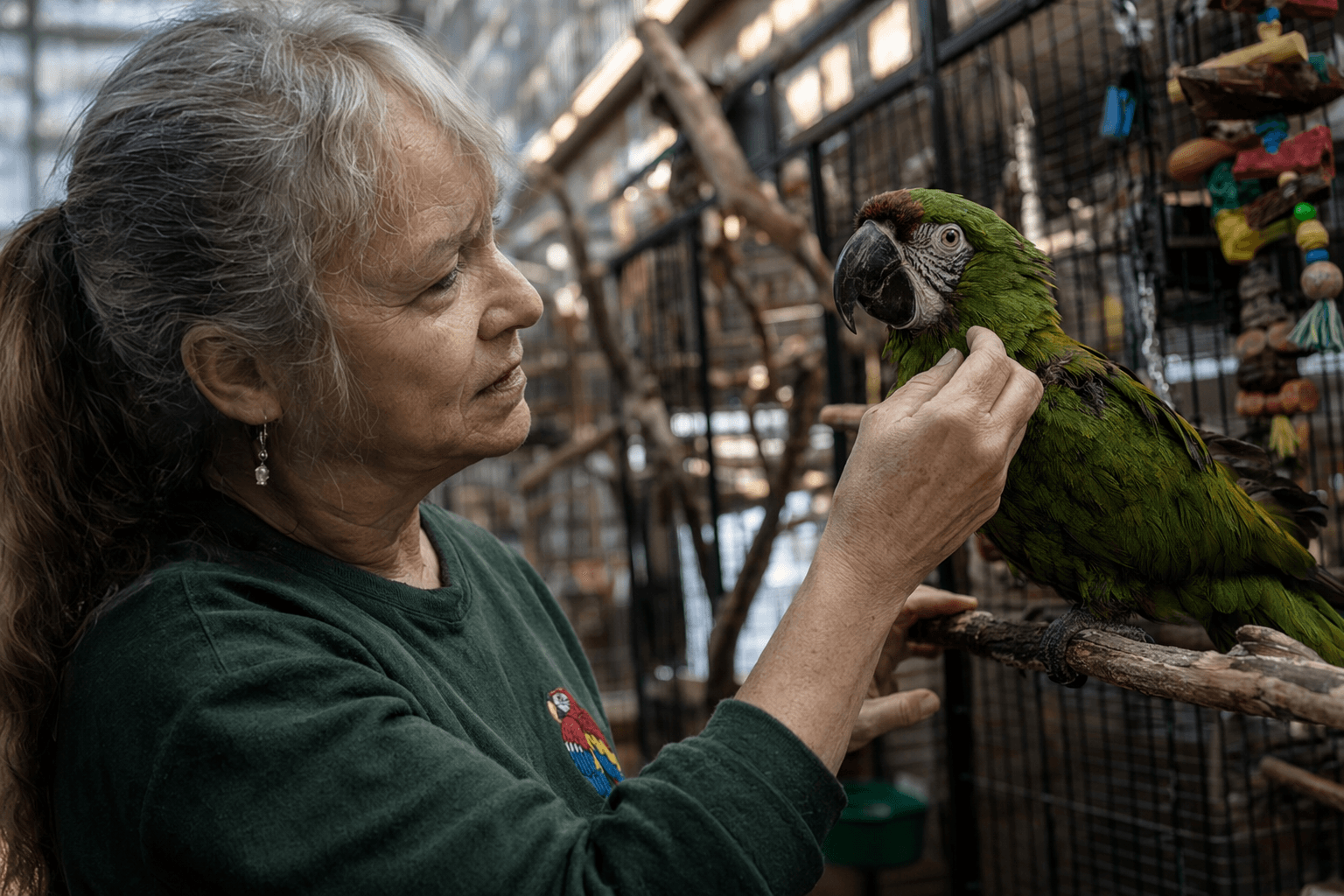
These are not luxury standards. They are the baseline for keeping a psittacine healthy over time, especially when Merck Veterinary Manual notes that nutrition and behavior are major components of psittacine wellness. In practice, that means the bowl, the water dish, the bath routine, and the air quality around the cage all affect behavior as much as they affect the body.
A home setup that follows the sanctuary’s model should look like this:
- roomy housing with a true retreat area
- a varied diet built around fresh foods, not only seed
- clean food and water every day
- regular bathing or showering for feather and skin care
- good ventilation and protection from indoor air irritants
Those are the details that keep a bird from sliding into the same problems that rescue teams work to undo later.
Perches, toys, and foraging are health care
The sanctuary also highlights perch variety, and that point is easy to overlook until foot problems show up. Natural wood perches of different thicknesses are better than relying on identical dowels, because varied surfaces help support foot health and reduce repetitive pressure. For a bird that stands, climbs, and grips all day, the perch is not cage decor. It is part of the orthopedic plan.
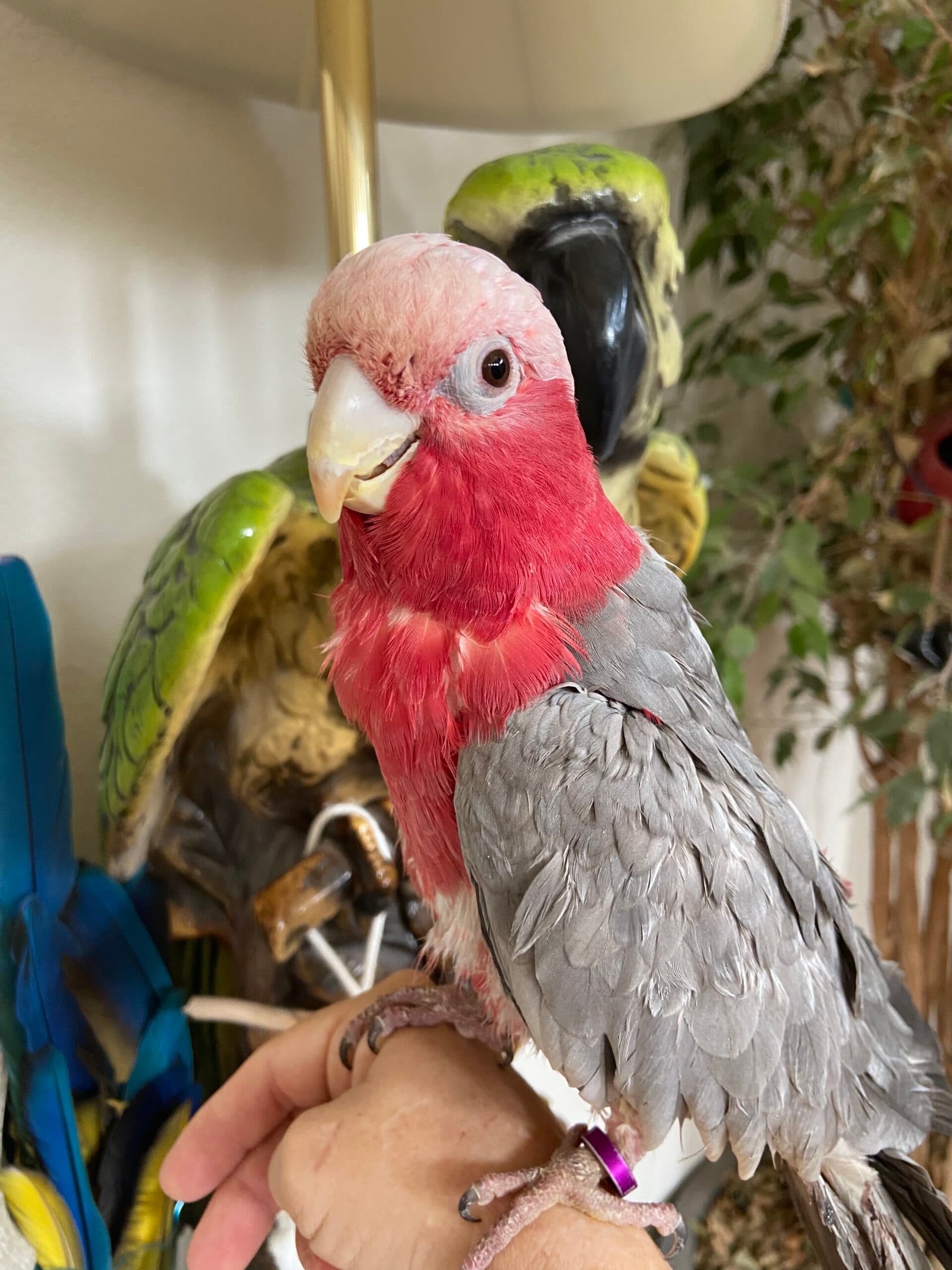
Enrichment matters just as much. Home At Last reminds owners that parrots need toys, chewable materials, and interaction because they are intelligent flock animals that depend on their human household for stimulation. That lines up with guidance from the Association of Avian Veterinarians, which says foraging enrichment should make parrots search for, procure, and extract or process food. A bird that has to work for food and entertainment is not being spoiled. It is being asked to use the instincts that keep it mentally engaged.
For owners trying to copy sanctuary-level care at home, the priority is not quantity of toys alone. It is whether the bird has work to do, choices to make, and reasons to stay curious. A clever parrot without stimulation does not stay quiet for long, and the fallout often looks like screaming, plucking, or biting long before anyone recognizes boredom as the root cause.
Why sanctuary birds remind us how long this commitment really lasts
One reason rescues end up with so many relinquished parrots is that people discover the timeline too late. MSD Veterinary Manual says many pet birds can live 20 to 80 years depending on species size, and larger parrots can live 20 to 50 years while forming strong bonds with their owners. That means adopting or buying a parrot is not a seasonal decision. It can become a decades-long responsibility that follows moves, jobs, relationships, and even retirement.
The Association of Avian Veterinarians also recommends regular checkups with an avian veterinarian, which is a reminder that parrot care is not built around emergency visits alone. A healthy bird needs ongoing oversight because subtle changes in weight, behavior, or droppings can signal trouble early. The same long lifespan that makes parrots such remarkable companions also makes preventive care non-negotiable.
The trade history behind today’s rescue and rehab work
The need for sanctuaries like Home At Last sits inside a bigger history. The Association of Avian Veterinarians says the first record of pet parrots dates to about 5,000 years ago in Brazil, which is a striking reminder that humans have been keeping parrots for a very long time. In the United States, however, the modern pet bird population is largely captive-bred, because Merck Veterinary Manual says mass importation of wild-caught psittacine birds was curtailed in the mid-1980s.
Disease and conservation policy both shaped that shift. The Centers for Disease Control and Prevention says the 1929 to 1930 psittacosis outbreak led to the first ban on importation and interstate shipment of psittacine birds in the United States. Later, the Wild Bird Conservation Act ended large-scale commercial importation in 1993. Those milestones explain why rescue and rehab are so central now: the birds people keep today come from a system with a long and complicated past, and not every bird that enters a home gets the informed care it deserves.
Home At Last Parrot Sanctuary makes that history feel immediate. Its work with abused, neglected, and displaced birds shows what rehabilitation really demands, and its ownership reminders show how much of that suffering can be prevented. The takeaway is plain: if the cage is too small, the diet too narrow, the air too stale, or the bird too understimulated, the problem is not the parrot. The problem is the setup.
This article was produced by Prism’s automated news system from verified source data, official records, and press releases, then run through automated quality and moderation checks before publishing. The system is built and supervised by the people who set the standards it runs under. Read our full AI policy.
Did this article answer your question?