Recall Training Gives Parrots Safety, Freedom, and Reliable Return Cues
A strong recall cue can keep a parrot out of trouble at home and make every flight back feel safe, predictable, and worth repeating.
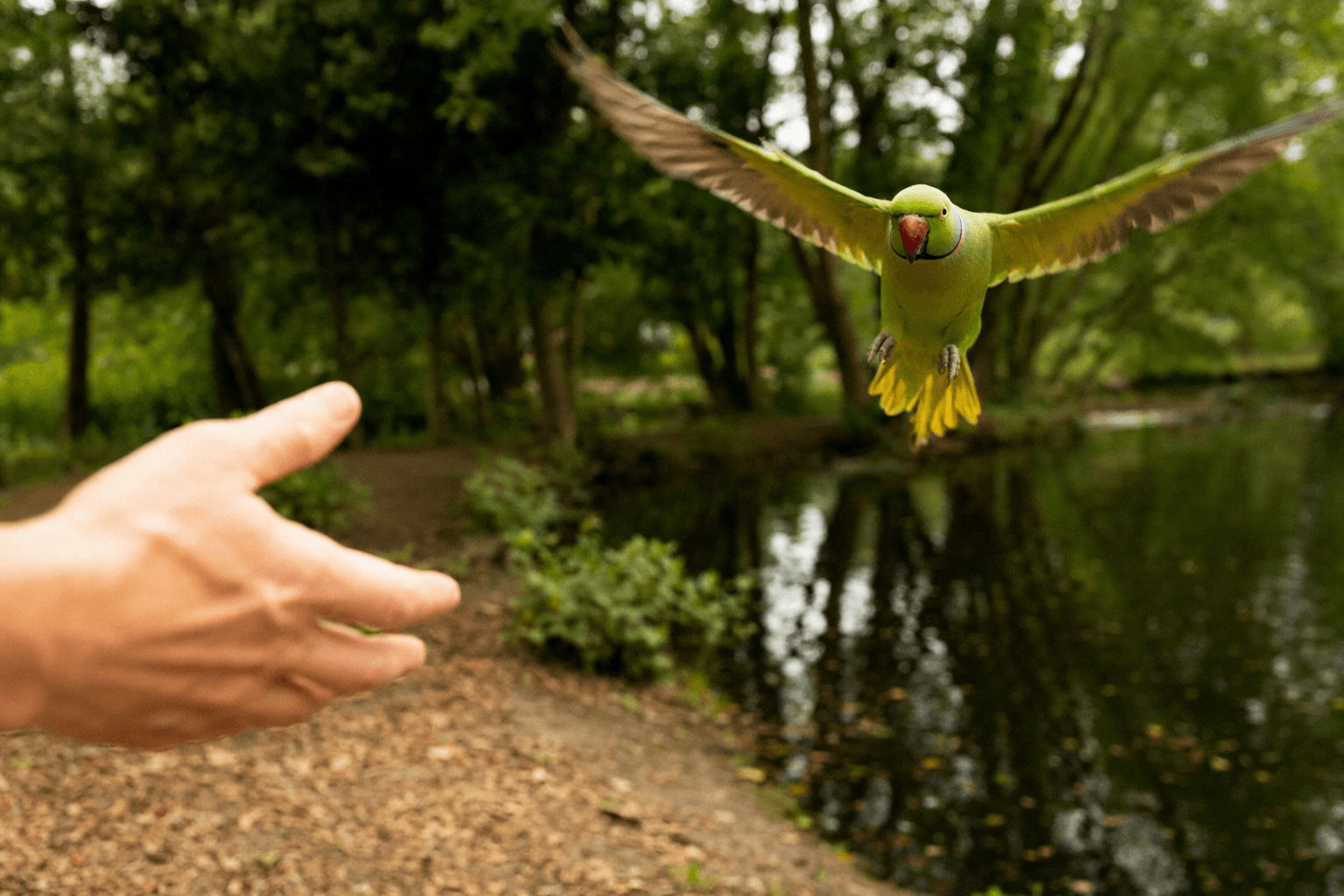
Recall is the safety habit that pays off every day
When a parrot launches toward a curtain rod, heads for a kitchen doorway, or refuses to come off a high perch, recall is not about showing off. It is the behavior that can move your bird away from a hazard, make daily transitions smoother, and give you a reliable way to call the bird back before a problem becomes a rescue. That is why recall matters whether your bird flies freely, has limited flight, or only makes short hops around the room.
The best recall training is built on the same idea that runs through strong parrot care in general: keep the bird confident, keep the cue clear, and make success worth repeating. Flying is widely described as the optimal form of exercise for birds, and it supports cardiac, vascular, muscular, and mental health. A good return cue protects that freedom by making flight safer in real life, not just in theory.
Start with target training and a calm setup
Recall works best when you treat it as a skill ladder, not a single lesson. A positive-reinforcement baseline like target training gives your bird a simple win first: move toward a target, then get rewarded. That approach also helps you move the bird without handling, which is useful for birds that are nervous, handling-averse, or still learning to trust the routine.
Set the stage before you ask for distance. Start indoors, choose one training spot, and keep interruptions out of the session. The room should be boring enough that your bird can pay attention, but familiar enough that the first repetitions feel safe. In practice, that means you are teaching the bird that coming back is predictable, rewarding, and easier than chasing whatever else is happening in the room.
The recall sequence that builds reliability
The fastest way to weaken recall is to rush it. Parrots learn better from short, repeated sessions than from marathon drills, and the cue needs to stay easy at first so the bird can stack up successful returns. A simple progression keeps that momentum intact:
1. Begin with target training or a very short return from close range.
2. Reward immediately when the bird turns toward you, reaches you, or lands where you asked.
3. Repeat several short reps, then stop before the bird gets bored or frustrated.
4. Add a little more distance only after the current distance is working reliably.
5. Increase complexity slowly by changing location, angle, or mild distractions.
That step-by-step pattern matters because the bird has to learn that returning is not random. It is a dependable behavior with a clear payoff. If the reward comes late, the room is too busy, or the distance jumps too fast, the cue loses value and progress stalls.
What usually makes recall break down
Most recall problems are not about stubbornness. They come from training choices that make the cue less rewarding than the environment. Asking for too much distance too soon, practicing in a cluttered or noisy room, or letting interruptions break the rhythm can all make the bird choose everything except you.
Bird temperament also matters. A fearful bird may freeze or avoid movement if the setup feels too intense, while an easily distracted bird may respond once and then ignore the next cue if the reward is weak or the session drags on. Clipped birds need extra care too, because wing trimming is commonly used to limit flight and reduce access to hazards in the home. For those birds, recall still matters, but the path may rely more on target cues, short hops, and careful positioning than on full flight.
How to adapt recall for clipped, fearful, or distracted parrots
Not every bird starts from the same place, and a good recall plan respects that. If your bird is clipped, focus on the movement the bird can safely make now, then build confidence with low-distance returns and target work. If your bird is fearful, keep the environment quiet and predictable, and let the bird win in small steps before asking for more.
For a bird that gets distracted easily, the answer is not longer sessions, it is cleaner sessions. Keep the reward immediate, keep the location consistent, and make the repetition easy enough that your bird can succeed several times in a row. That is the kind of early momentum that turns a nervous or scattered response into a reliable cue.
- Use high-value rewards the bird actually wants.
- Keep sessions short enough to leave the bird eager for the next one.
- Add distance only after the current setup is dependable.
- Practice when the room is calm, not when the bird is already overstimulated.
- Revisit the cue regularly so it stays strong as the bird changes, the room changes, and motivation changes.
Why the welfare angle matters as much as the training angle
Recall is part of a broader welfare strategy, not just a training trick. The Association of Avian Veterinarians describes target training as a positive-reinforcement method that can help move a bird without handling and serve as a baseline for more complex tasks. That same logic makes recall valuable in homes where flight is encouraged, in homes where flight is limited, and in homes that need a safer way to manage daily movement.
The Association also frames wing trimming as a common grooming procedure used to limit flight and reduce access to hazards, while still allowing a bird to glide safely to land. That tells you exactly why recall deserves attention: if a bird can move through the house, even in a restricted way, the return cue becomes part of the safety net. In a good setup, the bird stays active, the relationship stays cooperative, and the human has a practical way to prevent a small mistake from becoming a dangerous one.
Recall is one of the rare bird skills that improves freedom by adding control. When you train it patiently, with short sessions, clean cues, immediate rewards, and gradual distance, you are not just teaching a return. You are building a safer daily routine, a calmer relationship, and a bird that knows coming back is always the smartest move.
This article was produced by Prism’s automated news system from verified source data, official records, and press releases, then run through automated quality and moderation checks before publishing. The system is built and supervised by the people who set the standards it runs under. Read our full AI policy.
Did this article answer your question?