Budgie dances on cat’s head, delighting viewers and showing playful bond
Paco’s head-top dance is adorable, but it’s also a reminder that cat-bird contact needs hard boundaries and richer, safer play.
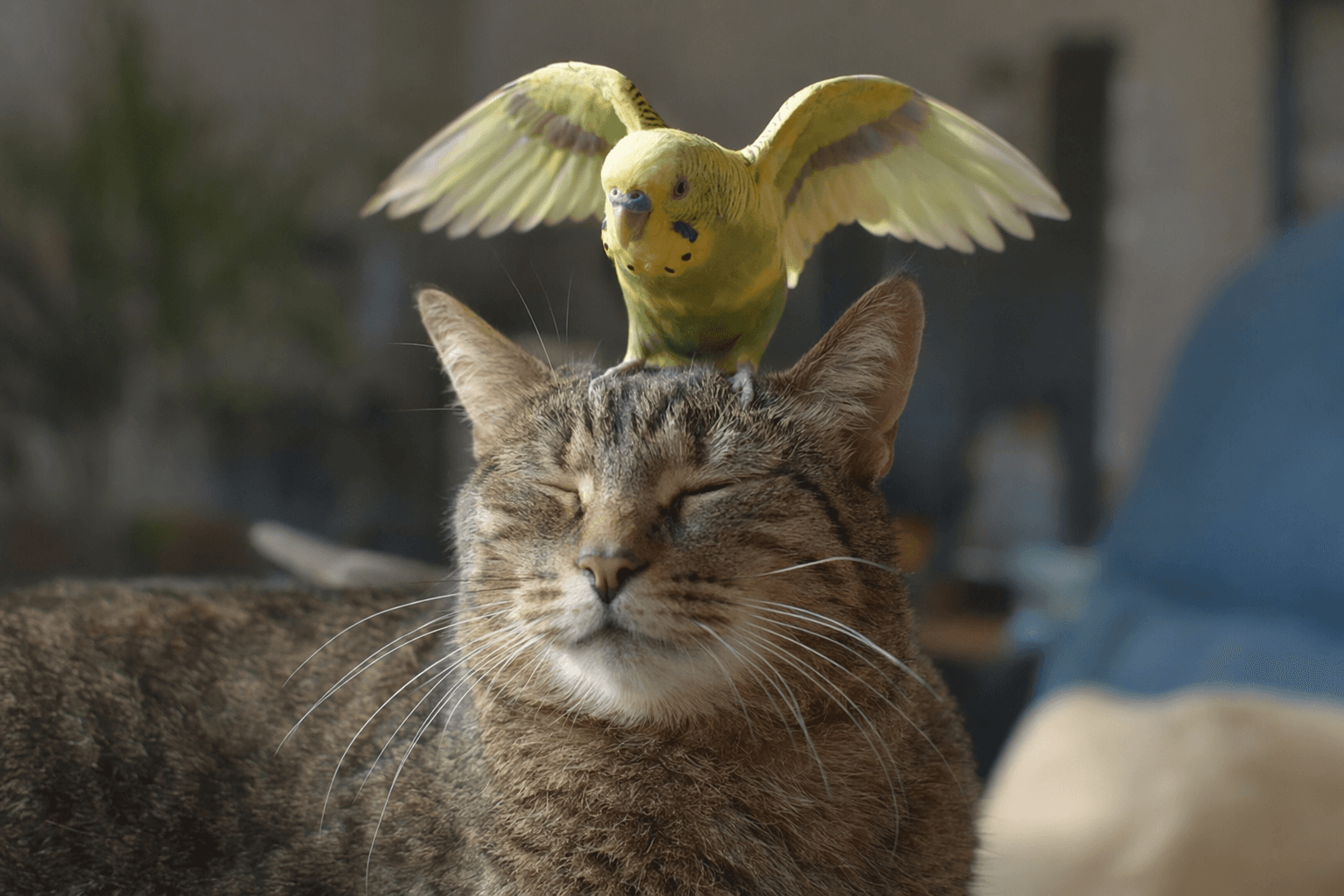
A budgie who climbs onto a cat’s head and starts dancing is the kind of clip that can melt a feed in seconds. Paco and Tessa’s moment is funny, charming, and easy to share, but it also gives bird keepers something much more useful than a feel-good replay: a reminder that confident-looking behavior can still sit right next to real danger.
What Paco and Tessa’s clip tells you
PawNation’s description of Paco the budgie and Tessa the cat says the pair are taking their bond to new heights, with the bird putting on a dance performance right on the cat’s head. That reads like pure comedy, yet it also reflects something many parrot households recognize immediately: a lively bird wants movement, novelty, and attention. When a budgie bobs, sidesteps, or shuffles with excitement, especially around music or a favorite person, that is often a sign of stimulation rather than simple mischief.
That is why the clip works so well. Paco looks like he is giving the routine his all, and the tiny stage makes the whole scene feel bigger than it is. But the real lesson is not that a bird and a cat can safely “hang out.” It is that a budgie’s energy needs somewhere to go, and if you do not provide that outlet, the bird will find one, sometimes in ways that are amusing only because they are risky.
Why budgies act like this in the first place
Budgerigars are not naturally solitary little ornaments. Wild budgerigars in Australia are highly social flock birds that call constantly to one another and move nomadically in response to rain and seed availability. That history helps explain why a pet budgie can be so responsive to sound, motion, and the presence of another living creature in the room.
In a home, that flock instinct often shows up as curiosity and a desire to join whatever looks active. A budgie may lean toward music, track a hand across the room, or turn a cat’s stillness into a kind of stage cue. The impulse is normal, but it should not be confused with safety. A bird can be brave, social, and intensely engaged without being protected from the very risks that come with cross-species contact.
Cute contact is still a predator-prey gamble
This is the part of the story that gets lost when a clip goes viral. Even if Tessa appears calm, a cat is still a predator, and a budgie is still prey-sized. A single startle, pounce, paw swipe, or moment of fixation can turn a playful scene into an emergency faster than anyone can react.
VCA Animal Hospitals is blunt about the bigger husbandry issue: birds are naturally curious and mischievous, and if they are not properly supervised, they can get into predicaments. That is not just about chewing cords or slipping into a bad perch choice. It also means that a bird should never be treated like a toy that can safely share space with a cat because the cat happens to look relaxed at that second.
The safest interpretation is simple. A calm-looking cat is not a safe cat, and a confident budgie is not a bird that understands the odds. Supervised contact still leaves too much to chance, which is exactly why bird-proofing the home and separating species is part of responsible care, not overprotective fussing.
How to read the body language in a mixed-species home
The easiest mistake is to read a cute moment as mutual consent. A budgie dancing, puffing up, sidestepping, or leaning into movement may be showing comfort or excitement, but that does not mean the situation is appropriate. In the same scene, a cat’s stillness may look peaceful to a person and tactical to a predator.
The better habit is to ask a different set of questions. Is the budgie choosing the interaction, or has curiosity cornered it? Does the bird have an escape route, or is the cat blocking the way? Is the cat on the floor, on a perch, or within swatting distance of a small body that cannot absorb even a mild strike?
You should also watch how quickly the moment escalates. Birds can shift from playful to stressed in an instant, especially if a cat’s head moves, whiskers twitch, or a paw lifts. If you are ever unsure, the answer is to separate them before you need to guess.
What enrichment should look like instead
This is where the viral clip can do some real service for parrots care. ASPCA says enrichment matters for birds and even points to dancing with your bird as a fun activity. That does not mean dancing should happen on top of a cat’s head. It means movement, rhythm, and social interaction are worth building into the day in a way that keeps the bird secure.
VCA also reminds us that pet birds rely on us for food, housing, enrichment, and socialization. Housing is not just where the bird sleeps. It is the foundation of health, mental state, and the relationship you are building with your bird, because a secure home base makes every other interaction safer and calmer.
Safer versions of the same energy are easy to set up:
- A cat-free play zone with a stable perch or stand
- Short music sessions where your budgie can bob and dance without sharing space with other pets
- Foraging toys that make the bird work for treats and attention
- Supervised out-of-cage time in a room that has been bird-proofed
- Social time with you, rather than with a pet that can injure on instinct
The goal is not to make life sterile. It is to give Paco-style confidence somewhere appropriate to land.
Why this goes beyond one funny clip
There is another reason to keep cat-and-bird boundaries firm: health risk. The CDC says H5 bird flu is widespread in wild birds and has caused outbreaks in poultry and U.S. dairy cows, with sporadic human cases. AVMA advises keeping cats away from livestock, poultry, and their environments, especially where H5N1 is known to be present.
That matters because mixed-species homes can create far more than bite or scratch risks. Even if your cat never touches a bird, the broader rule is still the same: cats should not be allowed into spaces where birds, poultry, or contaminated environments could expose them to disease. For a household that keeps birds, that makes clean separation, strict hygiene, and thoughtful traffic patterns part of everyday care.
Paco’s dance is adorable because it captures the joy birds bring when they are alert, social, and fully engaged with their world. The smartest takeaway is to give that energy a safer stage: one with a perch, a toy, a song, and a room where a cat cannot turn a delightful moment into a preventable tragedy.
This article was produced by Prism’s automated news system from verified source data, official records, and press releases, then run through automated quality and moderation checks before publishing. The system is built and supervised by the people who set the standards it runs under. Read our full AI policy.
Did this article answer your question?