Chef Jose Hernandez shares roots, restaurants and fresh pasta techniques
Jose Hernandez turns pasta advice into a Houston story, from Brasserie du Parc downtown to Savoir and Patton’s Steakhouse. His roots make the dough conversation feel personal and practical.
A pasta conversation with real local weight
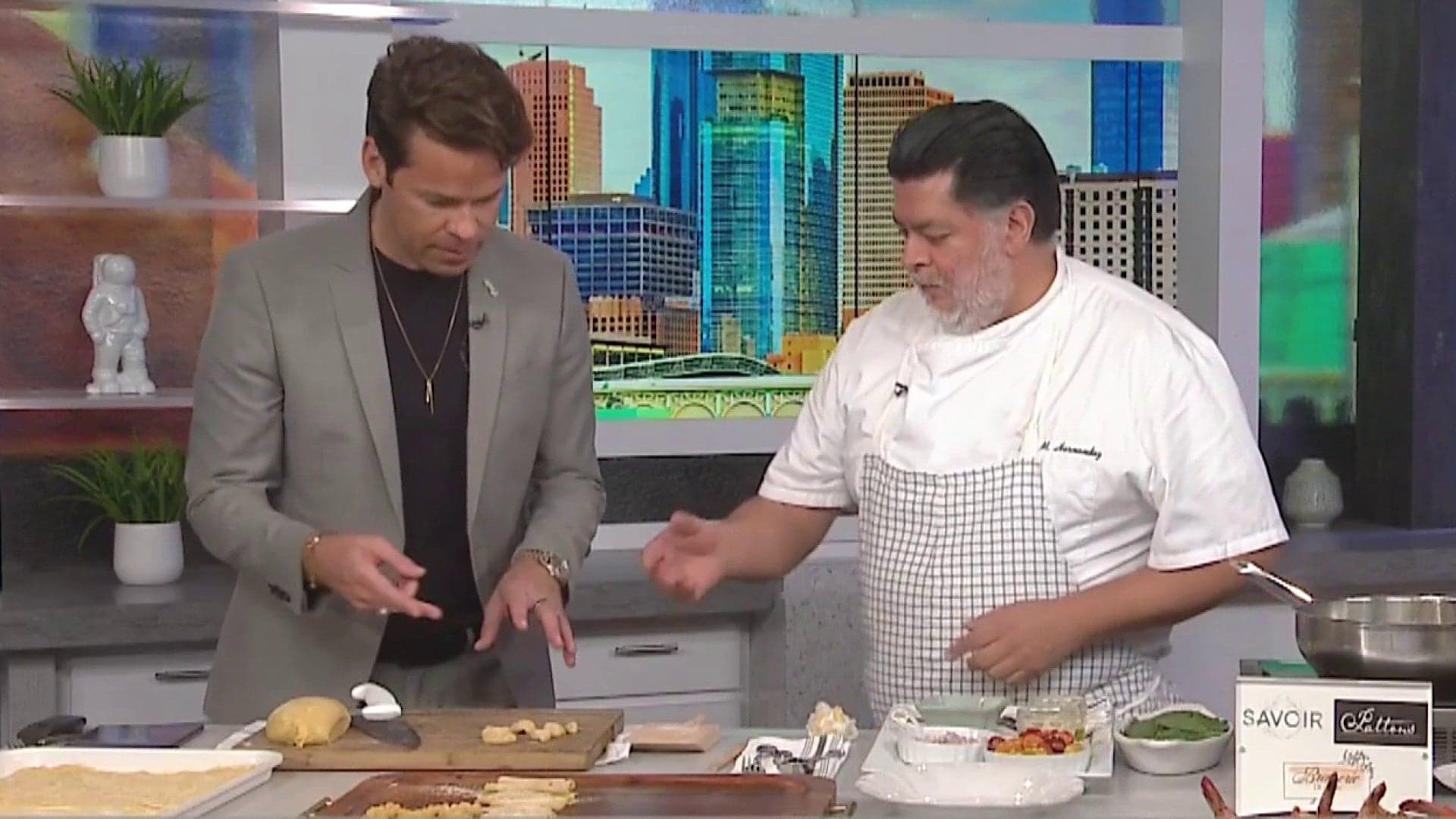
Jose Hernandez is talking about fresh pasta from a place most chefs never reach: he is not just cooking it, he is shaping the restaurants around it. The current Houston chapter puts him in charge of Brasserie du Parc downtown, Savoir in the Heights, and Patton’s Steakhouse, so even a simple pasta technique carries the weight of a chef who now owns the room as much as he cooks in it.
That is what gives the interview its pull for pasta readers. Hernandez is a veteran of major kitchens in New York City and Houston, but the story is not really about credentials for their own sake. It is about how a chef with deep fine-dining experience, a strong French foundation, and a very personal immigrant backstory talks about the everyday discipline behind good pasta.
Roots that still shape the way he cooks
Hernandez’s history begins far from the downtown dining rooms he runs now. He was born in Mexico City, lost his mother when he was 7, and then moved with family to a farming town where he learned field work and handled staples like corn and bread grains. Those years matter because they point to an early understanding of ingredients as labor, not abstraction.
Later, he returned to Mexico City and moved through bakeries, hotels, and restaurant kitchens before taking his place in more formal culinary spaces. The line from that childhood to fresh pasta is easy to see even without turning the story into a cooking lesson. Someone who has worked around grains, doughs, and bakery production from early on tends to think about texture and structure with unusual care.
The Houston career that keeps expanding
Hernandez’s Houston story has been building for about 15 years, and the timeline explains why his name keeps resurfacing whenever a serious restaurant project changes hands. He quietly took ownership of Brasserie du Parc by February 2022, after serving as culinary director of Berg Hospitality, and that move marked a shift from respected operator to owner with his own stamp on a dining room.
His local resume already carried plenty of weight before that. Earlier Houston coverage places him at Triniti, La Balance, Radio Milano, and Lucienne at Hotel Alessandra, the 64-seat restaurant inside the hotel. Hotel Alessandra closed in January 2021, but Hernandez’s role there helped cement the reputation that followed him into ownership.
A few milestones show just how mobile and persistent his career has been:
- In 2001, he moved to New York City.
- In 2004, he came to Houston to help open Bistro Moderne with Philippe Schmit.
- After the 2008 downturn, he returned to New York.
- In 2010, he came back to Houston and said he planned to stay and raise his family here.
That path makes his current roster of restaurants feel less like a sudden pivot and more like the result of years spent learning how to work in different kitchen cultures without losing his own voice.
Why Savoir matters in the present tense
Savoir is one of the clearest signs that Hernandez is now running dining rooms, not just staffing them. The Heights restaurant closed in early March 2025, then reopened in August 2025 under his leadership with refreshed interiors and a new French-Mediterranean menu. That reopening gave the space a second life and also showed how Hernandez handles revival: not as a nostalgic reset, but as a sharpened version of the original idea.
That matters for pasta readers because it places his technique inside a larger point of view. His cooking is rooted in classical French training, but it has also moved toward broader European and Mediterranean influences, which is exactly the kind of framework that makes fresh pasta feel like part of a living restaurant language rather than a one-note specialty. The speakeasy Patton’s Steakhouse extends that same reach, giving him a different kind of room to shape alongside Brasserie du Parc and Savoir.
The useful part: what his pasta perspective is really saying
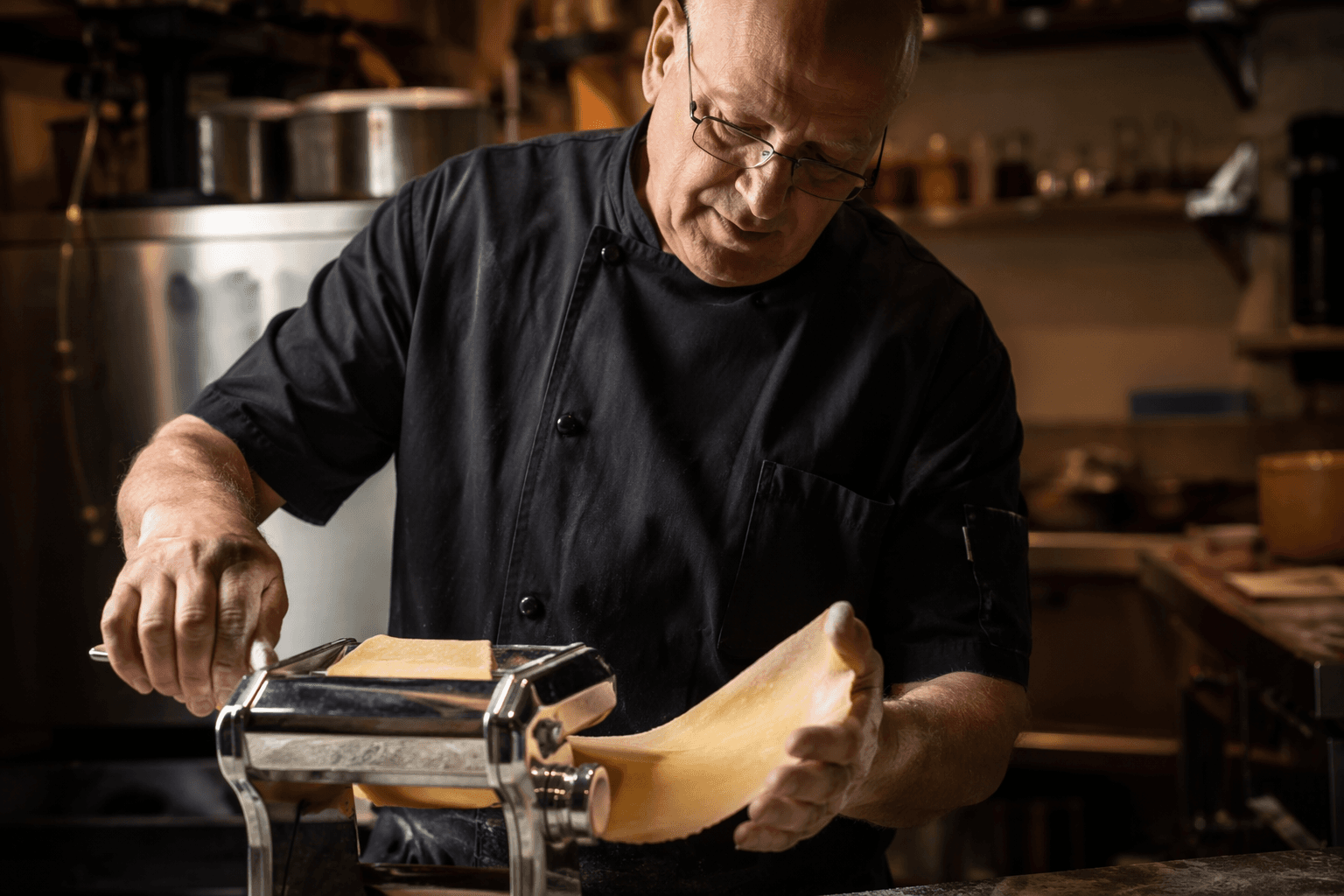
The most practical detail in the conversation is also the most revealing: Hernandez shares simple techniques for making delicious pasta at home. That simplicity is the point. Coming from a chef who has trained under Philippe Schmit, worked pastry, moved through hotels and fine dining, and spent years balancing French precision with Mediterranean and Italian-leaning cooking, the advice lands as something earned rather than decorative.
His background helps explain why the pasta discussion feels grounded. A childhood shaped by farm work, grain handling, bakery life, and later restaurant discipline gives him an instinct for fundamentals. In other words, he is not approaching fresh pasta as a performance dish; he is treating it as the kind of food that rewards rhythm, restraint, and respect for the ingredients.
That is the real thread running through the story. Hernandez’s pasta advice makes sense because it comes from a chef whose life has moved from Mexico City fields to New York pastry training to Houston ownership, and every stop along that route seems to have taught him the same lesson: the best dough is built on patience, not noise.
This article was produced by Prism’s automated news system from verified source data, official records, and press releases, then run through automated quality and moderation checks before publishing. The system is built and supervised by the people who set the standards it runs under. Read our full AI policy.
Did this article answer your question?