Emilia in Kensington earns Philly buzz with standout pasta and cocktails
At 2406 Frankford Ave., Emilia turns Kensington into a serious pasta stop with tortellini, ragù bianco, and cocktails built for repeat visits.
Kensington’s new pasta address
Emilia at 2406 Frankford Ave. in East Kensington is the kind of opening that sticks because it feels built to last, not just built to generate a first-week buzz. The recent Eater Philly heatmap update is only the hook here; the real story is that Greg Vernick’s first restaurant outside Center City has arrived with a clear identity around pasta, cocktails, and a neighborhood rhythm that fits Philadelphia’s current dining shift.
The restaurant opened on Monday, January 26, 2026, and already reads as more than a one-note Italian spot. Emilia is framed as a modern neighborhood restaurant with pasta at the center, but it is not boxed in by that alone. The kitchen leans into cooking from Italy, while the bar program gives the room a second life with carefully chosen Italian wine and well-made cocktails that make the place work for dinner, drinks, or a return visit a week later.
Why Emilia feels different in Philadelphia right now
Philly’s pasta conversation has been widening, and Emilia lands right in that movement. Instead of staying in the obvious Center City orbit, Vernick planted this project in Kensington, on the Frankford Avenue corridor near vintage stores and coffee shops, where the room can feel locally rooted and still destination-worthy. That matters because the restaurant is not presented as a special occasion outlier or an old-school red-sauce redoubt. It is designed to serve casual nights, dates, and the steady kind of repeat dining that keeps a neighborhood place alive.
Vernick has said Emilia was meant to be “industry-friendly, not precious,” and that description fits the way the restaurant is being talked about. It has enough polish to draw attention citywide, but not so much formality that it loses the easy pull of a place you can actually return to often. That balance is a big reason the heatmap placement feels like an establishment of momentum rather than a simple announcement.
The pasta that defines the room
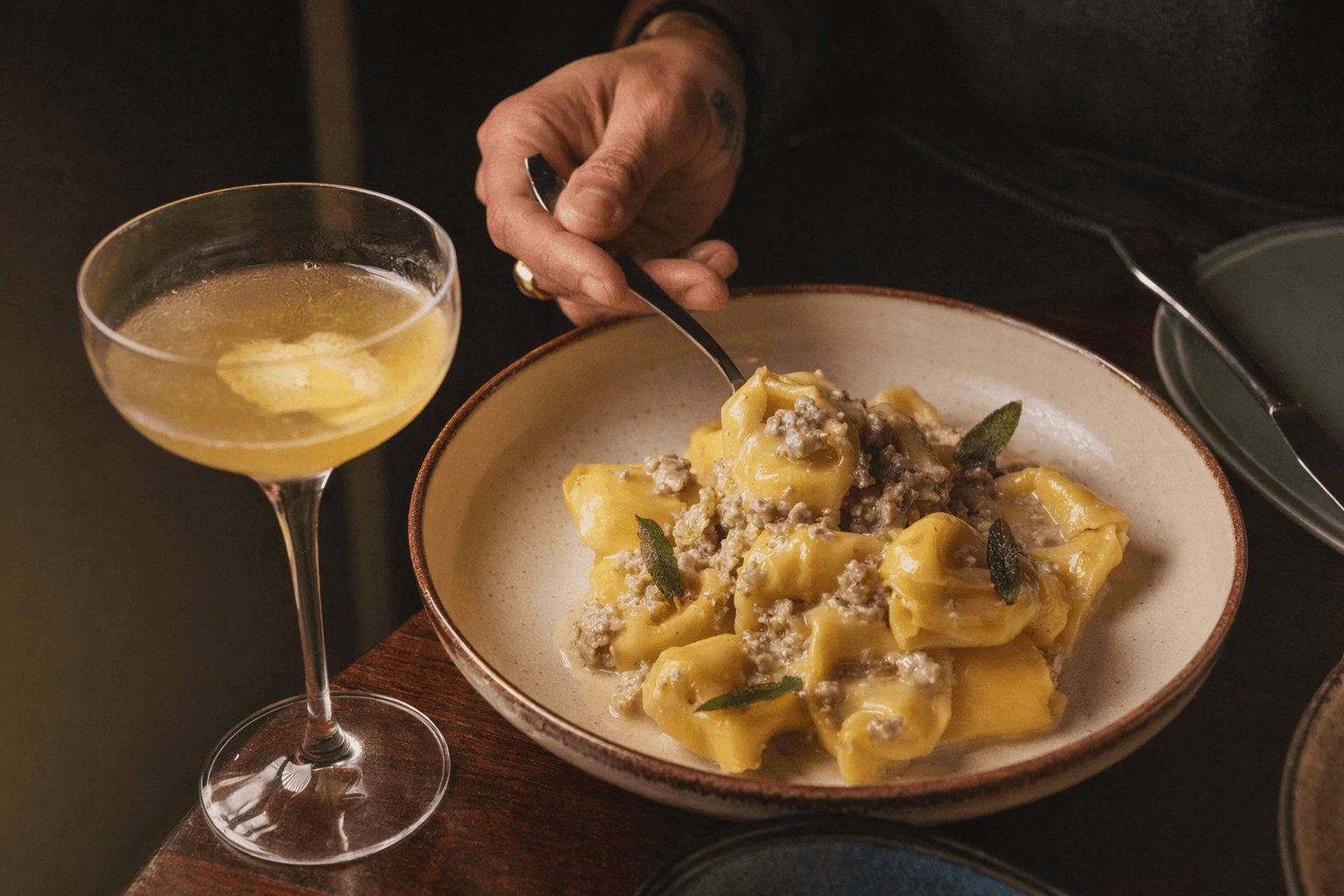
The clearest signal of Emilia’s identity is the pasta itself. Eater highlighted tortellini in brodo, rigatoni in ragù bianco, and capellini with pesto, and those dishes sketch the restaurant’s range well. There is comfort in the tortellini, a more technically focused edge in the ragù bianco, and a lighter, brighter register in the pesto capellini.
That spread tells you Emilia is not leaning on a single crowd-pleaser. It is building a pasta program that can move between delicate, satisfying, and deeply savory without losing its point of view. The standout mention of rigatoni in ragù bianco is especially telling, because it reflects a dish with enough depth to anchor the menu while still feeling rooted in a specific culinary memory rather than a generic Italian-American template.
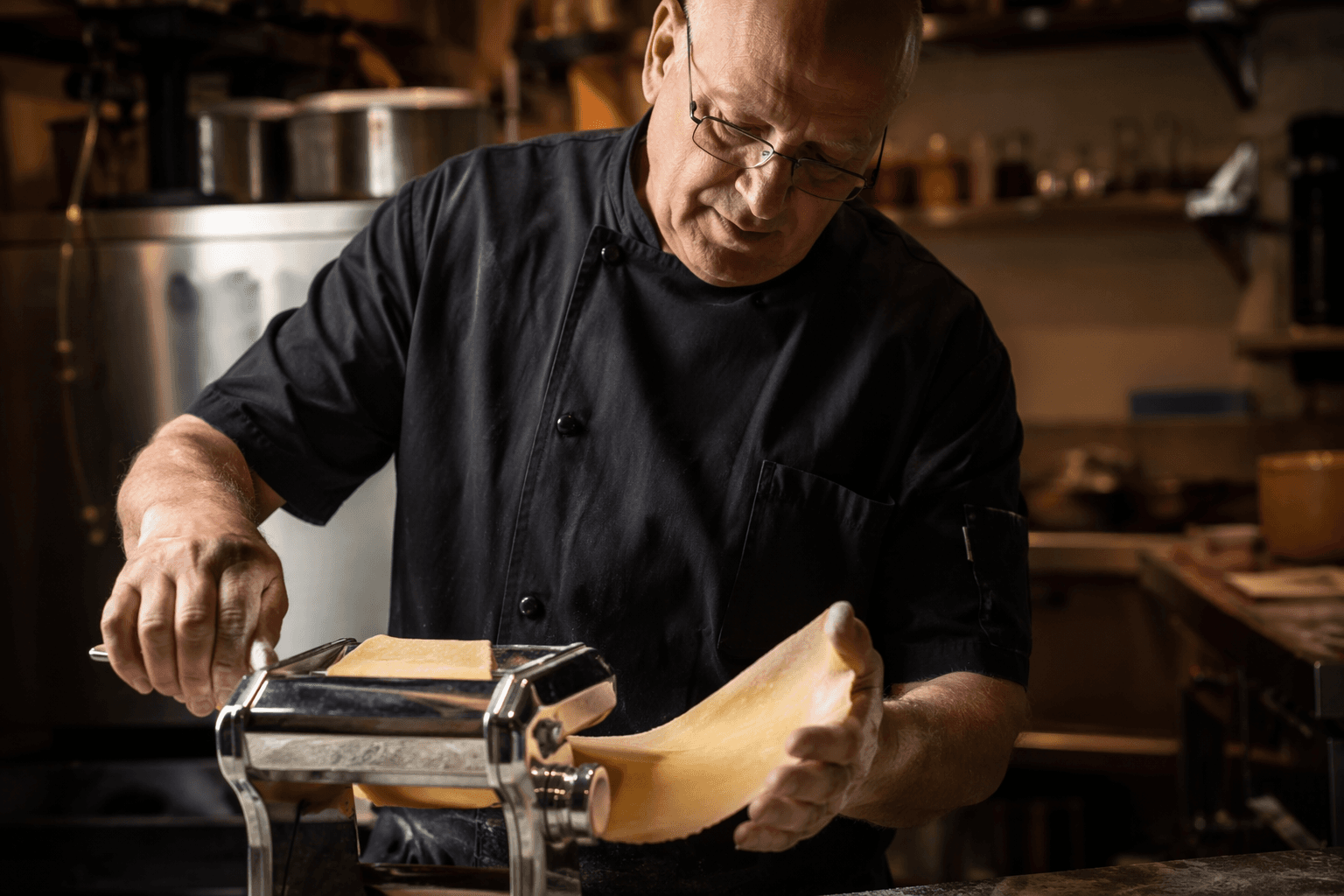
Meredith “Meri” Medoway is central to why that matters. She is a longtime Vernick collaborator who previously built the handmade pasta program at Vernick Food & Drink, and her background includes living in Italy, studying in Emilia-Romagna, and cooking in Calabria. That experience shows up in the way Emilia’s pasta reads as learned, not borrowed.
A menu shaped by travel, memory, and technique
The path to Emilia’s pasta program runs through Rome. Vernick, Medoway, and culinary director Drew Parassio traveled through Rome and nearby towns before the restaurant opened, and one report says the rigatoni in ragù bianco was inspired by a chicken ragù dish the team ate in Rome and at the American Academy in Rome. That kind of origin gives the dish more weight than a standard menu filler. It sounds like a plate with a story, but more important, it sounds like a plate with a point of view.
The rest of the menu is said to be strong and consistent, which is crucial for a restaurant trying to win both neighborhood trust and destination traffic. Emilia’s own site describes the concept as focused on seasonality, light and bright flavors, and wood-fire grilling, so the pasta is part of a broader kitchen language rather than a standalone feature. That combination gives the restaurant flexibility, letting it function as a pasta place without becoming trapped by that label.
Cocktails, wine, and a room built for repeat use
Emilia’s bar program deserves attention because it helps explain why the restaurant can sustain momentum. The drinks are built around well-made cocktails and carefully chosen Italian wine, which gives the room a second point of gravity beyond the dining room. For a place like this, that matters: a strong bar extends the life of the restaurant into the evening and gives diners another reason to come back even if they are not there strictly for a full pasta dinner.
The seating layout reinforces that versatility. Emilia is reported to have about 60 seats in the dining room, 20 in a lounge area, and 10 at the bar, for roughly 90 seats total. That mix suggests a room that can handle a range of visits, from a quick drink and snack to a longer meal. It also hints at the kind of operational flexibility that helps a new restaurant settle into a neighborhood instead of burning hot and fading fast.
Greg Vernick’s move beyond Center City
Emilia also matters because of who is behind it. Greg Vernick returned to Philadelphia in 2012 after working with Jean-Georges Vongerichten and opened Vernick Food & Drink in Rittenhouse Square, where he later won the James Beard Award for Best Chef: Mid-Atlantic. That history frames Emilia as part of a longer career arc, not a side project. He built a reputation on modern American cooking and hospitality, and now he is channeling that same discipline into a neighborhood Italian restaurant in Kensington.
It is also his first new restaurant since Vernick Fish opened in 2019, which gives Emilia added weight within his portfolio. Early reporting noted that the building developers wanted an Italian restaurant there, and Vernick and his wife Julie became more interested after spending time dining in the area, including at Fiore, Picnic, and Zig Zag BBQ. That kind of local familiarity matters. Emilia does not feel dropped into Kensington from nowhere; it feels like a deliberate fit for a corridor that already had enough energy to make the idea make sense.
Why Emilia fits the current Philly pasta wave
Emilia’s inclusion in Eater Philly’s best-new-restaurants heatmap signals something larger about Philadelphia dining. The city’s most interesting pasta rooms are no longer confined to the most obvious core, and diners are willing to travel for a kitchen that knows how to make pasta feel both comforting and exact. Emilia shows how that works now: a neighborhood setting, a smart bar, a serious pasta program, and a chef-led operation with the confidence to treat Italian cooking as something modern and lived-in.
That is why Emilia is getting buzz that feels durable. The restaurant has the kind of dish identity pasta readers can actually use, the operational scale to stay useful, and the neighborhood placement that makes it feel like part of where Philadelphia is headed, not just another opening in the queue.
This article was produced by Prism’s automated news system from verified source data, official records, and press releases, then run through automated quality and moderation checks before publishing. The system is built and supervised by the people who set the standards it runs under. Read our full AI policy.
Did this article answer your question?