Key West’s Conchiglia blends Italian pasta with island identity
Conchiglia turns Key West’s conch house setting into a pasta-driven identity, pairing handmade Italian technique with island seafood and Conch Republic flair.
A Duval Street restaurant with two identities
Conchiglia is not trying to be a generic Italian spot dropped into Key West. At 816 Duval Street, the family-owned restaurant leans into the island’s Conch Republic identity while serving coastal Italian food that feels built for the Florida Keys, not imported from somewhere else. Opened in February inside a restored conch house, it ties together the story of owners Albena Pechakova and Michael Dana, their years in Key West, and a kitchen that treats pasta as part of a broader seafood-and-housemade program.
The name captures the idea immediately: conchiglia means conch in Italian. That matters in Key West, where the Conch Republic has long been more than a joke or a slogan, and where local identity is tightly bound to place, architecture, and the island’s self-mythology. Conchiglia uses that connection as a design and menu guide, not just a branding flourish.
What the room is saying before the first plate arrives
The space is built to feel like a meeting point between a Key West conch house and a breezier Amalfi villa. Blue accents, lemon references, tile details, and even an upside-down boat used as a light fixture pull the dining room toward the Italian coast without losing the island setting outside. The result is playful but specific, and it works because Key West already thrives on layered visual identity, from historic wood homes to colorful tourism-era touches.
That setting matters on Duval Street, one of the city’s most visited corridors. Key West’s historic district architecture is a major part of the city’s draw, and National Register documentation describes the city’s charm as inseparable from that distinctive built environment. Conchiglia fits neatly into that context by turning the restored conch house itself into part of the experience.
The kitchen’s pasta story is about more than pasta
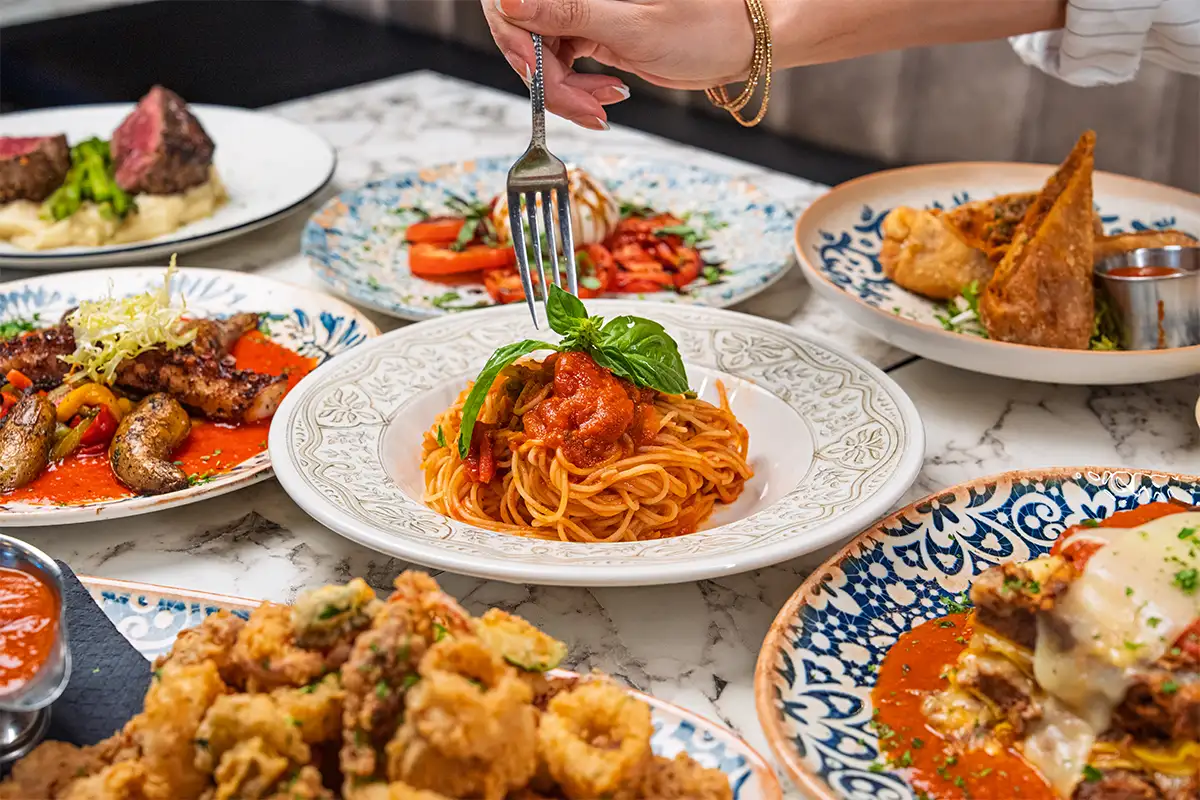
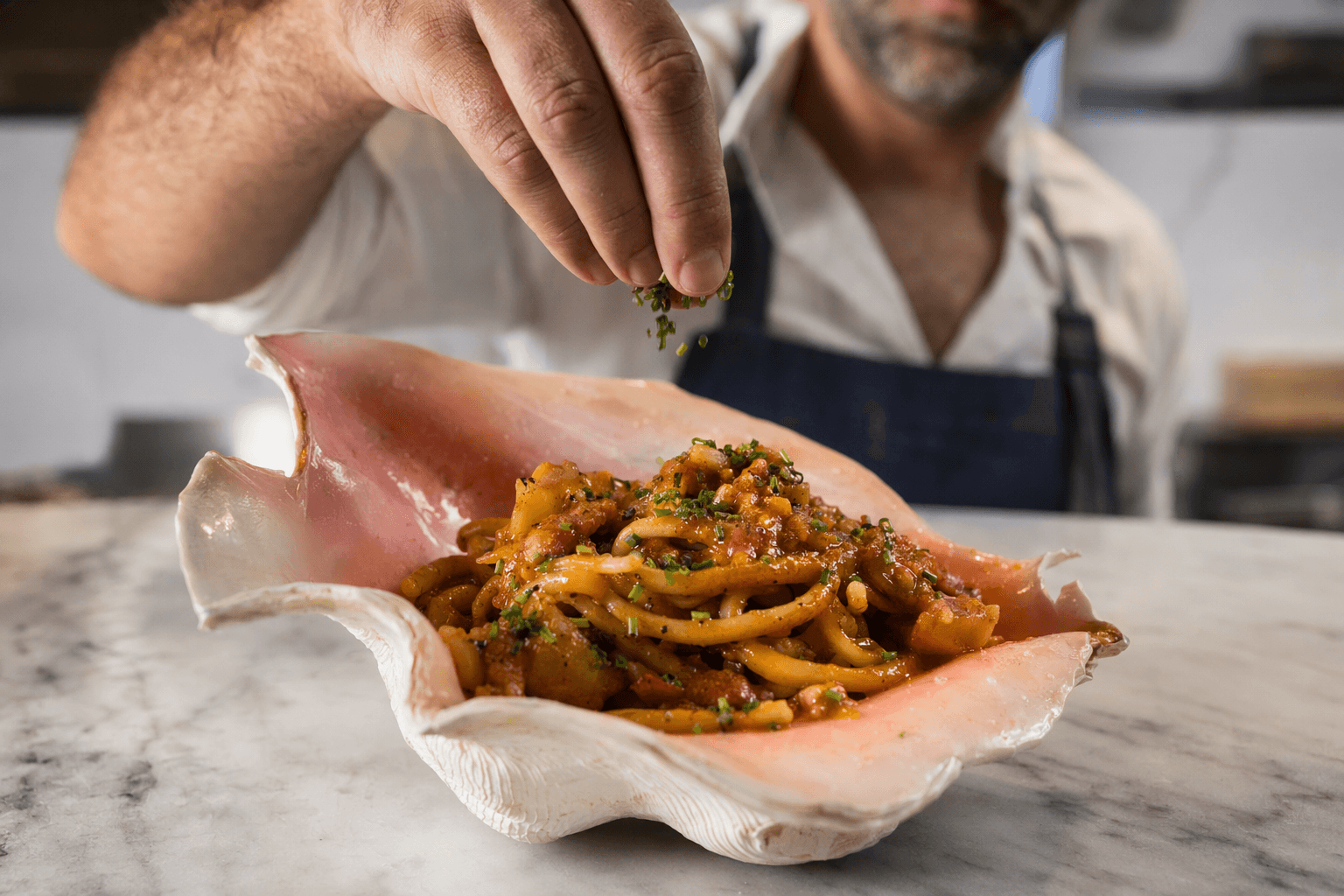
For pasta readers, the clearest signal is that Conchiglia makes most of its pasta in-house, alongside bread, sauces, and dressings. That puts the restaurant in the camp of places where pasta is not a placeholder or a side note, but a working expression of the kitchen’s identity. Executive chef Paolo Galotti, who is from Rome, leads a menu that uses Italian technique as a framework for local ingredients.
Dana says the kitchen takes a local-ingredient approach through an Italian lens, and that shows up in the way the team works with the whole animal and the whole shell where possible. Lobster shells are turned into broth. Meat trimmings become sausage, ragù, and Bolognese. That kind of use-everything discipline gives the restaurant a practical edge that fits both coastal cooking and the realities of a busy island market.
The pasta program lands inside that larger philosophy. Instead of presenting handmade pasta as the main story and seafood as the add-on, Conchiglia folds both into a single coastal Italian identity. That makes the menu feel especially rooted in Key West, where fresh catch, tourism, and a strong sense of place all shape what diners expect.
Dishes that show the concept in action
The clearest example of the restaurant’s direction is the local snapper prepared acqua pazza style with clams and broth. It is a dish that reads as coastal Italian first, but it still sounds like Key West because the fish and the setting are inseparable from the island. This is the kind of plate that explains Conchiglia better than a long menu description ever could.

The broader effect is a kitchen that works from the sea inward. Pasta, broth, seafood, and butchered components all feed the same identity, which is exactly what makes the restaurant feel tailored to the Florida Keys rather than lifted from a mainland template. In a market where visitors are looking for something memorable and locals are looking for something that still feels like home, that balance has real value.
Why the family story matters here
Conchiglia also reads as a family business in the fuller sense, not just because it is owned by a couple. Pechakova and Dana married in Italy and spent summers in Umbria, so the Italian connection is personal rather than decorative. They moved to Key West in 2017, bought the local Dairy Queen in 2022, and then stepped into their first full-service restaurant with Conchiglia.
That timeline gives the restaurant a grounded local narrative. It is a family moving through the island’s business landscape, learning it, and then planting a more ambitious dining concept in one of the city’s most visible spots. In a tourist-heavy market, that kind of continuity matters because guests can sense when a place belongs to the neighborhood story instead of just borrowing from it.
How the Conch Republic backdrop deepens the appeal
Conchiglia’s branding lands because Key West already has a strong local mythology to work with. The Conch Republic was born on April 23, 1982, after a U.S. Border Patrol blockade of the Florida Keys, when then-Mayor Dennis Wardlow’s symbolic break with the Union turned a protest into a lasting civic identity. That history still shapes local celebrations, business storytelling, and the way the island presents itself to visitors.
The 44th-anniversary celebration, scheduled for April 17-26, 2026, shows how durable that identity remains. Conchiglia taps into that same current, but it does so through food rather than souvenir-shop shorthand. The restaurant’s coastal Italian approach, its use of handmade pasta, and its island-minded design all make the Conch Republic feel edible.
What makes Conchiglia work in Key West
The restaurant succeeds because every part of it points in the same direction. The restored conch house, the Amalfi-inspired room, the Roman chef, the Italy-rooted owners, and the seafood-driven pasta kitchen all reinforce the same idea: this is Key West through an Italian lens, not an Italian restaurant that happens to be on an island. That distinction is what makes Conchiglia stand out on Duval Street.
For diners, the payoff is simple. You get the texture of Key West, the technique of coastal Italy, and a pasta program that is woven into the whole operation rather than isolated from it. That is why Conchiglia feels less like a transplant and more like a natural part of the Conch Republic story, one bowl of handmade pasta at a time.
Know something we missed? Have a correction or additional information?
Submit a Tip