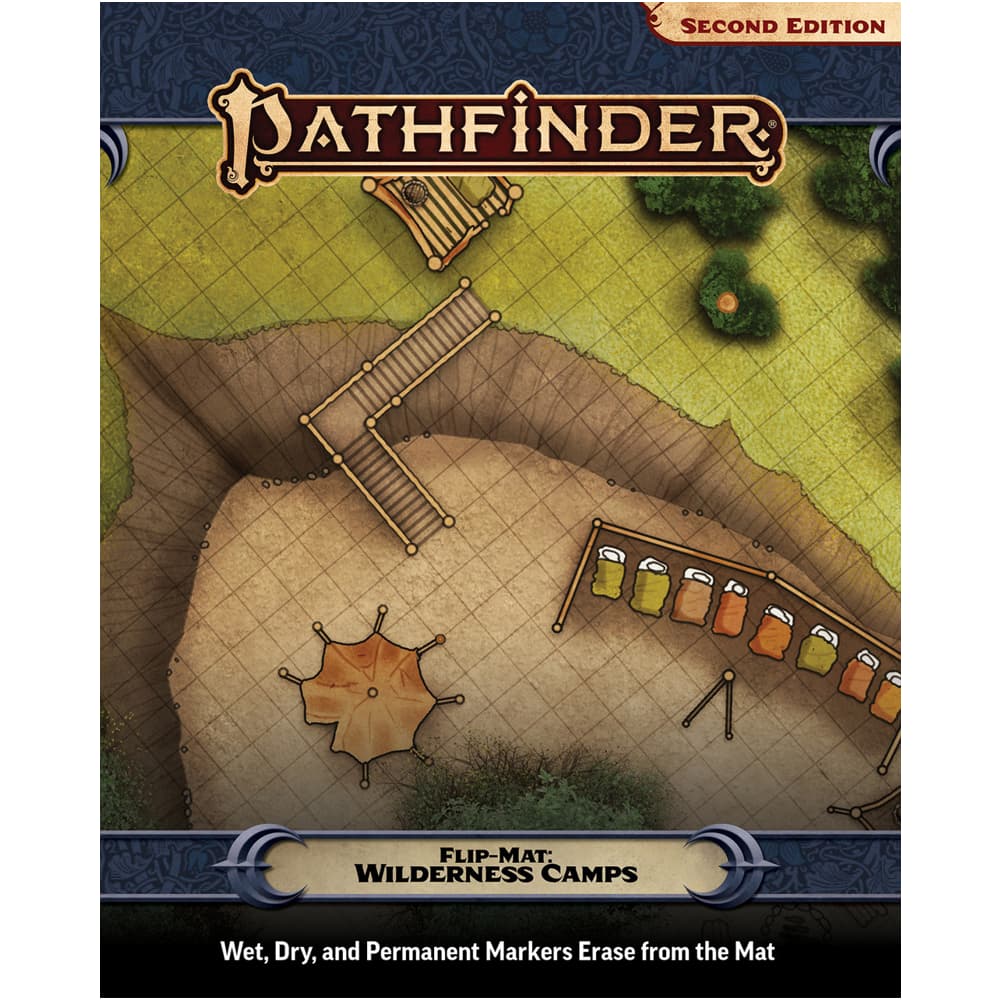
Paizo's Wilderness Camps Flip-Mat offers two ready-made campsite scenes
Two campsite scenes, one mat: Wilderness Camps drops a believable camp into badlands or jungle sessions without sketching from scratch.

The easiest campsite in Pathfinder is the one you never had to draw in the first place. Paizo’s Wilderness Camps Flip-Mat turns a small but recurring table problem into a ready-made answer, giving you a believable place to park the party when the road runs long and the night turns tense.
A campsite that does not eat your prep
This is a practical GM tool first and a display piece second. The release is built for the moments when adventurers are far from home, the kind of extended wilderness expedition that keeps a travel session moving but also needs a physical scene for watch rotations, scouting, stealth, and whatever creeps in after dark. Instead of spending prep time sketching a rough camp from scratch, you can lay down a finished location that already looks lived-in.
Paizo released the mat on June 3, 2026, so it lands right in the middle of a current Pathfinder product cycle. That timing matters for groups planning summer campaigns, especially tables that expect a lot of overland movement, roadside bivouacs, or remote encampments where the campsite itself becomes part of the encounter design.
What the mat actually gives you
Wilderness Camps is a double-sided Flip-Mat with two distinct scenes. One side shows a hunting camp in rugged badlands, while the other presents a primal encampment tucked into a dense, humid jungle that feels half shelter, half survival test. That split gives you two very different wilderness moods in one product, and both are broad enough to serve more than one kind of Pathfinder story.
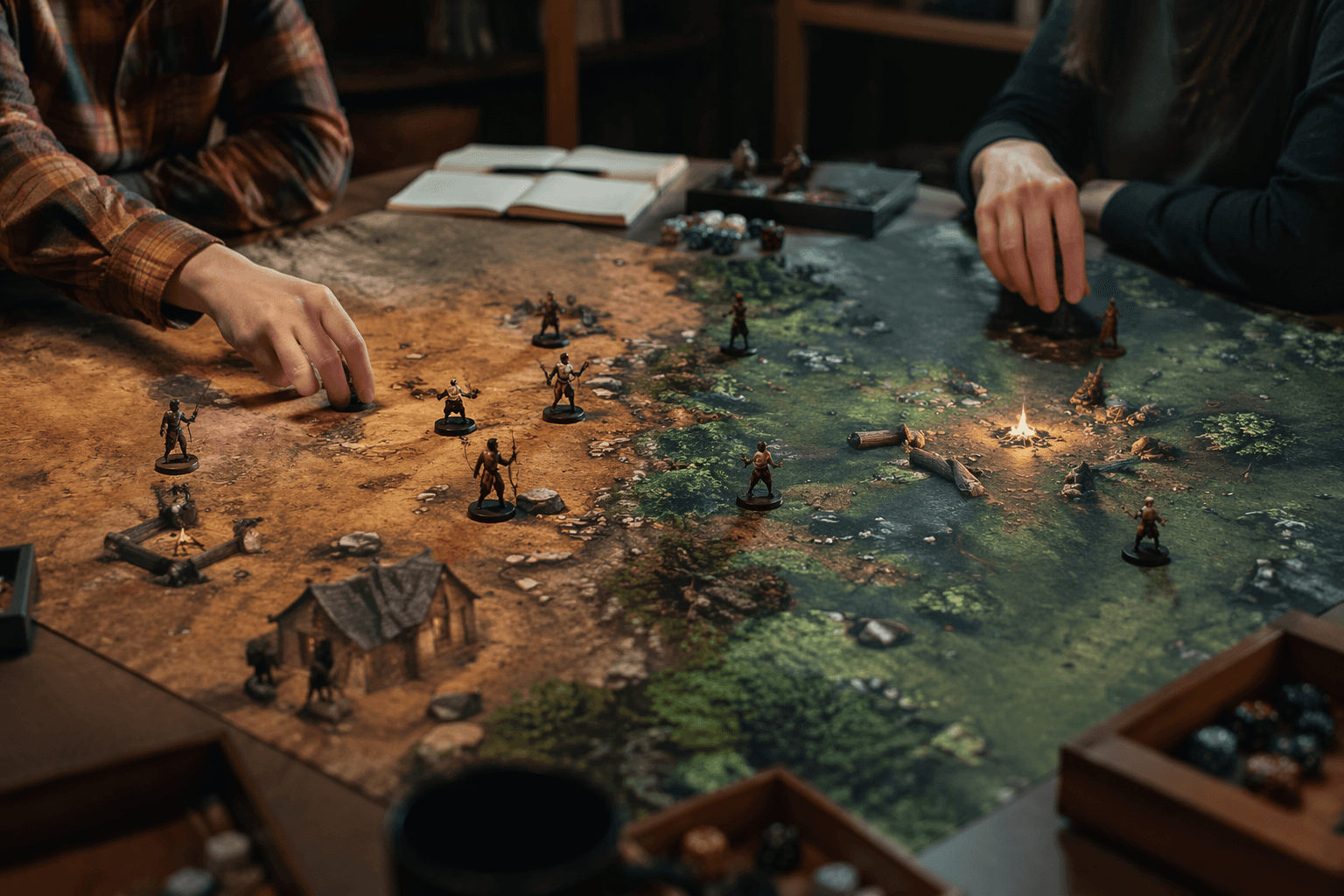
The physical size is straightforward and table-friendly: 24 by 30 inches unfolded, 8 by 10 inches folded. It is designed for dry-erase, wet-erase, and permanent markers, which makes it flexible whether you want a one-night stopover, a recurring base camp, or a place you plan to mark up for an ambush, search pattern, or set-piece infiltration. The compact fold makes it easy to toss into a GM bag, but the unfolded surface still gives the camp enough breathing room to feel like a real location rather than a token patch of ground.
Where the badlands and jungle scenes shine
The badlands side is the better fit for frontier travel, harsh overland routes, monster-haunted borders, and campaigns where the party is moving through open, rocky country and may stop near a hunting camp, caravan route, or ranger outpost. It has the hard-edged feel you want when the wilderness is spare, exposed, and dangerous.
The jungle side leans harder into survival, concealment, and pressure from the environment itself. That makes it especially useful for lost-temple expeditions, humid explorations, river-route campaigns, and any story where the camp is as likely to be threatened by weather, beasts, or hidden movement as by a straight-up fight. If your game spends a lot of time in overland travel, these are the two styles most likely to get repeated use.
A campsite map also pulls more weight than its size suggests. In Pathfinder, camp scenes often become the place where the party splits duties, checks supplies, keeps watch, scouts ahead, or hears the first sign of trouble before dawn. A preprinted mat helps you keep that sequence moving, because the scene is already on the table when the decision-making starts.
Buy it, or keep sketching?
If you already enjoy drawing camps by hand, the question is not whether Wilderness Camps is useful. It is whether you want to keep paying the time cost every time the party stops for the night. For a GM running a travel-heavy adventure, even a modest campsite sketch can become a repeated interruption, especially if the camp appears more than once in a session or needs to be redrawn after a battle, a chase, or a stealth scene.
That is where this Flip-Mat earns its keep. It is faster than sketching a campsite yourself, and more specific than reusing a generic wilderness mat that leaves you inventing the camp details on the fly. If your campaign spends most of its time in dungeons, city streets, or tight indoor maps, you can skip it without missing much. If your table regularly lives on the road, the mat pays off by turning a routine travel beat into a ready scene in seconds instead of minutes.
Paizo has also been here before. Pathfinder Flip-Tiles: Campsites offered 24 double-sided 6-by-6-inch tiles for building campsite maps piece by piece, which shows that the publisher has long treated camp scenes as a recurring need rather than an afterthought. Wilderness Camps is the more direct answer: one compact mat, two finished looks, and no assembly required.
That is the real appeal here. When the party finally makes camp after a long push through badlands or jungle, you do not need to pause the night to draw the night itself. The mat is already waiting, and the story can stay where it belongs, on the trail, at the fire, and in the dark beyond it.
This article was produced by Prism’s automated news system from verified source data, official records, and press releases, then run through automated quality and moderation checks before publishing. The system is built and supervised by the people who set the standards it runs under. Read our full AI policy.
Know something we missed? Have a correction or additional information?
Submit a Tip