Pathfinder 2 Battlecry! adds commander, guardian, and mass combat rules
Battlecry! brings commander, guardian, and mass combat into Fantasy Grounds, giving Pathfinder tables a ready-made way to test war-themed play right now.
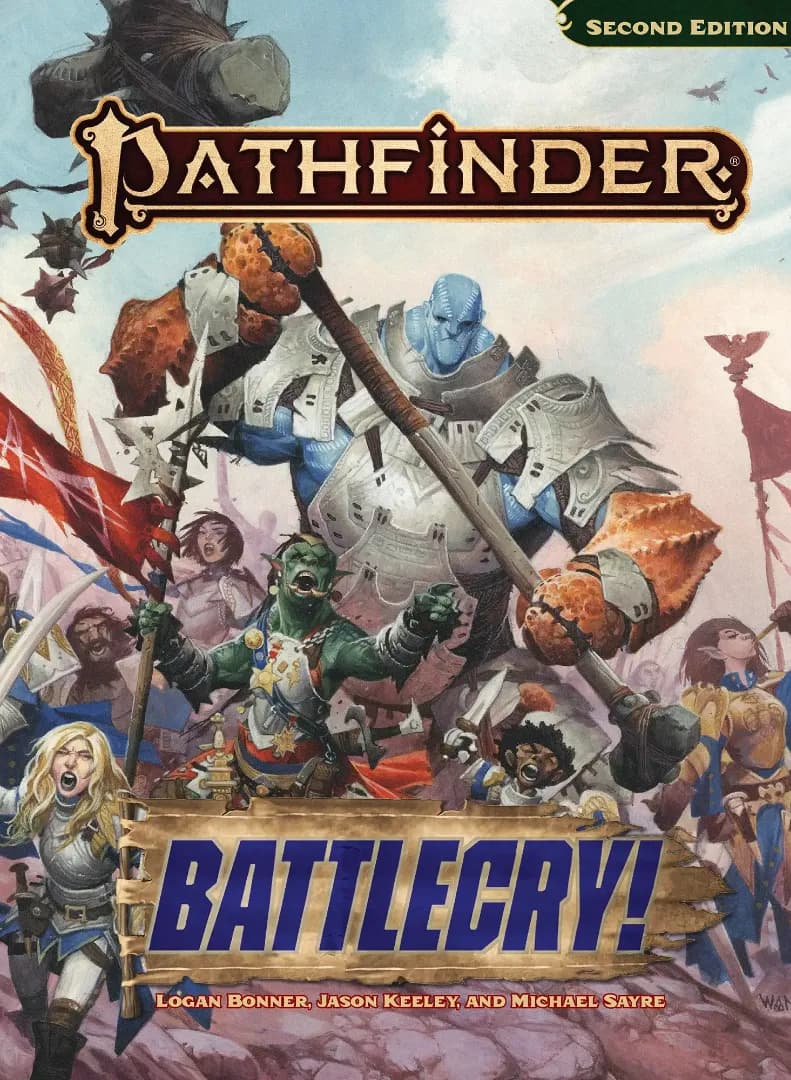
Battlecry! changes the feel of a Pathfinder table before the first initiative roll. The Fantasy Grounds release turns a major Pathfinder Second Edition rules book into something groups can actually start using immediately, with war at the center of the package rather than tucked in as a side option. That matters because the book is framed around a world where diplomacy has failed, conflict has spread across Golarion, and the setting itself is being reshaped by large-scale battle.
War becomes the campaign frame
Battlecry! is not built like a loose bundle of character options. It is designed around conflict as the main gameplay theme, which gives the release a very different energy from a normal class or equipment drop. The setting context is doing real work here: this is Pathfinder leaning into military tension, sieges, border fighting, and the pressure of armies moving across the map. For groups that like their adventures to feel like active campaigns rather than isolated dungeon runs, that shift changes what sits at the center of the table.
The Fantasy Grounds version matters because it gives online groups a ready-to-run digital copy of that design. Mass-combat material is exactly the kind of thing that can bog down if the rules are scattered or awkward to reference in play. Here, the conversion is presented as a practical way to bring Battlecry!’s war gear, army-scale encounters, and battlefield structure onto a virtual tabletop without forcing the GM to improvise every moving part.
Commander and guardian are the headline classes
The biggest immediate draw is the pair of new classes: commander and guardian. The commander is positioned as the tactical mind, the kind of character who helps steer the flow of battle by making the whole field smarter and more coordinated. That is a very Pathfinder kind of fantasy, but pushed toward battlefield leadership instead of pure personal damage.
The guardian, by contrast, is the protective frontline presence built to keep allies safe. That role should click fast for tables that want someone standing between the party and whatever the war throws at them. Together, the two classes suggest a design space where teamwork is not just encouraged, it is built into the structure of the book itself.
For many groups, that is the real table-level change. A commander and a guardian do not just add more options for character creation; they point toward a party that can operate like a unit. If your campaign already leans into coordinated play, military hierarchy, or a fellowship that fights in formation, these classes are the first things to look at.
More than classes: the book widens the battlefield toolkit
Battlecry! also pushes beyond its new class pair with a stack of options that reinforce the war theme. The book includes archetypes for raising undead soldiers or wielding a personal siege weapon, a new jotunborn ancestry, new magic weapons, and rules for running combat alongside troops. Each of those pieces helps the book feel like a complete battlefield toolbox rather than a single spotlight feature.
The undead-soldier archetype opens one path for darker, more ruthless war stories. The personal siege weapon archetype goes the other direction, turning a character into someone who can bring heavy battlefield force into the middle of a fight. Jotunborn adds another identity layer to the release, while the new magic weapons make sure the equipment side of the game keeps pace with the larger conflict tone.
The combat alongside troops rules are especially important. They point to a style of Pathfinder where the party is still making meaningful tactical choices while armies, squads, or supporting forces matter around them. That is the bridge between traditional encounter play and the bigger war-campaign structure Battlecry! is clearly reaching for.
Who should care first
The first tables to feel the impact will be the ones already playing military campaigns, border wars, or siege-heavy stories. If your game spends as much time on strategy, command, and holding the line as it does on exploration, Battlecry! is aiming directly at your lane. It is also a strong fit for groups that like the tactical side of Pathfinder and want that precision to scale upward instead of disappearing once the battlefield gets larger.
It should also matter to GMs who have wanted to zoom out without losing the system’s tactical identity. Battlecry! is built for campaigns that want armies and sieges to matter as much as dungeon rooms and monster stat blocks. That is a meaningful shift, because it gives a GM permission to treat war as a normal part of Pathfinder play rather than a custom side scenario.
For players, the release offers clearer character lanes in a conflict-heavy campaign. The commander gives the table a strategic centerpiece, the guardian gives it a dedicated protector, and the supporting archetypes and ancestry widen the possible party shapes around them. If a group wants a war story that still feels like Pathfinder at its core, this is where the options line up.
Why the Fantasy Grounds release helps right now
The Fantasy Grounds conversion is more than a convenience layer. Its main value is that it turns a complex war-focused rules book into something online groups can put on the table immediately. That is especially useful for content built around troops, siege tools, and larger engagements, where a clean digital presentation can save a huge amount of prep time.
The page also notes Paizo PDF discount integration, which gives an extra practical benefit to players who already own the book elsewhere. That makes the release easier to fold into an existing library and lowers the friction for groups that want to test Battlecry!’s ideas across multiple platforms. In a hobby where many tables split time between physical books and virtual play, that kind of overlap is not a small detail.
Battlecry! lands as both a rules drop and a signal about where Pathfinder Second Edition is heading next. The new classes tell you what kinds of heroes the game wants on the field; the mass-combat rules tell you what scale the game is ready to handle. For tables that have been waiting to see how Pathfinder plays when the war machine turns fully on, Fantasy Grounds now has the version that lets them find out at the table instead of just reading about it.
This article was produced by Prism’s automated news system from verified source data, official records, and press releases, then run through automated quality and moderation checks before publishing. The system is built and supervised by the people who set the standards it runs under. Read our full AI policy.
Did this article answer your question?