Pathfinder Remaster Update Guide: Fix Your Character Before Next Session
Paizo's Spring 2026 errata just reshuffled weakness/resistance rules after community backlash — here's the six-step checklist to fix your sheet before you sit down tonight.
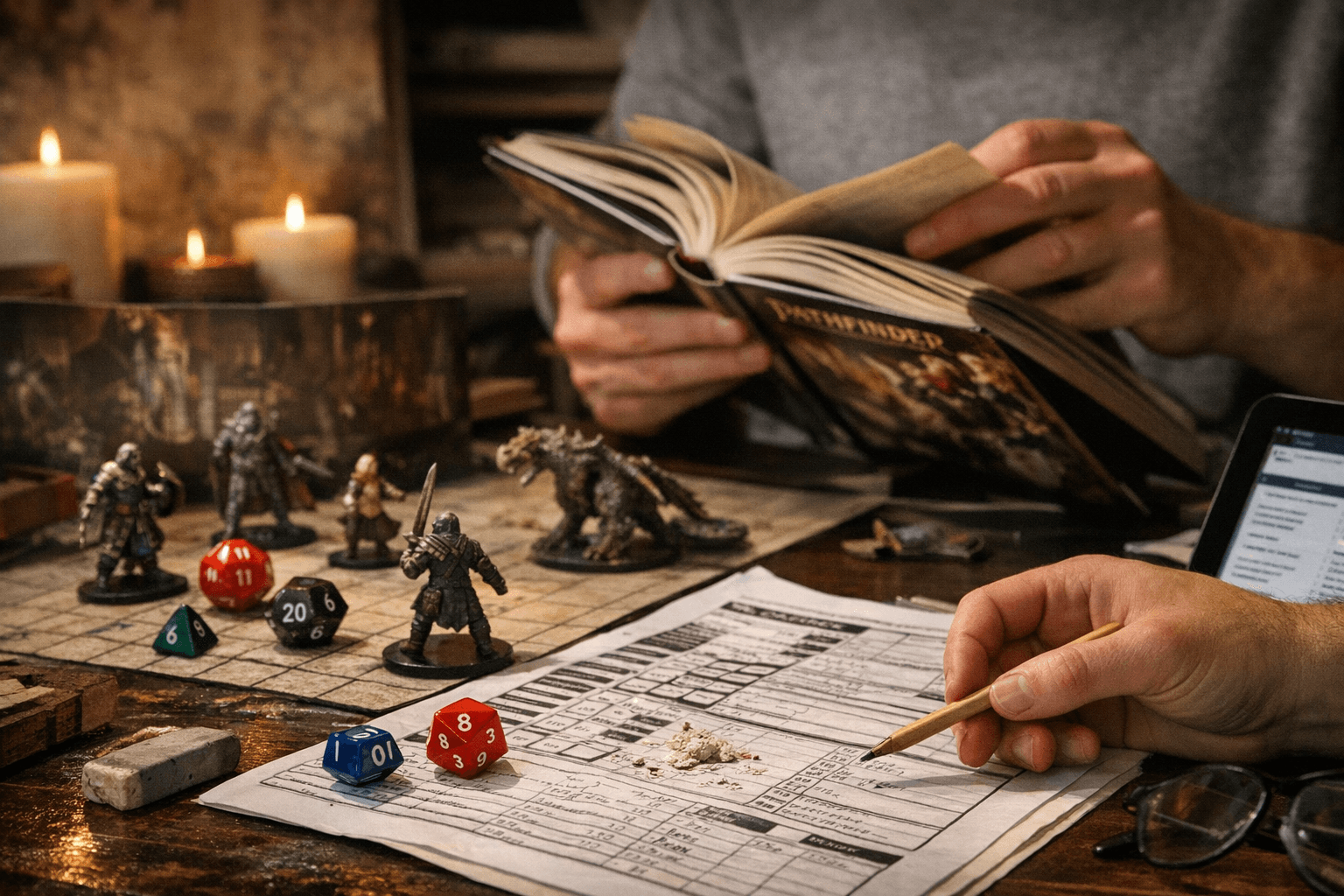
If your Pathfinder 2E character sheet hasn't been touched since before Paizo dropped its Spring 2026 errata, there's a meaningful chance something on it is wrong. Not catastrophically wrong, but wrong enough to cause a mid-session argument at the worst possible moment. The good news: most fixes take under two hours, and the handful of changes that actually break characters at the table are narrower than the length of the errata document suggests.
Paizo's Spring 2026 release touched four core titles simultaneously: Player Core, GM Core, Player Core 2, and Guns & Gears (Remastered), with an additional Spellstrike clarification folded in from the Secrets of Magic Fall 2024 errata. Player Core 2 was the heart of the update, and it carries the changes most likely to affect your character tonight.
The update that caused the most noise
The latest weakness and resistance revision came after significant negative feedback from the community, which is exactly why it deserves the top of this checklist. Under the revised rules, each weakness and resistance can trigger only once during an effect, such as a single Strike or spell. A creature with weaknesses to both a damage type and a special material can have both activated at the same time.
That last clause is the part tables were getting wrong in both directions: either applying multiple triggers for the same damage instance or refusing to stack a material weakness with a damage-type weakness. If your alchemist has been lighting silver-tipped bombs against lycanthropes, confirm with your GM exactly how the new language reads before the next session.
Step 1: Inventory affected options (15-30 minutes)
Pull your character sheet and flag anything touching weapon traits, potency runes, special materials (silver, adamantine, and the like), magic item durations or triggers, and any ancestry, familiar, or companion features touched by the Remaster cycle. Cross-reference against the official Paizo FAQ/errata page, which is the canonical source for exact wording. You're not rewriting the whole sheet; you're building a short list of line items to interrogate in the steps that follow.
Step 2: Kill your 'must-fix' conflicts first (30-60 minutes)
Anything that changes action cost, damage type classification, or class feature timing is a must-fix. These are the interactions that will surface in the first encounter and derail the session if they're unresolved.
The Spring 2026 Player Core 2 FAQs addressed a large number of changes to alchemist research field abilities and feats, primarily to improve action economy and integration between different abilities. Alchemist players in particular need to re-read their field vials, toxicologist field benefit, and any bomb-combination feats against the updated text before assuming their action sequence still works.
Other confirmed must-fix items from this cycle:
- Oracles had their spell repertoire text fixed to match the table, and weapon trance received an upgrade.
- Qi spell feats can now be taken multiple times as intended.
- Swashbuckler multiclass now has a use for panache in their dedication feat.
- Mature animal companion feats were upgraded to allow more movement types, matching their Player Core counterparts.
- Guns & Gears changes altered the inventor's Overdrive failure duration to 1 minute, defined how the automaton ancestry's Reinforced Chassis interacts with abilities and runes, fixed the Inventor Dedication's prerequisite, and delivered a major revamp of the firework technician archetype.
- The Stunned condition was revised and Take Cover was updated.
Step 3: Recalculate your numbers (60-90 minutes)
Once you've identified which rules changed, re-derive anything downstream of those changes: damage per round expectations, AC if equipment rules shifted, and the frequency of any daily-limited ability whose timing or trigger was touched. This is the step most people skip, and it's why characters feel "off" at the table even after a patch.
Use Demiplane, Pathfinder NEXUS, or another builder that reflects current Remaster content rather than hand-calculating. Demiplane's Pathfinder NEXUS has been posting playtest and errata updates in close alignment with official releases, making it the fastest way to pull corrected stat blocks and ability descriptions without reading every errata line yourself.
Step 4: Align with your GM on edge cases (15-30 minutes)
Some interactions won't be cleanly resolved by the errata text alone. Agree before play on three things: what constitutes a single effect, whether attached damage (such as alchemist fire affixed to a Strike) counts as part of that Strike, and how multiple weaknesses apply to a combined effect. Write those rulings in your session notes or a shared document. If your table wants to track with Paizo's published examples, link the FAQ example directly and treat it as provisional until the next errata cycle clarifies further.
Step 5: Playtest over two sessions, adjust conservatively
Run two short encounters specifically designed to stress your updated character: one that tests resistances and weaknesses under the new rules, and one that tests action economy or interaction timing. If something feels broken, reach for minor adjustments first, a feat swap, a consumable change, rather than a wholesale rebuild.
Step 6: Send useful feedback
If playtesting exposes an interaction that still feels inconsistent after the errata, write it up as a short reproducible example: what happened, what the rules say, and what you expected versus what occurred. Paizo uses well-structured community examples when drafting further clarifications. The weakness/resistance revision itself is a direct product of that feedback loop, which means the process works.
The full Spring 2026 errata, GM Core notes, and the official Pathfinder FAQ are all available on the Paizo site. Forward this checklist to your group before next session, and you can spend the table time fighting monsters instead of arguing about damage triggers.
This article was produced by Prism’s automated news system from verified source data, official records, and press releases, then run through automated quality and moderation checks before publishing. The system is built and supervised by the people who set the standards it runs under. Read our full AI policy.
Did this article answer your question?