PF2e Holodeck and Forensics turns Foundry combat into deep analytics
Foundry's newest PF2e analytics tool turns combat into a replayable data set, helping GMs spot lethal spikes, slow turns, and balance problems before the next session.

PF2e Holodeck and Forensics turns combat into something you can actually audit
Foundry has always been good at making Pathfinder Second Edition feel exact, but PF2e Holodeck and Forensics pushes that precision into a new lane. Instead of treating a fight as a blur of attack rolls and damage totals, it quietly reads the chat log and combat tracker, then rebuilds the encounter as data the GM can inspect after the dice stop moving.
The timing matters too. Foundry lists the module as last updated 1 day ago, with separate compatibility entries for Foundry Version 13 and Version 14, which tells you this is being maintained for a fast-moving platform. That matters in a scene where Version 13 became stable on April 27, 2025, and Version 14 started as a prototype on September 26, 2025. This is not a dusty spreadsheet addon sitting on an old branch. It is a living tool built for a current Foundry PF2e table.
The first big shift is that the module turns a combat session into a replay
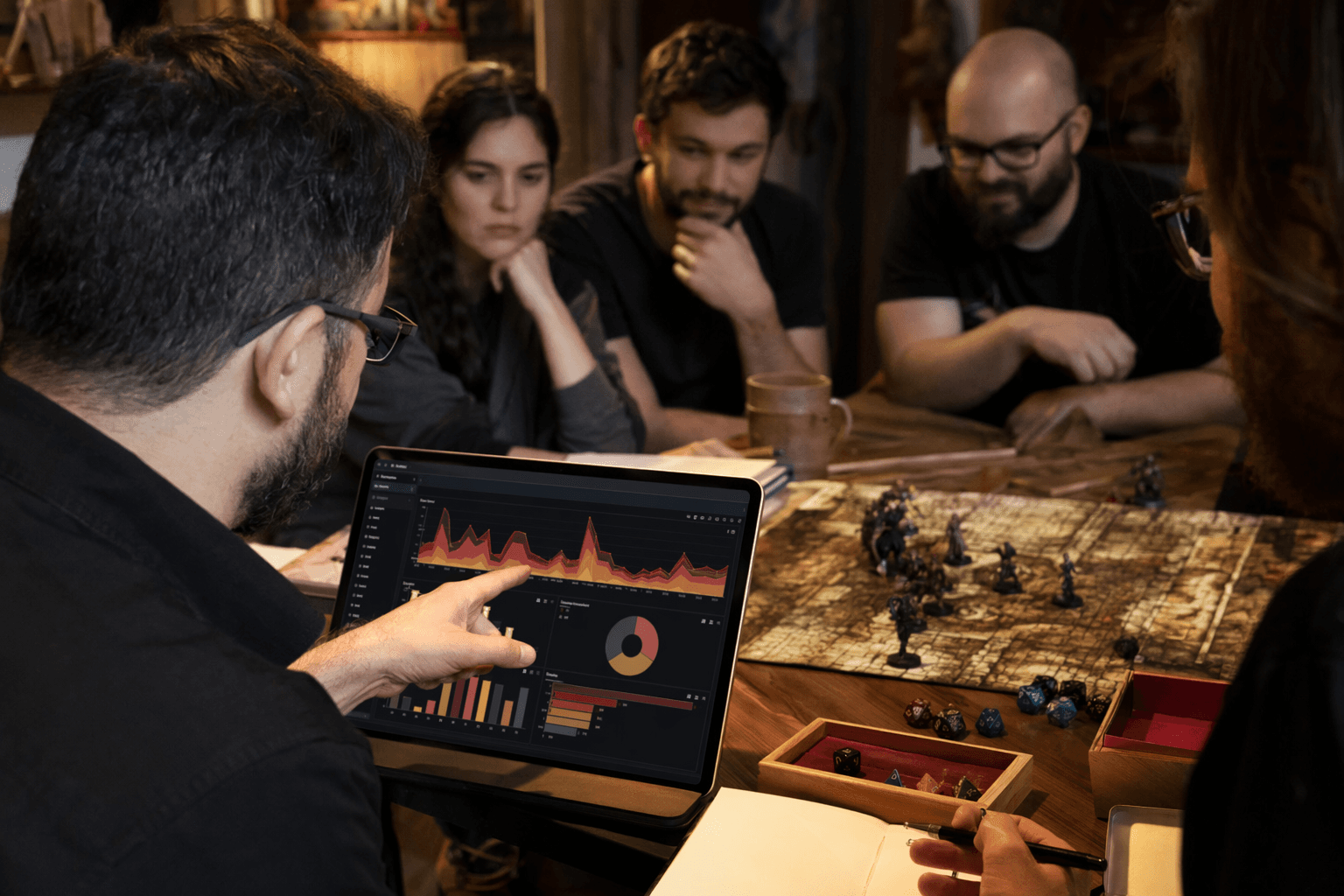
PF2e Holodeck and Forensics does its work silently. It parses attacks, saves, skill checks, damage, mitigations, and healing, then arranges the whole encounter into a color-coded timeline. That alone changes the conversation after a session, because the GM is no longer guessing at the shape of the fight. You can see where damage landed, when momentum changed, and whether the party’s recovery tools actually mattered or just felt like they did.
The module also saves historical combat data into world settings and can export statistical reports into journal entries. That means this is not just a one-off recap tool. It gives a campaign a memory, so a GM can compare encounters over time instead of relying on how dramatic the last battle felt at the table.
The most immediately useful metric is damage skew
If a Pathfinder fight feels too lethal or too easy, damage skew is often the hidden story. PF2e Holodeck and Forensics computes that skew so a GM can see whether one side was landing unusually hard, whether one monster’s output dominated the fight, or whether the party was carrying too much variance in a single turn.
That is a practical next-session tool. If the analytics show a boss fight only became dangerous because one critical spike blew apart a frontliner, the GM has a real clue that the encounter may be swingy rather than well tuned. If the skew keeps tilting toward the PCs because the enemy side is underperforming, then the issue is not the players being clever. It may be that the monster mix or terrain is softer than intended.
The module also identifies the luckiest and unluckiest rollers, which gives the GM a way to separate design problems from dice problems. A brutal fight that only felt brutal because the monsters ran hot is a different diagnosis from a fight whose numbers are structurally too punishing.
Turn-time comparison is the other metric that changes prep
Slow combat does not just feel bad. It changes the temperature of an entire Pathfinder table. PF2e Holodeck and Forensics breaks down PC and enemy turn times, which makes it much easier to spot where a session is dragging. Maybe one player is spending three times longer than everyone else because their build is complex. Maybe the enemy side is bogging down because a creature family has too many conditional abilities. Maybe the fight itself is asking for too many decisions per round.
That kind of data is gold for a GM planning the next session. If the timeline shows that the party loses its rhythm every time minions, reactions, and rider effects pile up, then the fix is not necessarily lower damage. It may be simpler monster selection, cleaner terrain, or a tighter action economy. In a system as tactical as Pathfinder Second Edition, a fight can be mathematically fair and still feel sluggish. This module gives the GM evidence for why.
Summons, minions, and familiars stop disappearing into the numbers
One of the smartest parts of the module is attribution. It tracks summon and minion damage and actions so familiars, companions, and other controlled creatures get credited back to the correct master. That sounds technical, but in PF2e it solves a very real problem. Pets, eidolons, summons, animal companions, and other controlled pieces can make post fight review messy fast.
With clean attribution, the GM can see the actual contribution of a summoner or pet focused build instead of a pile of anonymous attacks. That matters both for balance and for recognition. When the analytics say the ranger’s companion soaked a huge share of the pressure, or the conjurer’s summon really did alter the action economy, the table gets a clearer picture of what happened. The bookkeeping finally matches the fiction.
Simulation mode is where the module stops being a recap tool and becomes a planning tool
The standout feature is simulation mode. It lets a GM clone the current scene, copy the PCs and NPCs, and sever the “Link to actor” setting on the tokens. In plain terms, you can build a sandbox copy of the encounter without risking the live campaign state.
That makes the module useful before the fight, not just after it. A GM can test whether a homebrew adjustment makes a boss too fragile, whether a terrain feature is actually helping the monsters, or whether a difficult AP encounter becomes unmanageable once party synergy and pet actions are added back in. For Pathfinder 2e, where encounter difficulty is often only an estimate until the dice hit the table, that sandbox is a serious advantage.
Simulation mode also helps with teaching. A group can see how a battle behaves before committing to it in session, which is especially helpful when an encounter involves layered monster abilities, control effects, or allied creatures that create messy action economy.
Why this matters more in PF2e on Foundry than it would elsewhere
This module lands well because the PF2e ecosystem on Foundry already does a lot of the heavy lifting. The PF2e game system is maintained by the PF2e volunteer development team in an official partnership between Paizo Inc. and Foundry VTT, and it includes all official PF2e rules content along with built in support for flanking, immunities, weaknesses, resistances, and real time range detection.
That level of automation creates a rich combat record. When the system is already tracking the structure of a fight so carefully, a tool like PF2e Holodeck and Forensics can step in and turn the raw record into analysis. The result is not just more convenience. It is a new way to ask sharper questions: Was the fight lethal because the monsters were tuned high, because the party was exposed to too much burst damage, or because the action economy collapsed? Did the encounter drag because of complicated turns, or because one side was simply outmatched? Did the summon heavy build matter in practice, or only in theory?
PF2e Holodeck and Forensics is built for GMs who want answers to those questions in the next session, not vague impressions after the campaign is over. It treats combat the way performance minded players already treat their builds: as something you can review, diagnose, and improve with real data.
This article was produced by Prism’s automated news system from verified source data, official records, and press releases, then run through automated quality and moderation checks before publishing. The system is built and supervised by the people who set the standards it runs under. Read our full AI policy.
Did this article answer your question?