Anthropic's Claude Can Now Run Photoshop Edits for You Automatically
Type that prompt, walk away, and come back to a completed export folder: Claude's new Photoshop agent executes batch edits remotely from your phone.
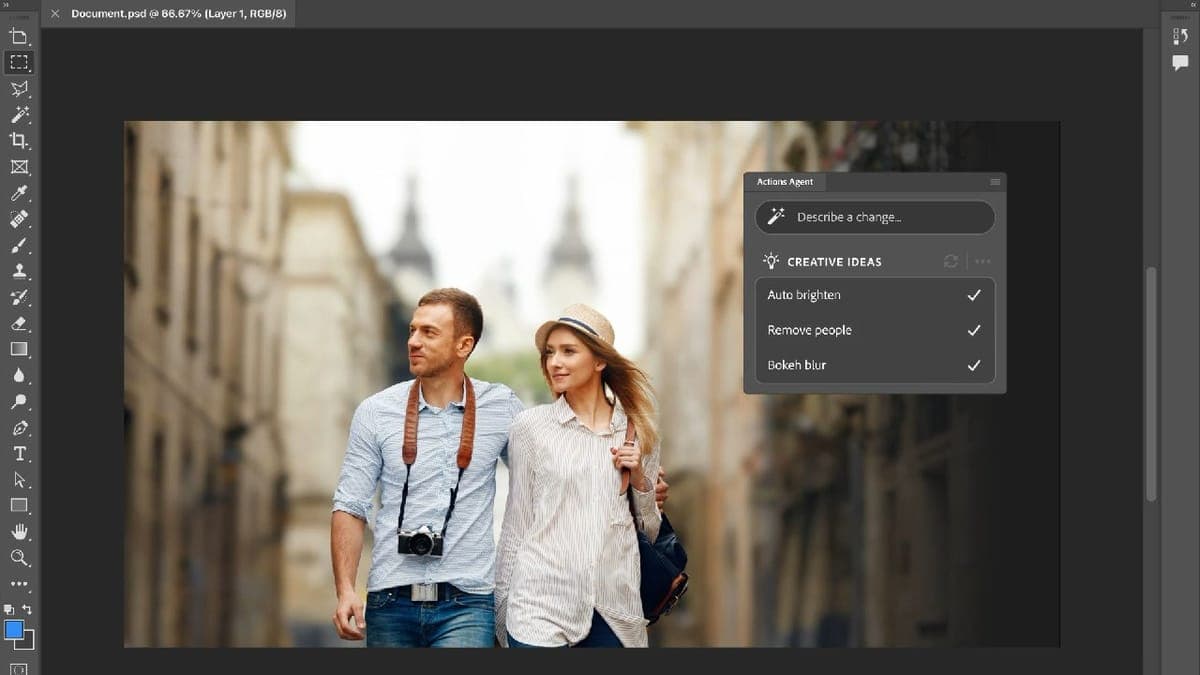
Type "Export these RAW files as 3000-pixel-long JPEGs, apply Auto Tone and +8 vibrance, and place them in a Dropbox folder named 'Client A'" into a chat window, and the agent handles everything from there. That is not a hypothetical: it is the exact demo prompt Anthropic used last week when it unveiled agentic capabilities for Claude that can remotely operate Adobe Photoshop on a photographer's behalf.
The feature, which drew attention across the photography press during the week of March 24-26, works through Anthropic's Dispatch mobile app and its cloud-to-desktop orchestration layer. A photographer sends natural-language editing instructions from their phone; the agent executes those commands inside Photoshop; the finished assets come back to wherever the photographer specified. No sitting at the editing station required.
Anthropic's stated aim is to eliminate the manual drudgery that eats hours inside high-volume workflows: batch-resizing, exporting in multiple formats, running consistent color corrections, clearing sensor dust across an entire set of frames, packaging delivery-ready JPEGs with embedded metadata. The remote-initiation angle sharpens the pitch further. A wedding photographer still at the venue, or a commercial shooter traveling between locations, could theoretically queue a complete edit job from a phone and return to a finished delivery folder.
The practical concerns arrive at the same speed as the efficiency gains. An agent operating inside a photographer's Photoshop environment and connected cloud storage needs robust access controls and clear audit logs; a misconfigured run has real potential to overwrite originals, misapply corrections to the wrong batch, or silently strip metadata. Anthropic's own framing draws the boundary explicitly: agents are built for repeatable, rules-based tasks, not for the nuanced retouching and creative decisions that require a human eye.

The prudent entry point for any studio is sandboxed testing, running the agent against a duplicate folder before it gets anywhere near client deliverables, then verifying that non-destructive workflows stay non-destructive and that Adobe's plugin architecture plays cleanly with the integration. Client metadata and copyright attribution need to survive the pipeline intact; confirming that before committing live files is non-negotiable.
Anthropic's implied rollout timeline puts serious early-adopter experimentation through mid-2026, with broader feature releases dependent on vendor partnerships with Adobe and others, accumulated user feedback, and regulatory scrutiny around autonomous software taking actions on user devices. The capability is genuinely compelling for event and editorial photographers running high-frame-count turnarounds. Whether it earns a permanent spot in professional pipelines will come down to how reliably it handles the edge cases that, in this line of work, show up constantly.
Know something we missed? Have a correction or additional information?
Submit a Tip

