Camera Traps Capture First Sumatran Orangutan Crossing Canopy Bridge
After two years of blank frames, a camera trap finally caught the first Sumatran orangutan crossing a canopy bridge in North Sumatra. The clip is a world first for the species.
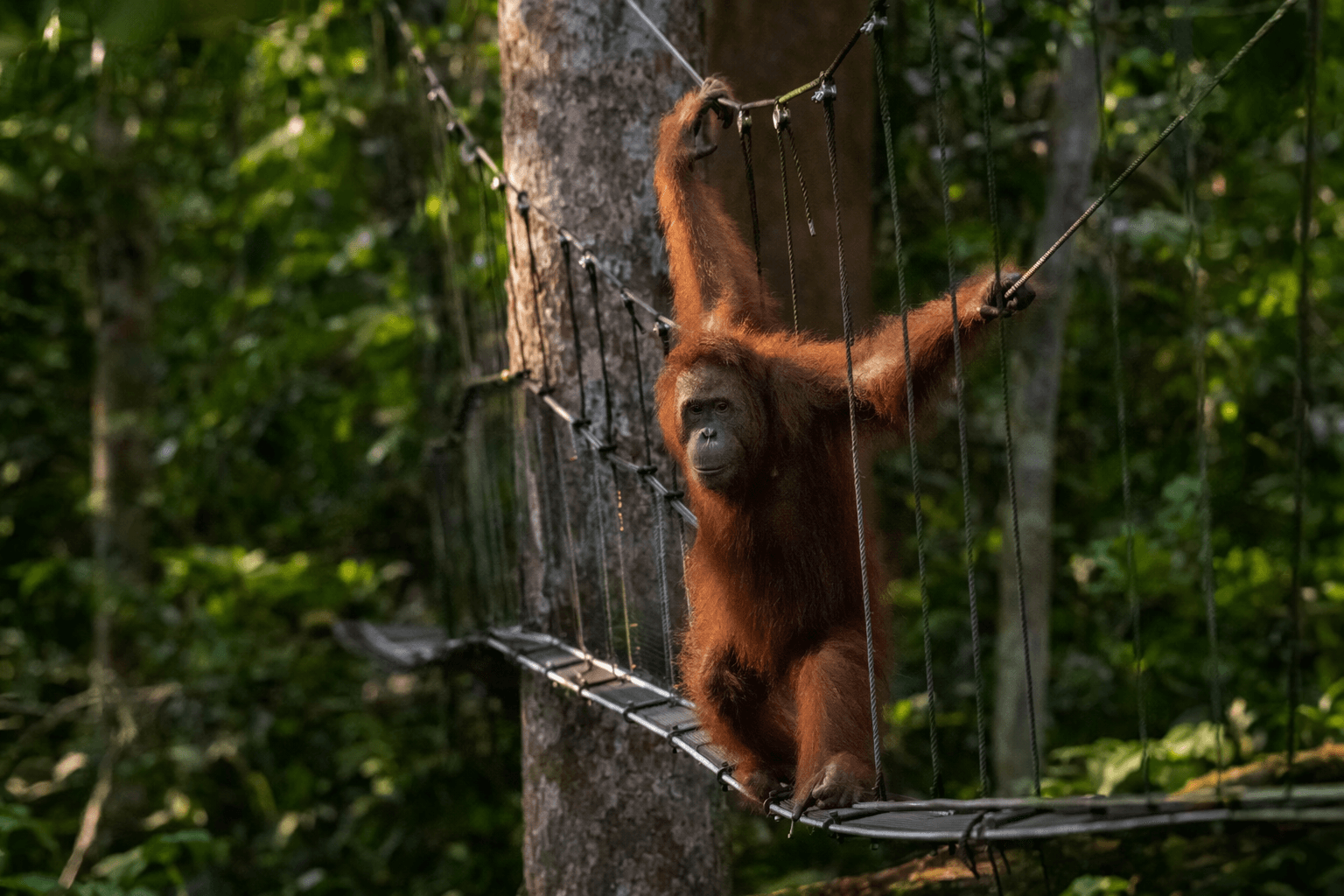
The payoff came after nearly two years of waiting: a camera trap in North Sumatra finally recorded a young male Sumatran orangutan crossing a canopy bridge, the first footage ever captured of the species using one of the elevated crossings. For photographers, the clip is a reminder that the most valuable wildlife image is not always the most dramatic frame, but the one that proves a project worked.
The bridge stood over the Lagan-Pagindar road in Pakpak Bharat, where road upgrades in 2023 widened the canopy gap and made natural crossings impossible for wildlife. The road cuts through a fragmented forest landscape that SOS says still matters deeply to local people, because it provides access to schools, hospitals and other essential services. That is the tension at the heart of the story: infrastructure that helps human communities can also sever the routes animals have used for generations.
To answer that problem, the Sumatran Orangutan Society and Tangguh Hutan Khatulistiwa, working with government support and help from Vertical Rescue Indonesia and TaHuKah, built a series of canopy bridges in 2024. SOS says five bridges went up across the major road in West Toba, linking habitat that had been split between the Siranggas Wildlife Reserve and the Sikulaping Protection Forest. The organization said the broader goal was to reconnect fragmented rainforest, preserve gene flow and keep the population from becoming functionally extinct.
The camera trap did not deliver a payoff right away. For months, then through seasons, it captured nothing useful from the orangutan itself. But the frame-by-frame patience mattered. Other species started using the bridges first, including plantain squirrels, black giant squirrels, long-tailed macaques, black Sumatran langurs and agile gibbons. Only after that pattern was established did the orangutan step onto the rope bridge and make it across, slowly and carefully, giving conservationists the proof they had been waiting for.
That proof matters because the Sumatran orangutan, Pongo abelii, is listed as Critically Endangered by the IUCN and is now restricted to the north of Sumatra. The IUCN warns that if losses continue, the decline could exceed 80 percent over a three-generation period. SOS has said the road corridor held roughly 350 orangutans, split into two groups, with isolation raising the risk of inbreeding, health problems and long-term collapse.
Helen Buckland, who has led SOS since 2005, described the team’s response as pure delight when the crossing was finally recorded. For anyone working with remote cameras, the lesson is unmistakable: placement, patience and long timelines can turn a quiet piece of conservation infrastructure into a story the lens can actually prove.
This article was produced by Prism’s automated news system from verified source data, official records, and press releases, then run through automated quality and moderation checks before publishing. The system is built and supervised by the people who set the standards it runs under. Read our full AI policy.
Did this article answer your question?