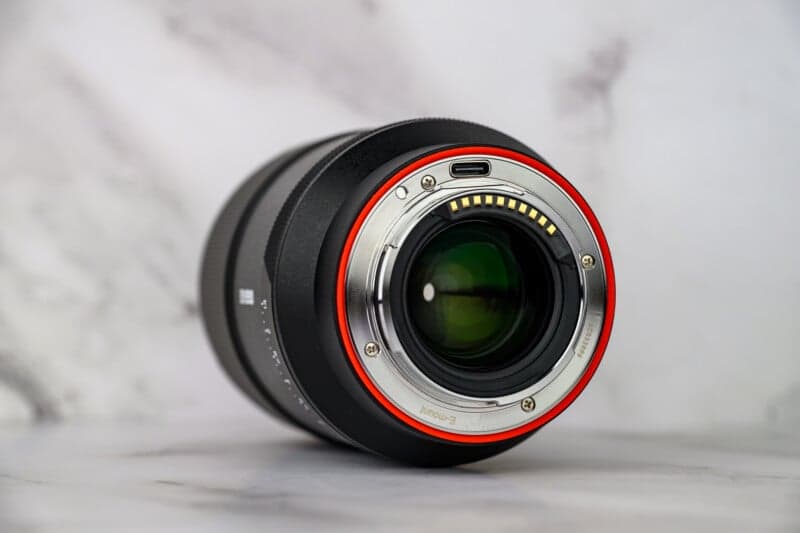
Hasselblad XCD 35-100 E proves a versatile zoom across real assignments
Six months of campaigns, weddings, and workshops show Hasselblad’s 35-100E can replace a small prime kit, though its all-purpose reach still trims some prime magic.

The one-lens test
Six months on commercial campaigns, a family wedding in the Alps, and a workshop in southern Spain is a hard enough mix for any lens to survive. Hasselblad’s XCD 35-100E came through all three without a lens change, which is exactly why this zoom matters to serious shooters who want one body-lens pairing that can keep moving.

That is also the central tension in the lens. The 35-100E is convincing as a do-everything tool, but the more it succeeds as a universal solution, the more it challenges the emotional pull of a prime kit. Hasselblad’s pitch is practical and bold at the same time: one zoom that can effectively combine the range of seven Hasselblad primes into a single lens.
A standard zoom with medium-format ambition
Hasselblad launched the XCD 2,8-4/35-100E on August 26, 2025, alongside the X2D II 100C. The company frames it as a versatile standard zoom that bridges wide-angle to medium telephoto, with a roughly 3x optical zoom range and a 28-76mm full-frame equivalent field of view.
That range lands in a sweet spot for real assignments. It is broad enough for landscapes, street scenes, and environmental frames, yet long enough to tighten portraits and isolate details without constantly switching glass. Hasselblad has also positioned it as the fastest medium-format zoom in the XCD lineup, and third-party launch coverage from Fstoppers, DPReview, PetaPixel, and Digital Camera World echoed that point.
The lens is designed to sit naturally beside the X2D II 100C, whose launch materials highlight AF-C continuous autofocus, subject detection, 10-stop stabilization, and HNCS HDR. In practice, that pairing makes the 35-100E feel less like a compromise zoom and more like the anchor lens for a modern medium-format working kit.
Build quality that feels properly Hasselblad
The first thing that stands out is how the lens is built. It has the tactile confidence you expect from a premium medium-format optic, with smooth zoom and focus rings, a metal housing, and the kind of resistance that makes every adjustment feel deliberate. It is the sort of lens that gives you confidence before you even make the first frame.
Just as important, it is more compact than the spec sheet might suggest. Hasselblad lists the lens at 894 grams and 90 x 138 mm when not extended, with an 86 mm filter thread. That weight is close to a Canon RF 24-70mm f/2.8, and it is lighter than Hasselblad’s older XCD 35-75mm f/3.5-4.5, which weighs 1,115 grams.
There is one important caveat: the lens has some seam sealing, but it is not rated for dust or water resistance. That means the build feels robust, but it is not a weather-sealed passport to careless shooting in bad conditions. It is premium engineering, not indestructibility.
The optical formula behind the flexibility
The published optical design is a serious one, with 16 elements in 13 groups, including 3 aspherical elements and 5 extra-low dispersion elements. Hasselblad’s datasheet lists an actual focal length range of 36-97mm, which translates to roughly 28-76mm full-frame equivalent.
That matters because this is not just a convenience zoom, it is a carefully shaped convenience zoom. The lens offers an effective f/2.2-3.2 range, and the bright f/2.8 maximum aperture at the wide end helps keep it useful when light drops or when depth of field control starts to matter.
The wide-to-tele balance is especially useful for landscape work, where a little more reach than a traditional 24-70 style lens can simplify composition. You can pull in a ridge line, tighten a frame around a subject in the landscape, or move from a broad establishing shot to a more compressed view without changing lenses or breaking rhythm.
How it behaves across real assignments
In commercial work, the appeal is obvious. A lens that can jump from broader environmental setups to tighter client-facing frames without a bag swap saves time, keeps the pace up, and reduces the chance of missing a moment while you change glass. For a photographer moving between products, people, and location details, that kind of continuity can be more valuable than ultimate specialization.
At the wedding in the Alps, the value shifts from convenience to calm. A single lens covering a large part of the day means fewer interruptions, fewer dust concerns, and less mental friction when the pace changes fast, from wider scenes to tighter emotional frames. In a workshop setting in southern Spain, it also supports teaching and shooting at the same time, because you are not constantly deciding which focal length to mount next.
The lens is officially aimed at landscape, portrait, street photography, and travel photography, and the field use described here shows why that range makes sense. It covers the jobs where adaptability matters most, and it does so with enough optical seriousness to avoid feeling like a stopgap.
- For commercial campaigns, it reduces lens changes and keeps the workflow moving.
- For weddings, it gives you range without dragging a full prime kit through the day.
- For travel and workshops, it offers one lens that can handle scenes, people, and detail work.
Where the prime question still lingers
The hardest question is not whether the XCD 35-100E is useful. It clearly is. The real question is whether versatility is enough when the emotional pull of a dedicated prime still defines a lot of Hasselblad shooting culture.
That is where the lens’s philosophical challenge shows up. It can cover so many situations that it starts to look like the answer to everything, but some photographers will still prefer the cleaner purpose and distinctive rendering of a fixed focal length. The 35-100E may not replace the satisfaction of a prime setup, even when it replaces the need to carry one.
For photographers who want one body-lens combination to handle commercial, travel, portrait, street, and event work, the XCD 35-100E is a serious all-rounder with real assignment credibility. It proves that versatility in medium format does not have to feel watered down, even if the final trade-off is that purity, not convenience, remains the stronger argument for primes.
This article was produced by Prism’s automated news system from verified source data, official records, and press releases, then run through automated quality and moderation checks before publishing. The system is built and supervised by the people who set the standards it runs under. Read our full AI policy.
Did this article answer your question?