Rare Nikon 2000mm Reflex lens amazes photographers with donut bokeh
Jo Geier put Nikon’s 2,000mm Reflex lens to work on portraits and wildlife, showing how a 60cm, 17.5kg mirror lens still delivers wild donut bokeh.
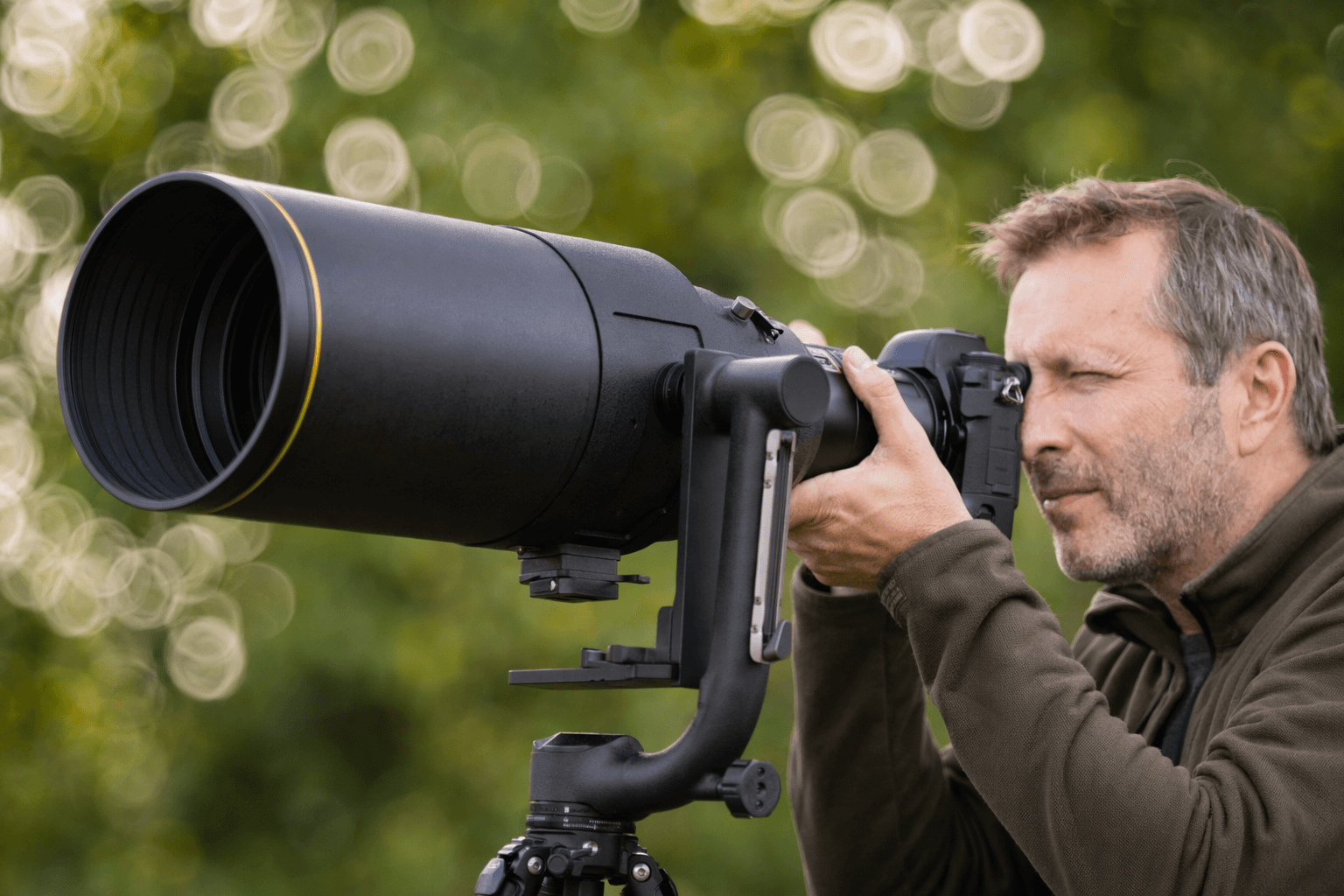
A 2,000mm lens sounds more like lab equipment than something that can be carried into the field, yet Jo Geier’s latest test shows why Nikon’s Reflex-Nikkor 2000mm f/11 still grabs attention. The German photographer used the ultra-long mirror lens on portraits and wildlife, and the sample images put its strangest signature front and center: donut-shaped bokeh.
That optical look comes from the lens’s catadioptric design, a mirror-based formula built around just 5 elements in 5 groups. Nikon first showed the lens as a prototype at Photokina in Cologne in 1968, then put it into production in 1970. It remains Nikon’s longest focal-length lens ever produced for 35mm photography, with a field of view of about 1 degree 10 minutes and about 40x magnification compared with a 50mm standard lens.
The trade-offs are as extreme as the reach. Published specs put the lens at about 60 cm long and 17.5 kg on its own, rising to roughly 25 kg with the dedicated gimbal or tripod mounting unit. Nikon’s AV-1 or AY-1 mounting platform was designed to make field use practical, because hand-holding this lens is not remotely realistic. Its closest focusing distance is 18 m, which makes composition a deliberate exercise in distance, framing, and patience.
That is part of the fascination now. The lens is widely described as extremely rare, with one guide estimating fewer than 300 units were made between 1970 and 1978. Auction references point to an improved-coated second version that appeared in 1975, and collector listings place surviving examples in the five-figure range. Even with that scarcity, the current buzz is less about shelf value than about performance, especially as photographers ask whether a vintage super-telephoto like this can still make sense on modern mirrorless cameras through adapters.
Geier’s review has helped push that question back into circulation. The appeal is not only the novelty of owning a Nikon oddity from another era, but the way it forces a direct lesson in focal-length compromise. The 2,000mm Reflex lens delivers reach, compression, and that unmistakable donut bokeh, while also demanding heavy support, careful framing, and acceptance of lower contrast. For photographers interested in what extreme optics actually teach, it is one of Nikon’s strangest and most revealing designs.
This article was produced by Prism’s automated news system from verified source data, official records, and press releases, then run through automated quality and moderation checks before publishing. The system is built and supervised by the people who set the standards it runs under. Read our full AI policy.
Did this article answer your question?